
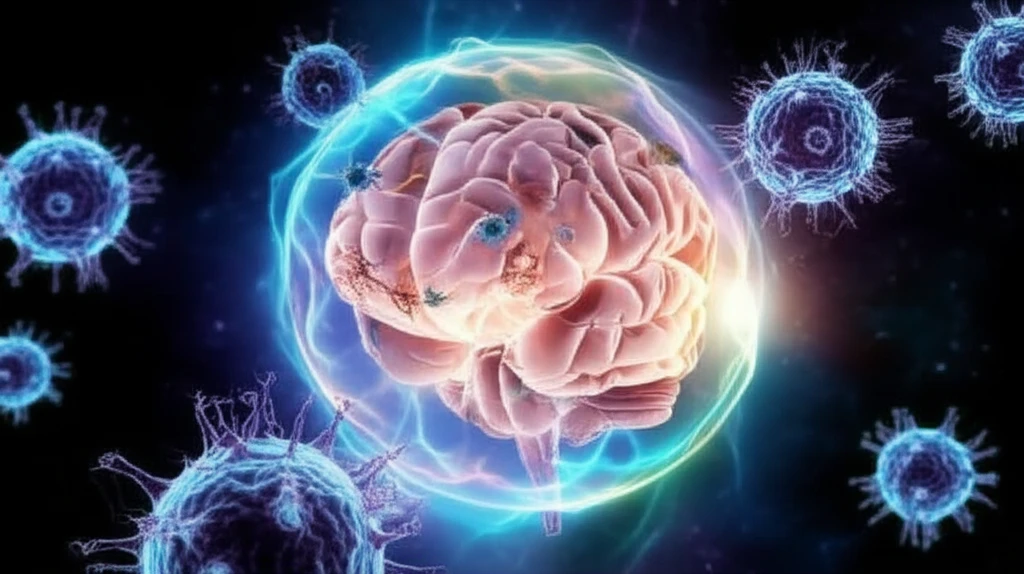
Unlock Brain Protection: Natural Compounds Combat HIV-Related Neurotoxicity

"Discover how Salvianic acid A and Danshen granule offer hope in mitigating neurological damage linked to HIV, paving the way for innovative therapies."
For individuals living with Human Immunodeficiency Virus 1 (HIV-1), advancements in antiretroviral therapy have significantly extended lifespans. Yet, a considerable number of patients still grapple with HIV-associated neurocognitive disorder (HAND), impacting their overall quality of life. HAND affects around 50% of the HIV-1 infected population, creating an urgent need to unravel the underlying molecular mechanisms and develop effective treatments.
Although neuronal damage occurs in patients with HIV-1, the precise processes behind HAND remain unclear. Research indicates that persistent HIV in the central nervous system (CNS), along with the ongoing presence of the HIV-1 regulatory protein Tat in the brain, are crucial factors in the development of HAND. Tat, a secreted viral protein, disrupts various cellular mechanisms, including apoptotic pathways, neurotransmitter function, oxidative stress, and inflammatory responses.
Studies suggest Tat can harm neurons both directly and indirectly, leading to inducible nitric oxide synthase and neurotoxicity. Elevated Tat levels correlate with neurocognitive disorders in HAND patients, making it imperative to find strategies that alleviate or prevent neuronal damage caused by Tat. This could lead to effective therapeutic interventions for HAND.
Salvianic Acid A and Danshen Granule: A Neuroprotective Powerhouse
Traditional Chinese Medicine (TCM) highlights Salvia miltiorrhiza, known as Danshen, as a vital herb. The Chinese Pharmacopeia officially recognizes Danshen, and Danshen granule, a pharmaceutical form of Salvia miltiorrhiza, has been marketed for over a decade in China, Hong Kong, and Taiwan.
- Combating Cell Death: Salvianic acid A and Danshen granule inhibit Tat-induced cell death, block LDH release, and rescue dendritic spine loss.
- Reducing Oxidative Stress: These compounds significantly reduce the production of intracellular ROS and MDA, mitigating oxidative damage.
- Preventing Apoptosis: Salvianic acid A and Danshen granule attenuate cell apoptosis by modulating apoptotic pathways.
- Boosting Antioxidant Activity: Pretreatment with these substances increases the activity of antioxidant enzymes like CAT, SOD, and GSH-Px.
Future Directions: Paving the Way for New Therapies
This study confirms the neuroprotective benefits of Danshen granule and Salvianic acid A against Tat-induced toxicity, revealing their ability to block LDH release, prevent cell death, and restore dendritic spine loss. The compounds also reduce intracellular ROS and MDA production while preventing cell apoptosis.
Danshen granule and Salvianic acid A enhance antioxidant enzymatic activity and regulate Bcl-2 and Bax ratios, inhibiting apoptotic pathways. These findings show that Danshen granule and Salvianic acid A mitigate Tat-induced neurotoxicity from multiple angles.
These results support further investigation into Danshen granule and Salvianic acid A as therapeutic agents for HAND and other neurodegenerative conditions, potentially revolutionizing treatment strategies.