
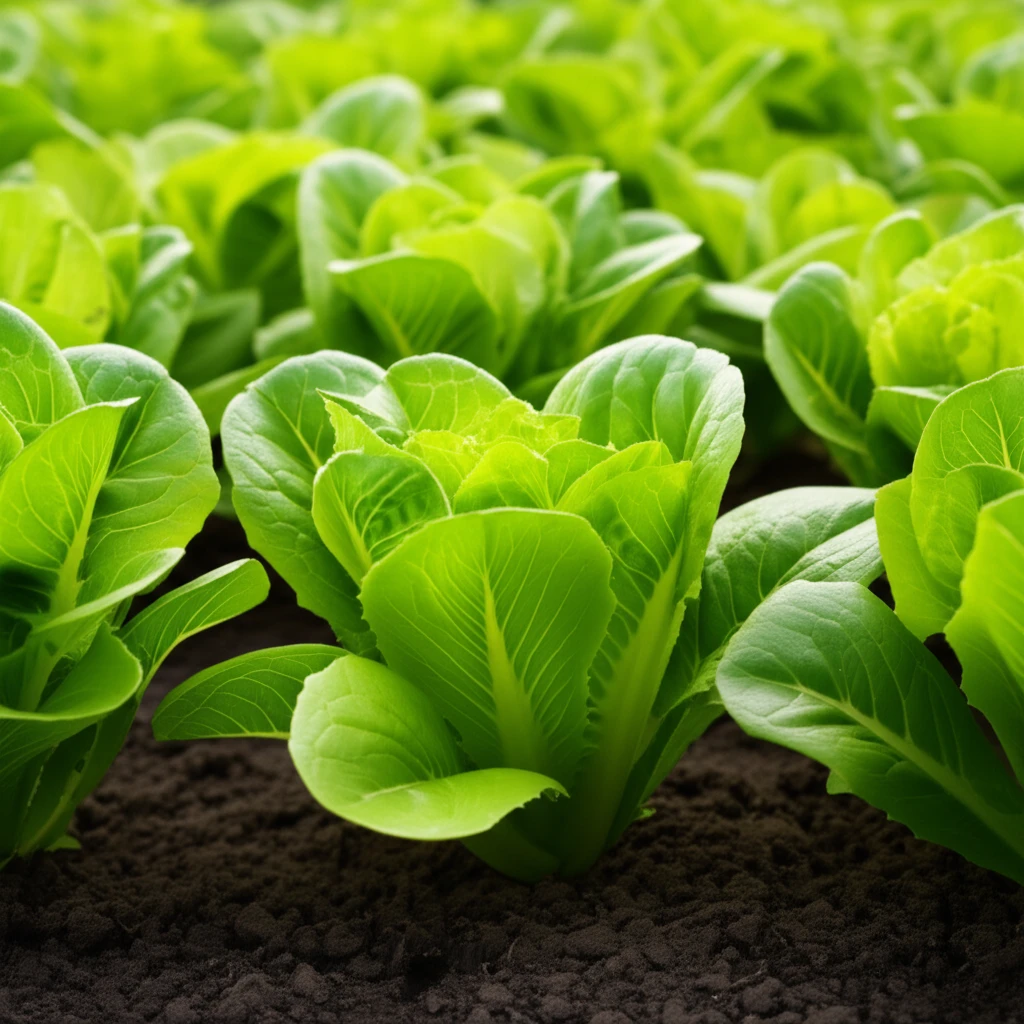
Unlock Bountiful Harvests: The Power of Green Manure for Your Lettuce Patch

"Discover how using a natural fertilizer like roostertree can boost your lettuce crop’s growth and yield, while keeping your garden eco-friendly."
Growing your own vegetables can be incredibly rewarding. Freshly harvested lettuce from your garden tastes amazing in salads, sandwiches, and wraps. However, many gardeners face the challenge of maintaining healthy soil and maximizing their yields without resorting to harsh chemicals.
That's where the concept of green manuring comes in. It's an age-old technique that involves using plant matter to enrich the soil, providing essential nutrients and improving its overall structure. In this article, we’ll explore how using a specific type of green manure – roostertree (Calotropis procera) – can work wonders for your lettuce crop.
We'll delve into a study conducted in Brazil that examined the effects of roostertree on lettuce production, revealing valuable insights into the best ways to incorporate this natural fertilizer for optimal growth and harvest.
Potential Benefits
Green manure may offer a practical way to support soil management in a lettuce patch. Its effects can depend on the plant selected, timing, soil conditions, and how the biomass is managed. Gardeners should therefore treat expected benefits as context-dependent rather than guaranteed.
Established Practices
Common green-manure practice involves growing suitable plants before a lettuce crop and incorporating or cutting the biomass at an appropriate stage. The approach may improve soil condition, but it also requires planning around planting dates and decomposition. Poor timing or unsuitable management can limit its usefulness.
Longstanding Practice
Using living plants to protect and improve cultivated soil is a longstanding agricultural practice. Green manure developed from the broader idea that plant residues can be returned to the soil rather than removed. Its continued use reflects interest in managing fertility and soil structure through biological processes.
What is Green Manuring and Why Use Roostertree for Lettuce?
Green manuring is essentially using plants as a natural fertilizer. Instead of relying on synthetic chemicals, you grow or gather plant material and incorporate it into the soil. As it decomposes, it releases nutrients that benefit your crops. This also improves the soil's ability to retain water and its overall structure, creating a healthier environment for your plants to thrive.
- Abundant biomass production: Roostertree grows quickly and produces a lot of organic matter, making it a readily available resource.
- Nutrient-rich composition: It contains essential nutrients like nitrogen, phosphorus, and potassium, crucial for plant growth.
- Drought tolerance: It thrives in dry conditions, making it a sustainable option even in water-scarce areas.
- Suitability for organic farming: Roostertree is a natural and organic amendment, aligning with eco-friendly gardening practices.
Current Evidence
Research on green manure for lettuce can examine crop growth, soil condition, nutrient availability, and practical management. Results may vary with the cover crop, climate, soil type, and interval before lettuce is planted. For that reason, findings should be applied to local growing conditions rather than treated as universally predictive.
Practical Limitations
Green manure is not automatically successful in every lettuce-growing situation. It can compete for time, water, or space with the main crop, and its benefits may be reduced when biomass is poorly timed or managed. These limitations make crop choice and scheduling important parts of the practice.
Understanding Green
The sources describe green as a color positioned between cyan and yellow on the visible spectrum, with a dominant wavelength of roughly 495 to 570 nm. They also describe many variations in green based on hue, chroma, and lightness, including tints mixed with white and shades mixed with black. Figma characterizes green as a saturated color between blue and yellow on the color wheel, while Simple English Wikipedia notes that some languages do not distinguish green from blue. These color definitions concern visual classification rather than the agronomic performance of green manure in a lettuce patch.
Harnessing the Power of Green Manure for Your Garden
By incorporating green manuring techniques, particularly with resourceful plants like roostertree, both home gardeners and small-scale farmers can cultivate healthier, more productive lettuce crops. This method enhances growth and embodies sustainability by harnessing natural resources to enrich the soil and minimize reliance on synthetic fertilizers. Isn't it time you gave your lettuce a natural boost?
A Broad Green Palette
A February 15, 2024 resource presents more than 237 shades of green, ranging from light to dark and from vibrant to muted natural hues. It also discusses HEX, RGB, and CMYK codes for these named colors. This illustrates that green is not a single visual category but a broad palette with variations suited to different designs and decor.
Future Possibilities
Future work on green manure may focus on selecting plants and management methods that fit changing weather and local soil conditions. More practical comparisons could help growers balance soil benefits with the time and resources required. Until stronger location-specific evidence is available, flexible experimentation and careful observation remain sensible.
System-Level Constraints
Green-manure decisions are shaped by broader constraints such as land availability, water access, labor, seed costs, and the timing of the lettuce crop. These factors can make a practice that works well in one garden difficult to apply in another. A useful assessment therefore needs to consider the whole growing system rather than soil benefits alone.
Grower Experience
The real-world value of green manure depends partly on whether growers can manage it within their available time, tools, and space. Practical experience can reveal problems with timing, incorporation, or crop competition that general guidance may overlook. For lettuce growers, observing soil and crop responses over successive seasons can support more informed decisions.