
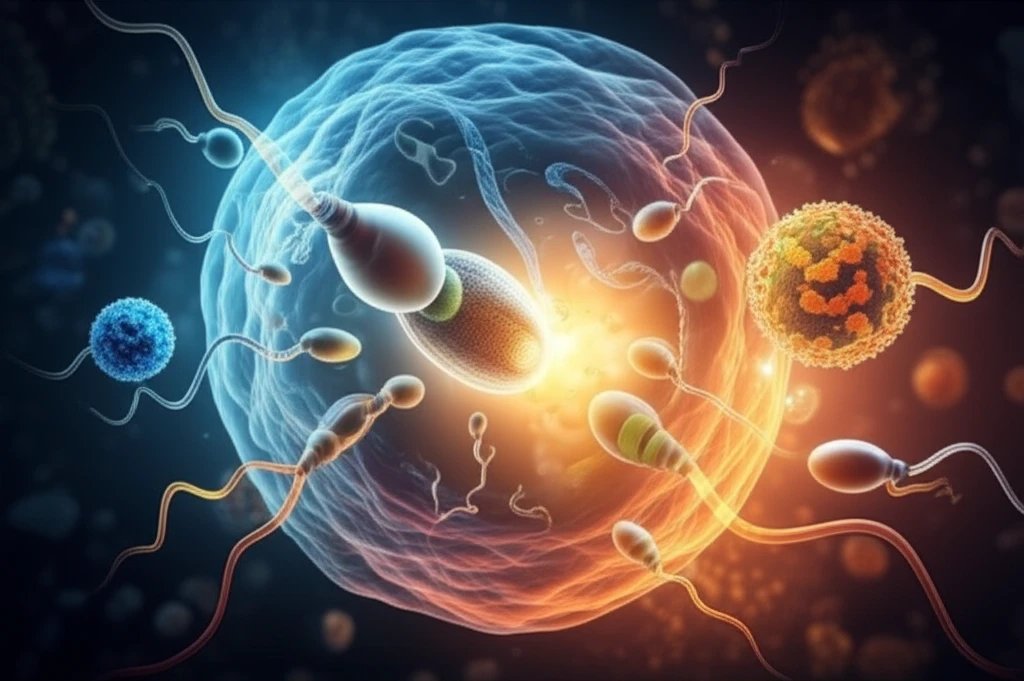
Microscopic view of boar semen protected by quercetin.

Unlock Boar Semen Potential: How Quercetin Can Boost Fertility

"Fight oxidative stress and improve sperm quality with this natural antioxidant. Find out the optimal dosage for enhanced boar semen."


In the world of swine reproduction, maintaining the quality of boar semen is crucial for successful artificial insemination. One major challenge is oxidative stress, which occurs when there's an imbalance between reactive oxygen species (ROS) and the body's ability to neutralize them. Elevated ROS levels can damage sperm membranes, decrease fertility, and lead to morphological abnormalities.

Antioxidants play a vital role in combating oxidative stress. These substances neutralize free radicals, protecting cells from damage. Quercetin, a natural flavonoid found in many plants, has gained attention for its antioxidant properties and potential to improve sperm quality.

This article explores how quercetin supplementation during boar semen thawing and incubation can positively impact sperm characteristics. We'll delve into the research findings, discuss the optimal concentration of quercetin, and explain how it improves sperm motility, viability, and reduces lipid peroxidation, ultimately enhancing fertility outcomes.

Quercetin: A Shield Against Oxidative Stress in Boar Semen

Microscopic view of boar semen protected by quercetin.

Reactive oxygen species (ROS) are unstable molecules that can damage cells and tissues. In boar semen, elevated ROS levels can compromise sperm quality, leading to:

  • Membrane damage: ROS can attack the delicate lipid membranes of sperm cells, disrupting their structure and function.
  • Decreased fertility: Damaged sperm are less likely to successfully fertilize an egg, reducing fertility rates.
  • Morphological abnormalities: Oxidative stress can cause deformities in sperm shape and structure, further impairing their ability to fertilize an egg.

text
Quercetin, a flavonoid with a polyphenol structure, acts as an antioxidant by donating electrons to stabilize free radicals, preventing them from causing damage. This protective effect can significantly improve boar semen quality during thawing and incubation.

Maximizing Fertility: The Quercetin Advantage

The study highlights the potential of quercetin supplementation as a valuable tool for improving boar semen quality. The research indicates that supplementing with 0.25 mM quercetin during thawing and incubation can:

<ul><li>Significantly increase sperm motility after 10 hours.</li><li>Increase the percentage of viable cells after 10 hours.</li><li>Reduce hydroperoxide levels, indicating lower lipid peroxidation.</li></ul>

These findings suggest that quercetin can effectively combat oxidative stress, leading to improved sperm characteristics and potentially enhanced fertility outcomes in artificial insemination programs. Further research may explore the long-term effects and optimal application strategies of quercetin supplementation in boar semen management.

About this Article -

This article was crafted using a human-AI hybrid and collaborative approach. AI assisted our team with initial drafting, research insights, identifying key questions, and image generation. Our human editors guided topic selection, defined the angle, structured the content, ensured factual accuracy and relevance, refined the tone, and conducted thorough editing to deliver helpful, high-quality information.See our About page for more information.

Everything You Need To Know

1

What is oxidative stress, and why is it a problem for boar semen?

Oxidative stress occurs when there's an imbalance between reactive oxygen species (ROS) and the body's ability to neutralize them. In the context of boar semen, elevated ROS levels are detrimental, damaging sperm membranes, decreasing fertility, and causing morphological abnormalities. These abnormalities directly hinder the success of artificial insemination.

2

What is quercetin, and how does it work?

Quercetin is a natural flavonoid with a polyphenol structure, acting as an antioxidant. Its primary function is to donate electrons to stabilize free radicals. This action prevents the free radicals from causing damage to the sperm cells, improving sperm motility, viability, and reducing lipid peroxidation during boar semen thawing and incubation. This protective effect directly improves boar semen quality.

3

What is the optimal concentration of quercetin for boar semen?

The study indicates that supplementing boar semen with 0.25 mM of quercetin during thawing and incubation yields the best results. This concentration has been shown to improve sperm motility, viability, and reduce lipid peroxidation. Lipid peroxidation is the oxidative degradation of lipids (fats), leading to damage in cell membranes. Reducing lipid peroxidation helps to preserve the integrity of the sperm cells, enhancing the chances of successful fertilization and improved fertility outcomes.

4

Why is boar semen quality so important?

Maintaining the quality of boar semen is vital in swine reproduction, particularly for successful artificial insemination. Oxidative stress, caused by reactive oxygen species (ROS), is a significant challenge. High ROS levels can damage sperm membranes, decrease fertility rates, and result in morphological abnormalities. These issues drastically reduce the success rate of artificial insemination, impacting breeding programs and overall productivity.

5

What are the key benefits of using quercetin in boar semen?

The benefits of quercetin supplementation include improved sperm motility, viability, and reduced lipid peroxidation. Improved sperm motility means sperm cells can move more effectively, increasing their chances of reaching and fertilizing the egg. Increased viability means a higher percentage of sperm cells remain alive and functional after thawing and incubation. Reducing lipid peroxidation protects the sperm cell membranes from damage. All of these factors contribute to enhancing fertility outcomes and increase the success rate of artificial insemination.

Newsletter Subscribe

Subscribe to get the latest articles and insights directly in your inbox.