
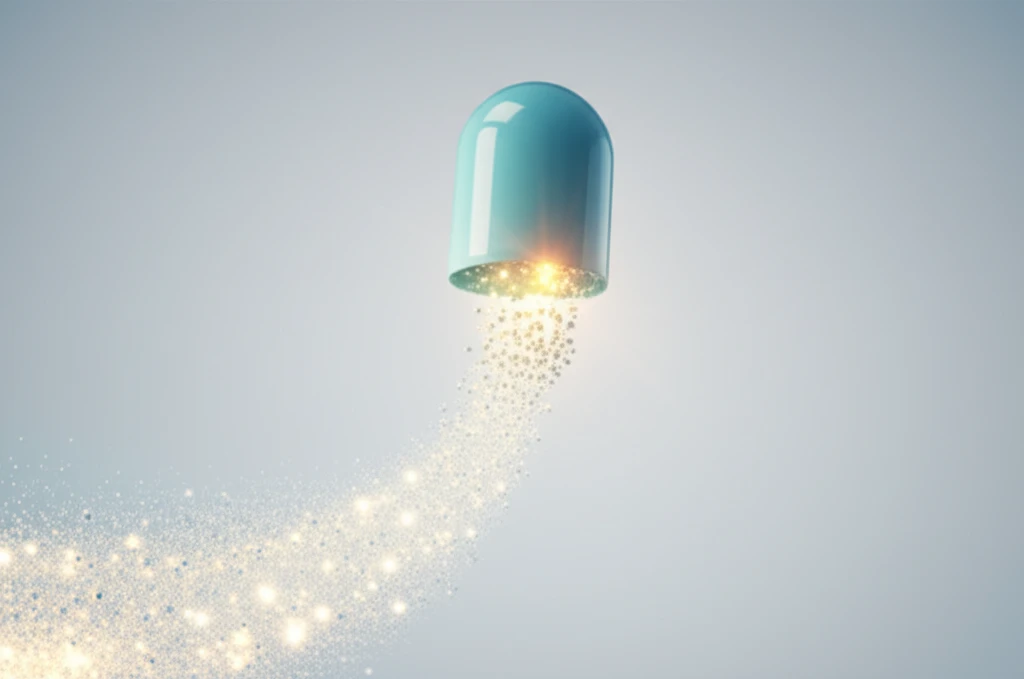
Medication capsule dissolving into light particles

Unlock Better Absorption: How Solid Dispersion Can Revolutionize Your Medication

"Struggling with medications that don't seem to work? Discover how solid dispersion, a cutting-edge technique, can dramatically improve drug absorption and effectiveness."


Imagine taking a medication, confident that it's working its way through your system, delivering the relief you need. But what if that pill isn't being fully absorbed? Poor drug solubility is a widespread problem in the pharmaceutical world. Many promising drug candidates never make it to market because they can't dissolve properly in the body, rendering them ineffective.

That's where solid dispersion comes in. This innovative technique tackles the issue head-on, transforming poorly soluble drugs into forms that are more easily absorbed by the body. By carefully dispersing the drug within a carrier matrix, solid dispersion enhances its dissolution rate and, ultimately, its bioavailability – the amount of drug that actually reaches your bloodstream and can exert its therapeutic effects.

Think of it like this: you're trying to dissolve sugar cubes in water. A single sugar cube dissolves slowly. But if you crush the sugar cube into fine particles and spread them evenly in the water, they dissolve much faster. Solid dispersion works on a similar principle, breaking down drug particles and dispersing them to maximize absorption.

What is Solid Dispersion and How Does it Work?

Medication capsule dissolving into light particles

Solid dispersion is essentially a technique where a drug is dispersed in an inert, solid carrier. This carrier can be crystalline or amorphous (non-crystalline). The goal is to create a system where the drug is present in a highly dispersed state, ideally at the molecular level. This increased dispersion leads to a larger surface area exposed to the body's fluids, which in turn enhances dissolution.

Several methods are used to create solid dispersions, each with its own advantages and disadvantages. The original research paper examines one method in particular: co-grinding. However, the general process involves:

  • Mixing: The drug and carrier are combined in a specific ratio.
  • Processing: The mixture is then processed using techniques like melting, solvent evaporation, or co-grinding.
  • Solidification: The mixture is then solidified, resulting in the solid dispersion.
The choice of carrier is crucial and depends on the drug's properties and the desired release profile. Common carriers include polymers like polyvinylpyrrolidone (PVP), polyethylene glycol (PEG), and sugars like mannitol.

The Future of Medication: Enhanced Absorption for Better Health

Solid dispersion represents a significant step forward in pharmaceutical technology. By addressing the challenge of poor drug solubility, this technique has the potential to transform countless medications, making them more effective and improving patient outcomes. As research continues, we can expect to see even more innovative applications of solid dispersion, paving the way for a future where medications are optimized for maximum absorption and therapeutic benefit.

About this Article -

This article was crafted using a human-AI hybrid and collaborative approach. AI assisted our team with initial drafting, research insights, identifying key questions, and image generation. Our human editors guided topic selection, defined the angle, structured the content, ensured factual accuracy and relevance, refined the tone, and conducted thorough editing to deliver helpful, high-quality information.See our About page for more information.

Everything You Need To Know

1

What is solid dispersion and how does it improve drug absorption?

Solid dispersion is a technique used in pharmaceuticals to enhance the absorption and bioavailability of drugs. It involves dispersing a drug within an inert, solid carrier. This process improves drug absorption by increasing the surface area of the drug exposed to bodily fluids, thereby accelerating its dissolution rate. The goal is to transform poorly soluble drugs into forms that are more easily absorbed, ultimately leading to more effective treatments. This method directly addresses the common problem of poor drug solubility which can limit a medication's effectiveness.

2

Why is drug solubility a significant problem in medication effectiveness, and how does solid dispersion solve it?

Poor drug solubility is a widespread issue, often causing promising drug candidates to fail because they cannot dissolve adequately in the body. This directly impacts the bioavailability of the drug, meaning less of the active ingredient reaches the bloodstream to provide therapeutic effects. Solid dispersion solves this by converting poorly soluble drugs into a form that is more easily absorbed. By dispersing the drug within a carrier matrix, it increases the drug's dissolution rate, thereby enhancing its bioavailability and ensuring more of the drug is available to exert its effects.

3

What are the key steps involved in creating solid dispersions, and what role does the carrier play?

The general process of creating solid dispersions involves three main steps: mixing, processing, and solidification. First, the drug and a carrier are combined in a specific ratio. Then, this mixture is processed using techniques like melting, solvent evaporation, or co-grinding. Finally, the mixture is solidified to create the solid dispersion. The choice of carrier is crucial, with common examples including polymers such as polyvinylpyrrolidone (PVP) and polyethylene glycol (PEG), or sugars like mannitol. The carrier's selection depends on the drug's properties and the desired release profile.

4

How does the co-grinding method relate to the broader concept of solid dispersion?

Co-grinding is one of the many processing methods used in the creation of solid dispersions. It involves grinding the drug and carrier together to achieve a high degree of dispersion at the molecular level. This is a specific approach under the larger umbrella of solid dispersion, alongside methods like melting and solvent evaporation. The aim of co-grinding, like other methods, is to enhance dissolution by increasing the surface area exposed to the body's fluids.

5

What is the potential future impact of solid dispersion on medication and patient health?

Solid dispersion represents a significant advancement in pharmaceutical technology by directly addressing the challenge of poor drug solubility. This technique has the potential to transform countless medications, making them more effective and improving patient outcomes. As research progresses, further innovative applications of solid dispersion are expected, leading to medications optimized for maximum absorption and therapeutic benefit. The end goal is a future where medications are highly effective due to improved bioavailability, improving overall health outcomes.

Newsletter Subscribe

Subscribe to get the latest articles and insights directly in your inbox.