
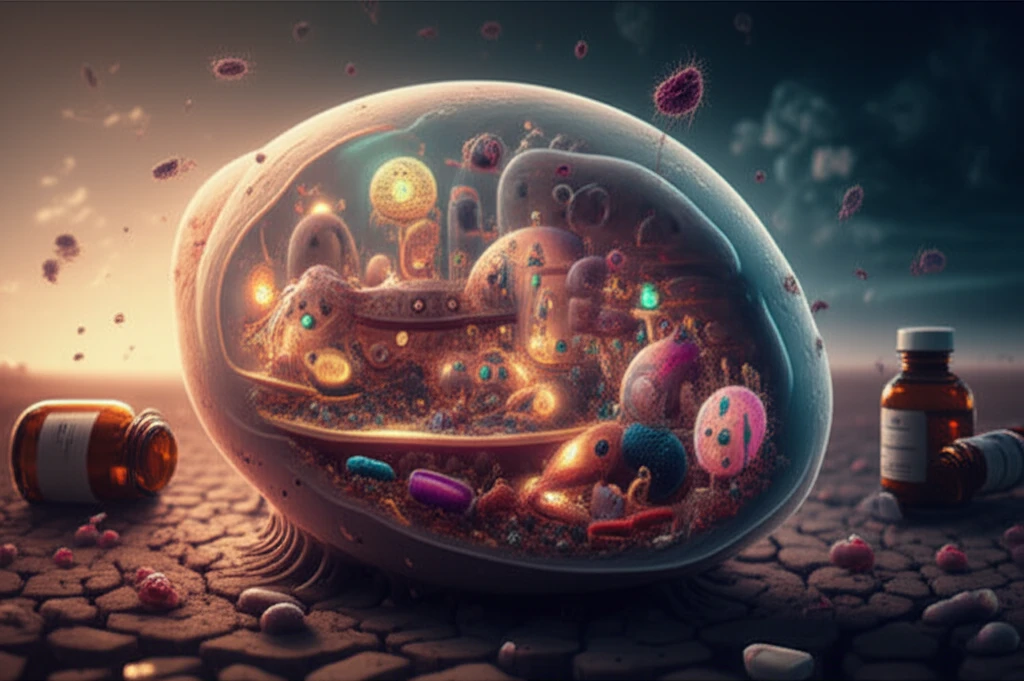
Microscopic view of bacteria thriving inside a protective amoeba.

Unlikely Roommates: How Bacteria Survive Inside Amoebas and What It Means for Your Health

"Scientists discover how Streptococcus pneumoniae and S. pyogenes hitchhike inside Acanthamoeba castellanii, potentially boosting their survival and spread."


Streptococcus pneumoniae and Streptococcus pyogenes are notorious bacteria, responsible for a range of illnesses from common sore throats and skin infections to serious conditions like pneumonia and meningitis. These bacteria affect millions worldwide, underscoring the need to understand how they survive and spread.

Acanthamoeba castellanii, a free-living amoeba, is commonly found in soil and water. While often harmless, Acanthamoeba can cause severe infections, particularly in individuals with weakened immune systems or contact lens wearers. Recent studies have uncovered a surprising interaction between Acanthamoeba and certain bacteria, suggesting these amoebas can act as hosts, sheltering bacteria from harm.

This article explores new research into how Streptococcus pneumoniae and Streptococcus pyogenes can not only survive within Acanthamoeba but also potentially enhance their ability to resist antibiotics and spread to new hosts. Understanding this microscopic relationship is crucial for developing better strategies to combat bacterial infections and protect public health.

Inside the Microscopic World: How Bacteria and Amoebas Interact

Microscopic view of bacteria thriving inside a protective amoeba.

The study investigated the interactions between Acanthamoeba castellanii and two types of Streptococcus bacteria: S. pneumoniae and S. pyogenes. Researchers sought to determine if these bacteria could associate with, invade, and survive within the amoebas. The findings revealed that both Streptococcus species were indeed capable of associating with A. castellanii.

The scientists observed that both S. pneumoniae and S. pyogenes could not only attach to the amoebas but also enter their cells. This process, known as invasion, allows the bacteria to hide from external threats, such as antibiotics and the host's immune system. The study further examined whether the bacteria could survive the amoebas' natural defense mechanisms.

  • Association: Both Streptococcus species attached to the amoebas.
  • Invasion: Bacteria entered the amoebas' cells, avoiding external threats.
  • Survival: Bacteria withstood the amoebas' defense mechanisms.
One of the most striking discoveries was the bacteria's ability to survive encystation, a process where amoebas form a protective cyst to withstand harsh conditions. The Streptococcus bacteria managed to survive inside these cysts, and when the cysts matured, the bacteria were released, ready to infect new hosts. This suggests that Acanthamoeba could act as a protective vessel, allowing bacteria to persist in the environment and spread more effectively.

What Does This Mean for Your Health?

The discovery that bacteria can survive and thrive within amoebas has significant implications for public health. It suggests that common bacteria like Streptococcus pneumoniae and Streptococcus pyogenes may have a hidden survival strategy, potentially increasing their ability to cause infections. As these bacteria can survive antibiotic exposure within amoebas, this could contribute to the growing problem of antibiotic resistance. Further research is needed to fully understand the extent of this threat and develop new ways to combat these infections. For now, practicing good hygiene, ensuring proper water sanitation, and following medical advice remain the best defenses against bacterial infections.

About this Article -

This article was crafted using a human-AI hybrid and collaborative approach. AI assisted our team with initial drafting, research insights, identifying key questions, and image generation. Our human editors guided topic selection, defined the angle, structured the content, ensured factual accuracy and relevance, refined the tone, and conducted thorough editing to deliver helpful, high-quality information.See our About page for more information.

Everything You Need To Know

1

What are the key findings regarding the interaction between Streptococcus pneumoniae, Streptococcus pyogenes, and Acanthamoeba castellanii?

The key findings reveal that both Streptococcus pneumoniae and Streptococcus pyogenes can associate with, invade, and survive within Acanthamoeba castellanii. Specifically, the bacteria attach to the amoebas, enter their cells (a process called invasion, which shields them from antibiotics and the host's immune system), and survive even during encystation, where the amoebas form protective cysts. Upon cyst maturation, the bacteria are released, ready to infect new hosts. This interaction suggests that Acanthamoeba castellanii acts as a protective vessel for the bacteria, enabling their persistence and spread.

2

How does Acanthamoeba castellanii assist in the survival and spread of Streptococcus pneumoniae and Streptococcus pyogenes?

Acanthamoeba castellanii provides a survival advantage to both Streptococcus pneumoniae and Streptococcus pyogenes by acting as a host and protective environment. The amoeba allows the bacteria to invade its cells, shielding them from external threats like antibiotics and the host's immune system. Furthermore, the bacteria can survive encystation, where the amoeba forms a protective cyst to endure harsh conditions. When the cyst matures, the bacteria are released, ready to infect new hosts. This mechanism enables the bacteria to persist in the environment and spread more effectively than they would on their own.

3

What are the potential health implications of the interaction between these bacteria and amoebas?

The interaction between Streptococcus pneumoniae, Streptococcus pyogenes, and Acanthamoeba castellanii has significant implications for public health. It suggests that these common bacteria have a hidden survival strategy that could increase their ability to cause infections. Since the bacteria can survive antibiotic exposure within the amoebas, this could contribute to the growing problem of antibiotic resistance. This means infections caused by these bacteria may become harder to treat, potentially leading to more severe illnesses and increased mortality. Further research is needed to understand the full extent of these implications and develop effective strategies to combat these infections.

4

What are the specific roles of Streptococcus pneumoniae and Streptococcus pyogenes in causing illnesses, and why is their survival strategy within Acanthamoeba concerning?

Streptococcus pneumoniae and Streptococcus pyogenes are both well-known bacterial pathogens responsible for a range of diseases. Streptococcus pneumoniae causes conditions like pneumonia and meningitis. Streptococcus pyogenes is responsible for infections ranging from sore throats and skin infections to more serious illnesses. The survival of these bacteria within Acanthamoeba castellanii is concerning because it potentially enhances their ability to resist antibiotics and spread to new hosts. The amoeba serves as a protective niche, allowing the bacteria to evade the host's immune system and survive exposure to antibiotics. This could lead to more frequent and severe infections that are harder to treat, posing a significant threat to public health.

5

How can we protect ourselves from infections caused by Streptococcus pneumoniae and Streptococcus pyogenes considering their interaction with Acanthamoeba castellanii?

While further research is needed to fully understand the implications of the interaction between Streptococcus pneumoniae, Streptococcus pyogenes, and Acanthamoeba castellanii, the best defenses against bacterial infections remain consistent. Practicing good hygiene, such as frequent handwashing, is crucial. Ensuring proper water sanitation is also essential, as Acanthamoeba castellanii is often found in water sources. Furthermore, following medical advice, including taking antibiotics as prescribed and getting appropriate vaccinations, can significantly reduce the risk of infection and limit the spread of these bacteria. Staying informed about public health recommendations and advancements in understanding these microscopic interactions is also vital for proactive health management.

Newsletter Subscribe

Subscribe to get the latest articles and insights directly in your inbox.