
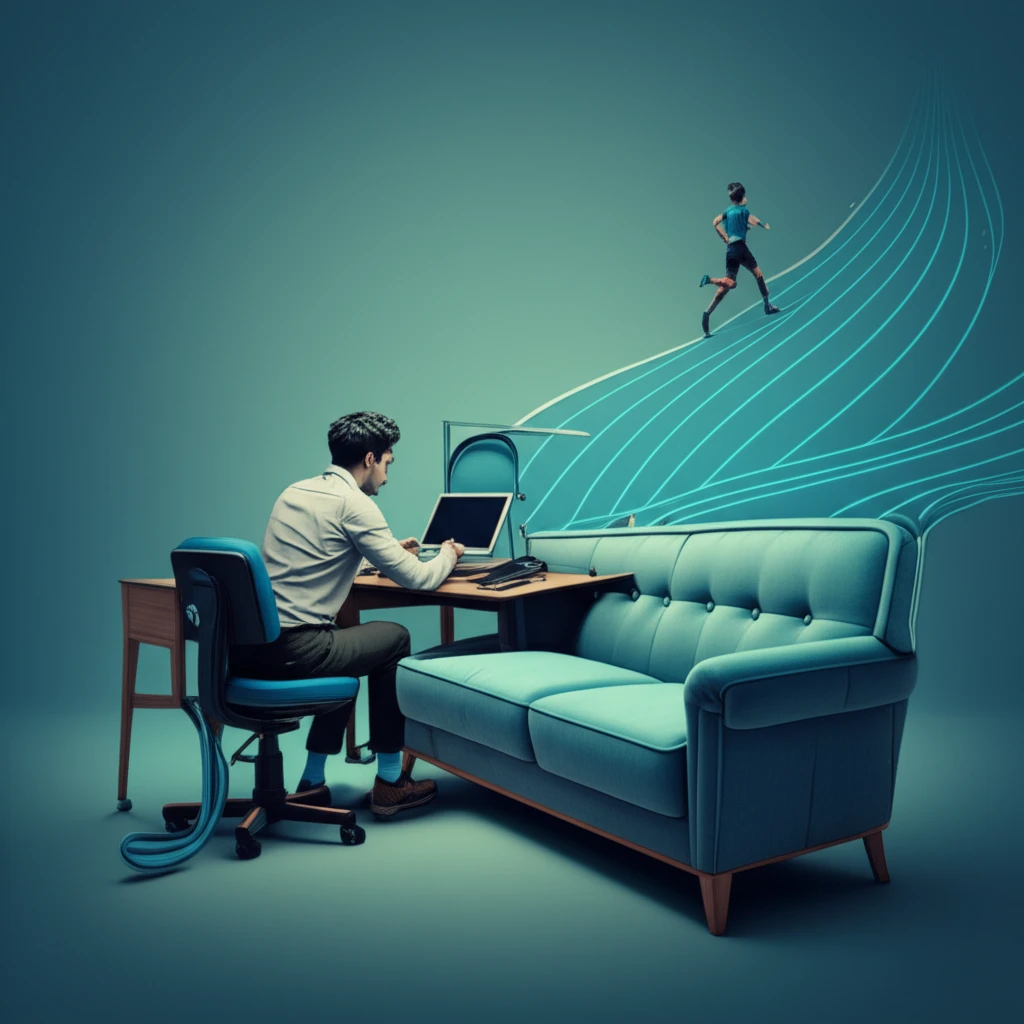
Uninterrupted Sitting: How Your 'Active Couch Potato' Lifestyle Impacts Your Health

"New research reveals the surprising disconnect between recreational exercise and the dangers of prolonged sedentary behavior in the workplace."
We all know physical activity (PA) is good for us, reducing the risk of chronic health conditions. Whether it's moderate-to-vigorous intensity PA (MVPA) or even light-intensity PA (LPA), every bit helps. But what about all that time we spend sitting? Sedentary behavior (SB), especially when we're glued to our desks at work, is now recognized as a health risk, independent of how much we exercise.
It turns out that being an 'active couch potato' – someone who meets their exercise goals but spends the rest of their time sitting – might not be as healthy as we think. There's a gap in our understanding of how people perceive the risks of SB and PA in different contexts, particularly at work versus during leisure time. Do people realize that even with regular workouts, a sedentary workday can still be harmful?
This article explores those perceptions, diving into a study that examines health beliefs about SB and PA among desk-based workers. Do employees and managers recognize the risks? And how do they feel about interventions aimed at reducing sitting time in the workplace?
The Active Couch Potato Paradox: Why Your Workout Might Not Be Enough
Researchers in Melbourne, Australia, surveyed 222 desk-based employees and 121 managers to gauge their health beliefs. Participants rated the healthiness of different scenarios involving sitting, breaks, light PA, and moderate-to-vigorous PA, both at work and during leisure time. They also shared their thoughts on reducing sitting in the workplace.
- The Good News: Participants recognized the general benefits of physical activity, with more intense PA perceived as healthier. They also viewed recreational activities as healthier than occupational ones.
- The Catch: Occupational MVPA was considered less healthy than recreational MVPA, highlighting a potential perception that workplace activity is more strenuous or less enjoyable.
- The Active Couch Potato Effect: The presence of leisure-time PA significantly reduced concerns about the health risks of workplace sitting.
- Main Concerns: Participants primarily worried about musculoskeletal issues and workplace performance rather than long-term chronic health problems related to sitting.
Rethinking Workplace Wellness: It's Time to Stand Up!
The study underscores the importance of addressing sedentary behavior in the workplace, not in isolation, but in conjunction with workers' existing beliefs about physical activity. Interventions should highlight the specific health risks of prolonged sitting, even for those who are active outside of work. By increasing awareness and promoting strategies to reduce sitting time, organizations can create a healthier and more productive work environment.