
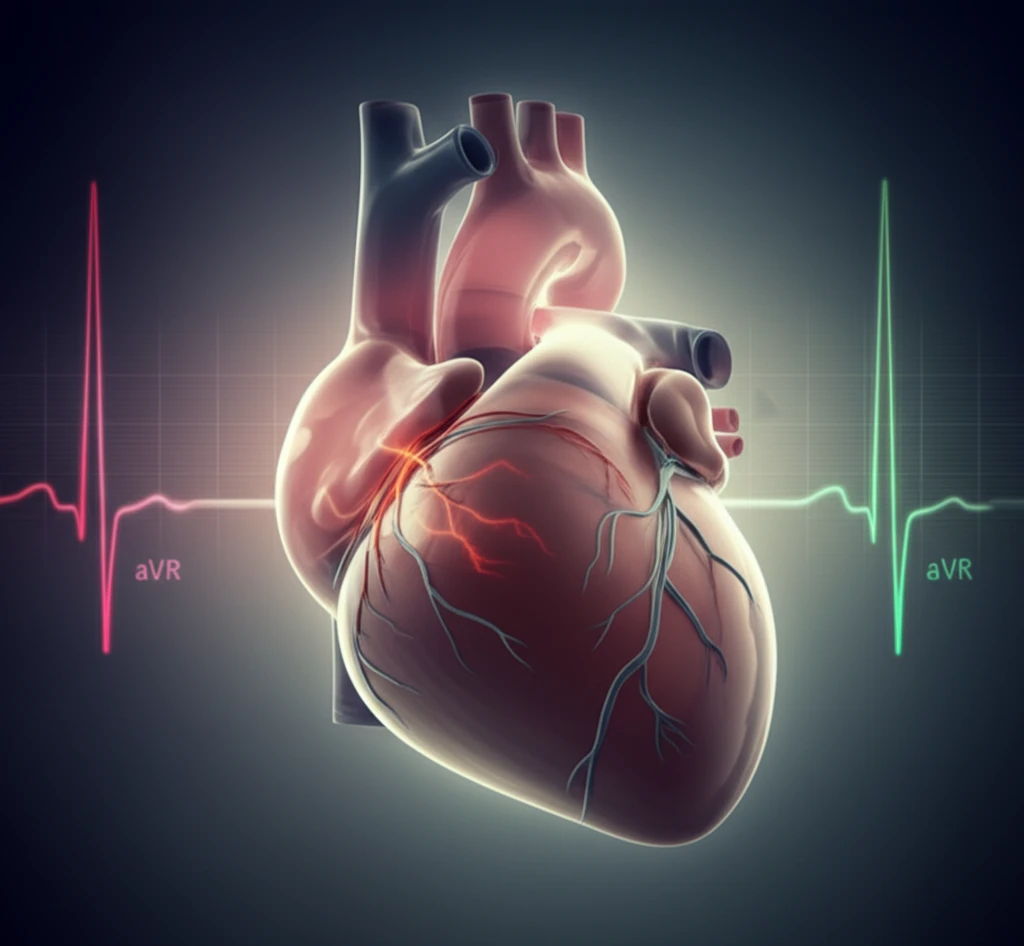
Surreal illustration of a heart showing an ECG readout with aVR lead highlighted and a spasm in the left main coronary artery.

Unexplained Chest Pain? A Rare Heart Condition You Should Know About

"Discover how a seemingly rare heart condition, left main coronary artery vasospasm, can cause acute myocardial infarction and the importance of recognizing subtle ECG changes for timely diagnosis."


Chest pain is a common symptom that sends many people to the emergency room. While many causes are well-known, some rare conditions can also trigger this alarming symptom. One such condition is left main coronary artery (LMCA) vasospasm, a sudden narrowing of the main artery that supplies blood to the left side of the heart. Recognizing this condition is crucial, as it can lead to a severe heart attack if not promptly addressed.

The left main coronary artery is a critical vessel. When it experiences a spasm, it can cause a significant reduction in blood flow, leading to a myocardial infarction (heart attack). What makes this particular type of heart attack unusual is that it can be identified by specific changes on an electrocardiogram (ECG), particularly ST-segment elevation in the aVR lead.

In a medical case reported by Jung and Kang (2012), a 35-year-old woman presented with chest pain and was diagnosed with acute myocardial infarction due to LMCA vasospasm. This case highlights the importance of considering coronary artery spasm, even in the absence of fixed blockages, and recognizing subtle ECG patterns for accurate and timely intervention.

Decoding the ECG: Spotting the Subtle Signs

Surreal illustration of a heart showing an ECG readout with aVR lead highlighted and a spasm in the left main coronary artery.

An electrocardiogram (ECG) is a vital tool for assessing heart conditions. In cases of LMCA vasospasm, specific ECG changes can provide critical clues. One such change is ST-segment elevation in the aVR lead, which indicates reduced blood flow to the heart. This finding, coupled with ST-segment depression in other leads (like V3-6, I, aVL, II, and aVF), suggests a possible LMCA issue.

These ECG patterns are not always obvious. The ST-segment changes can be subtle, making it essential for healthcare professionals to carefully analyze the ECG in conjunction with the patient's symptoms. Recognizing these patterns early can lead to prompt diagnosis and treatment, potentially preventing severe heart damage.

  • ST-segment elevation in aVR lead.
  • ST-segment depression in leads V3-6, I, aVL, II, aVF.
  • Chest pain or discomfort.
  • Elevated cardiac enzyme levels.
Consider the 35-year-old woman in the reported case. Her initial ECG revealed 2-mm ST-segment depression in leads V3-6 and up to 1-mm ST-segment depression in leads I, aVL, II, aVF, along with a 2-mm ST-segment elevation in the aVR lead. These findings, combined with her chest pain and elevated cardiac enzyme levels, led to the diagnosis of acute myocardial infarction caused by LMCA vasospasm.

Don't Ignore the Warning Signs

Coronary artery spasm, though infrequent, is a significant cause of chest pain and myocardial ischemia. Recognizing the subtle signs and symptoms, especially the ECG changes, can help in early diagnosis and treatment. It's important not to ignore chest pain, as prompt medical evaluation can prevent severe heart damage and improve outcomes. Always consult a healthcare professional if you experience unexplained chest pain or discomfort.

About this Article -

This article was crafted using a human-AI hybrid and collaborative approach. AI assisted our team with initial drafting, research insights, identifying key questions, and image generation. Our human editors guided topic selection, defined the angle, structured the content, ensured factual accuracy and relevance, refined the tone, and conducted thorough editing to deliver helpful, high-quality information.See our About page for more information.

This article is based on research published under:

DOI-LINK: 10.4070/kcj.2012.42.1.50, Alternate LINK

Title: A Case Of Acute Myocardial Infarction With St-Segment Elevation In A Lead Augmented Right Vector Caused By A Left Main Coronary Artery Vasospasm

Subject: Cardiology and Cardiovascular Medicine

Journal: Korean Circulation Journal

Publisher: The Korean Society of Cardiology

Authors: Kyong Yeun Jung, Tae Soo Kang

Published: 2012-01-01

Everything You Need To Know

1

What is left main coronary artery vasospasm, and why is it important to recognize?

Left main coronary artery (LMCA) vasospasm is a sudden narrowing of the main artery that supplies blood to the left side of the heart. This narrowing can significantly reduce blood flow, potentially leading to a myocardial infarction (heart attack). It's crucial to recognize this condition because prompt intervention can prevent severe heart damage. Early recognition is often aided by observing specific changes on an electrocardiogram (ECG), especially ST-segment elevation in the aVR lead. The case of the 35-year-old woman highlights the importance of considering coronary artery spasm, even in the absence of fixed blockages.

2

Why is an electrocardiogram (ECG) so vital in diagnosing this type of chest pain?

An electrocardiogram (ECG) is crucial because it can reveal specific changes indicative of left main coronary artery (LMCA) vasospasm. Key indicators include ST-segment elevation in the aVR lead, along with ST-segment depression in leads such as V3-6, I, aVL, II, and aVF. While these changes can be subtle, recognizing them early is essential for prompt diagnosis and treatment. Detecting these patterns, combined with a patient's symptoms and elevated cardiac enzyme levels, enables healthcare professionals to consider LMCA vasospasm, even when other causes might be more immediately apparent.

3

Why is ST-segment elevation in the aVR lead a significant indicator?

ST-segment elevation in the aVR lead is a significant indicator because it can suggest reduced blood flow to the heart, particularly in the context of left main coronary artery (LMCA) vasospasm. When combined with ST-segment depression in other leads (like V3-6, I, aVL, II, and aVF), it forms a pattern that raises suspicion for LMCA vasospasm. It's important to note that ST-segment elevation in aVR can also be present in other cardiac conditions, such as proximal left anterior descending (LAD) artery occlusion, so a comprehensive evaluation is always necessary.

4

What happens if left main coronary artery (LMCA) vasospasm is not treated quickly?

If left main coronary artery (LMCA) vasospasm is not promptly addressed, the reduced blood flow to the heart can lead to a myocardial infarction (heart attack), potentially causing significant and lasting heart damage. Early diagnosis and treatment are crucial to prevent these severe outcomes. The case of the 35-year-old woman underscores the importance of considering this condition, even in the absence of fixed blockages, as timely intervention can significantly improve patient outcomes.

5

Does vasospasm only occur in the left main coronary artery, or can it happen elsewhere?

While the focus is on left main coronary artery (LMCA) vasospasm, other coronary arteries can also experience vasospasms. For instance, vasospasm in the right coronary artery or the left anterior descending (LAD) artery can also lead to myocardial ischemia and chest pain. Additionally, other conditions like Prinzmetal's angina (variant angina) can cause coronary artery spasms. It's essential for healthcare professionals to consider the possibility of coronary artery spasm, regardless of which artery is affected, especially when patients present with unexplained chest pain and ECG changes.

Newsletter Subscribe

Subscribe to get the latest articles and insights directly in your inbox.