
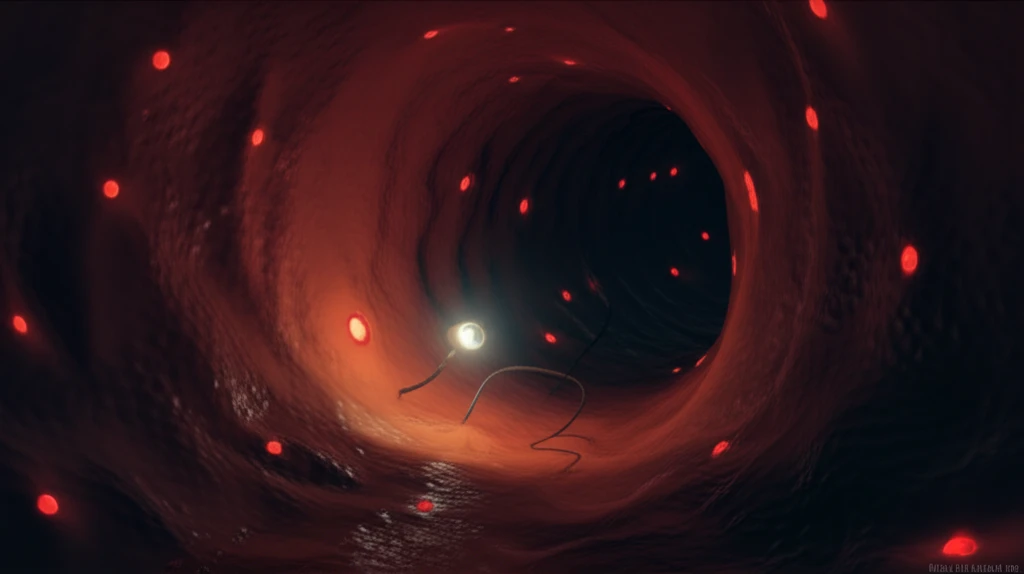
Small bowel capsule endoscopy showing P1 lesions

Unexplained Anemia? The Role of Capsule Endoscopy in Finding Hidden Bleeding

"Discover how small bowel capsule endoscopy (SBCE) can uncover the mystery behind iron-deficiency anemia, especially when other tests come back negative."


Feeling tired, weak, and just not yourself? If you're a woman, you might brush it off as just another busy day. But if these symptoms persist, especially with pale skin, brittle nails, and frequent headaches, it could be iron-deficiency anemia (IDA). And while it's easy to assume it's just your diet, sometimes, the real culprit is hiding where you least expect it: your small intestine.

Iron-deficiency anemia (IDA) is a common condition, particularly affecting women. While menstrual blood loss is a well-known cause, gastrointestinal (GI) bleeding often plays a significant role. When routine tests like upper endoscopy and colonoscopy come back clear, the search for the source of bleeding can become frustrating. That's where small bowel capsule endoscopy (SBCE) comes in—a high-tech tool that allows doctors to see deep into your small intestine and identify hidden lesions.

This article explores the use of SBCE in diagnosing iron-deficiency anemia, especially when other tests are inconclusive. We'll examine the findings from a recent study on "P1 lesions," small abnormalities found during SBCE, and discuss what they mean for your health. Whether you're dealing with unexplained anemia or simply curious about the latest in diagnostic technology, this guide will provide you with insights and actionable information.

What are P1 Lesions and Why Do They Matter?

Small bowel capsule endoscopy showing P1 lesions

During a SBCE, the camera sends back images of your small intestine. These images are carefully reviewed by doctors, who classify any abnormalities they find. One such classification is “P1 lesions,” which include red spots or small erosions on the intestinal lining. While they might sound alarming, P1 lesions are often of uncertain significance.

A key point of the original study was to better understand P1 lesions as previous studies have focused on P2 lesions and their risk factors, but little is known about P1 lesions. Researchers aimed to determine if there were any specific risk factors associated with P1 lesions and to assess the long-term outcomes for patients who have them.

  • Study Design: The study involved 100 patients with IDA who underwent SBCE. Patients were divided into two groups: those with P1 lesions and those without (the control group).
  • Key Findings: The study found that the use of non-steroidal anti-inflammatory drugs (NSAIDs) was significantly associated with a higher risk of P1 lesions. However, the long-term outcomes for patients with P1 lesions were similar to those without, meaning that P1 lesions themselves may not be a significant cause for concern.
  • Further Investigations: The study highlighted that patients with P1 lesions were less likely to undergo additional testing compared to those without any lesions. This suggests that doctors might view P1 lesions as a potential explanation for the anemia, without pursuing further investigation.
In essence, while P1 lesions are commonly found during SBCE in patients with IDA, they might not be the primary cause of the anemia. The important thing is to identify them and work with a doctor to understand the potential causes.

What this Means for You

If you're struggling with iron-deficiency anemia and your doctor has recommended a small bowel capsule endoscopy, don't be alarmed if they find P1 lesions. Understand that these findings are common and not necessarily a cause for concern. Work closely with your healthcare provider to explore all potential causes of your anemia, including your medication use and other underlying health conditions. With careful investigation and personalized treatment, you can find the answers you need to improve your health and well-being.

About this Article -

This article was crafted using a human-AI hybrid and collaborative approach. AI assisted our team with initial drafting, research insights, identifying key questions, and image generation. Our human editors guided topic selection, defined the angle, structured the content, ensured factual accuracy and relevance, refined the tone, and conducted thorough editing to deliver helpful, high-quality information.See our About page for more information.

This article is based on research published under:

DOI-LINK: 10.3748/wjg.v22.i38.8568, Alternate LINK

Title: Uncovering The Uncertainty: Risk Factors And Clinical Relevance Of P1 Lesions On Small Bowel Capsule Endoscopy Of Anemic Patients

Subject: Gastroenterology

Journal: World Journal of Gastroenterology

Publisher: Baishideng Publishing Group Inc.

Authors: Tiago Cúrdia Gonçalves, Mara Barbosa, Bruno Rosa, Maria João Moreira, José Cotter

Published: 2016-01-01

Everything You Need To Know

1

What is iron-deficiency anemia (IDA), and why is it significant?

Iron-deficiency anemia (IDA) is a condition where your body doesn't have enough iron, leading to symptoms like fatigue and weakness. While it's often linked to menstrual blood loss in women, gastrointestinal (GI) bleeding is a significant, sometimes hidden, cause. Understanding IDA is crucial because it can signal underlying health issues that need attention.

2

What is small bowel capsule endoscopy (SBCE), and why is it used?

Small bowel capsule endoscopy (SBCE) is a diagnostic procedure where you swallow a tiny camera inside a capsule. It travels through your small intestine, taking pictures and allowing doctors to identify abnormalities. SBCE is important because it can detect sources of bleeding in the small intestine, especially when other tests like upper endoscopy and colonoscopy come back normal. This helps pinpoint the cause of iron-deficiency anemia (IDA) when other tests are inconclusive, allowing for targeted treatment.

3

What are P1 lesions, and what do they mean?

P1 lesions are small abnormalities, like red spots or erosions, found in the small intestine during SBCE. They are commonly observed in patients with iron-deficiency anemia (IDA). They might be a factor, but not necessarily the main cause. While the presence of P1 lesions doesn't always directly lead to severe health issues, they suggest the need to investigate other potential causes of anemia. In a study, the use of non-steroidal anti-inflammatory drugs (NSAIDs) was linked with a higher risk of P1 lesions.

4

What are the implications of undergoing a small bowel capsule endoscopy if you have iron-deficiency anemia?

If you're dealing with unexplained iron-deficiency anemia (IDA), the implications of SBCE and any findings like P1 lesions include the need for further investigation. It is important to explore potential causes, such as medication use and other underlying health conditions, in conjunction with your doctor. A diagnosis from a SBCE can lead to more tailored treatment, which is a crucial step toward resolving the anemia and improving overall health.

5

What should I do if P1 lesions are found during my small bowel capsule endoscopy (SBCE)?

If P1 lesions are identified during your small bowel capsule endoscopy (SBCE), it doesn't always mean they are the sole cause of your iron-deficiency anemia (IDA). It's essential to discuss this finding with your healthcare provider to explore all potential causes. This includes reviewing your medications, lifestyle, and any other underlying conditions. Follow-up tests may be required to provide a comprehensive understanding of the underlying cause of IDA, this could lead to more effective management and better long-term health outcomes.

Newsletter Subscribe

Subscribe to get the latest articles and insights directly in your inbox.