
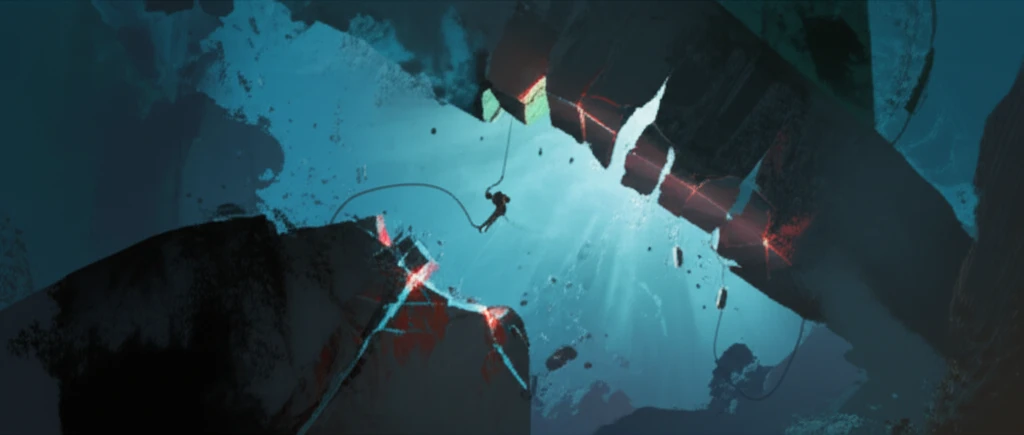
Fractured underwater weld joint illustrating structural failure.

Underwater Welding Woes: Cracking the Code to Failure Prevention

"A deep dive into the factors that lead to fracture in underwater welding joints, and what can be done to improve their structural integrity."


In the vast expanse of our oceans, a silent but crucial process unfolds: underwater welding. This technique is indispensable for the construction, maintenance, and repair of marine structures, from oil rigs to pipelines and ship hulls. However, the underwater environment presents unique challenges that can compromise the integrity of welded joints, leading to fracture and failure. Understanding these challenges and developing strategies to prevent them is paramount for ensuring the safety and longevity of underwater infrastructure.

Unlike welding performed in the controlled conditions of a workshop, underwater welding is subject to the harsh realities of the marine environment. The rapid cooling caused by the surrounding water, the presence of high levels of hydrogen, and the difficulty in maintaining a stable welding arc all contribute to the formation of defects in the weld. These defects, such as pores, cracks, and hardened microstructures, can significantly weaken the joint and make it susceptible to fracture.

Recent research has focused on identifying the key factors that contribute to fracture failure in underwater welding joints. By examining the microstructure, hardness, and fracture morphology of these joints, scientists are gaining valuable insights into the mechanisms at play. This knowledge is essential for developing improved welding techniques, selecting appropriate materials, and implementing effective inspection and repair strategies.

What Causes Underwater Welds to Fail?

Fractured underwater weld joint illustrating structural failure.

The structural integrity of underwater welds is often compromised by a combination of factors, each contributing to the potential for fracture. Understanding these factors is crucial for developing effective prevention strategies. The presence of cracks is a particularly significant concern.

Cracks act as stress concentrators, weakening the weld and providing a pathway for failure. These cracks can arise from a variety of sources, including:

  • Rapid Cooling: The rapid cooling rate associated with underwater welding promotes the formation of hardened microstructures like martensite, which are brittle and prone to cracking.
  • Hydrogen Embrittlement: The high hydrogen content in the underwater welding environment can lead to hydrogen cracking, a phenomenon where hydrogen atoms diffuse into the weld metal and cause it to become brittle and fracture.
  • Welding Defects: Defects such as pores and slag inclusions can also act as crack initiation sites, further weakening the weld.
These cracks tend to propagate along the welding line, and this expansion process often generates a dimpled fracture surface. Under the continuous action of tensile forces, the cracks continue to grow until the joint eventually fails. The key to preventing fracture, therefore, lies in minimizing the formation and propagation of these cracks.

Toward Stronger, Safer Underwater Welds

The research into fracture failure in underwater welding joints offers valuable insights for improving the reliability and safety of marine infrastructure. By understanding the mechanisms that lead to failure, engineers can develop more effective welding techniques, select more appropriate materials, and implement more robust inspection and repair strategies. Further research is needed to explore the potential of advanced welding processes, such as friction stir welding and laser welding, for underwater applications. These processes offer the potential to produce welds with superior mechanical properties and reduced susceptibility to cracking. With continued innovation and a commitment to quality, we can ensure the long-term integrity of underwater infrastructure and protect our oceans from the risks of structural failure.

About this Article -

This article was crafted using a human-AI hybrid and collaborative approach. AI assisted our team with initial drafting, research insights, identifying key questions, and image generation. Our human editors guided topic selection, defined the angle, structured the content, ensured factual accuracy and relevance, refined the tone, and conducted thorough editing to deliver helpful, high-quality information.See our About page for more information.

This article is based on research published under:

DOI-LINK: 10.1088/1757-899x/274/1/012134, Alternate LINK

Title: Research On Fracture Failure Of The Underwater Welding Joint

Subject: General Medicine

Journal: IOP Conference Series: Materials Science and Engineering

Publisher: IOP Publishing

Authors: Xiangfeng Kong, Feng Qiu, Jing Zhang, Yan Zou, Dongzhi Chu

Published: 2017-12-01

Everything You Need To Know

1

What is underwater welding and why is it so important?

Underwater welding is a crucial process for constructing, maintaining, and repairing marine structures. It is essential for oil rigs, pipelines, and ship hulls. Its significance lies in enabling the functionality of these critical components within the marine environment. Failure in these welds can lead to severe consequences including environmental damage, economic losses, and potential loss of life. By understanding and mitigating the issues associated with underwater welding, we can ensure the safety and longevity of underwater infrastructure.

2

What are the main challenges that make underwater welding prone to failure?

The rapid cooling caused by the surrounding water, high levels of hydrogen, and difficulty in maintaining a stable welding arc contribute to the formation of defects. Rapid Cooling promotes the formation of hardened microstructures such as martensite, which are brittle and prone to cracking. The high hydrogen content in the underwater environment can lead to hydrogen cracking, making the weld metal brittle. Defects like pores and slag inclusions can also act as crack initiation sites. These factors weaken the weld and make it susceptible to fracture.

3

How do cracks lead to the failure of underwater welds?

Cracks act as stress concentrators, weakening the weld and creating pathways for failure. These can arise from rapid cooling, which promotes the formation of brittle microstructures, and from hydrogen embrittlement, where hydrogen atoms cause the metal to become brittle. Welding defects like pores and slag inclusions can also act as crack initiation sites. These cracks propagate under tensile forces until the joint fails, highlighting the importance of preventing their formation and propagation.

4

What is hydrogen embrittlement and why is it a problem in underwater welding?

Hydrogen embrittlement happens when hydrogen atoms enter the weld metal and cause it to become brittle and prone to fracture. This is particularly relevant in underwater welding because the marine environment often contains high levels of hydrogen. This is a significant concern because it can weaken the weld, making it more susceptible to cracking and ultimately, failure. Understanding and mitigating hydrogen embrittlement is therefore a key factor in ensuring the reliability and safety of underwater welded joints.

5

How can the reliability of underwater welds be improved?

Scientists and engineers are developing ways to improve underwater welds by understanding the mechanisms that lead to failure. This involves refining welding techniques, choosing appropriate materials, and implementing robust inspection and repair strategies. Further research could explore advanced welding processes such as friction stir welding and laser welding for underwater applications. These processes potentially offer superior mechanical properties and reduce susceptibility to cracking, thus helping to ensure the long-term integrity and safety of underwater infrastructure.

Newsletter Subscribe

Subscribe to get the latest articles and insights directly in your inbox.