
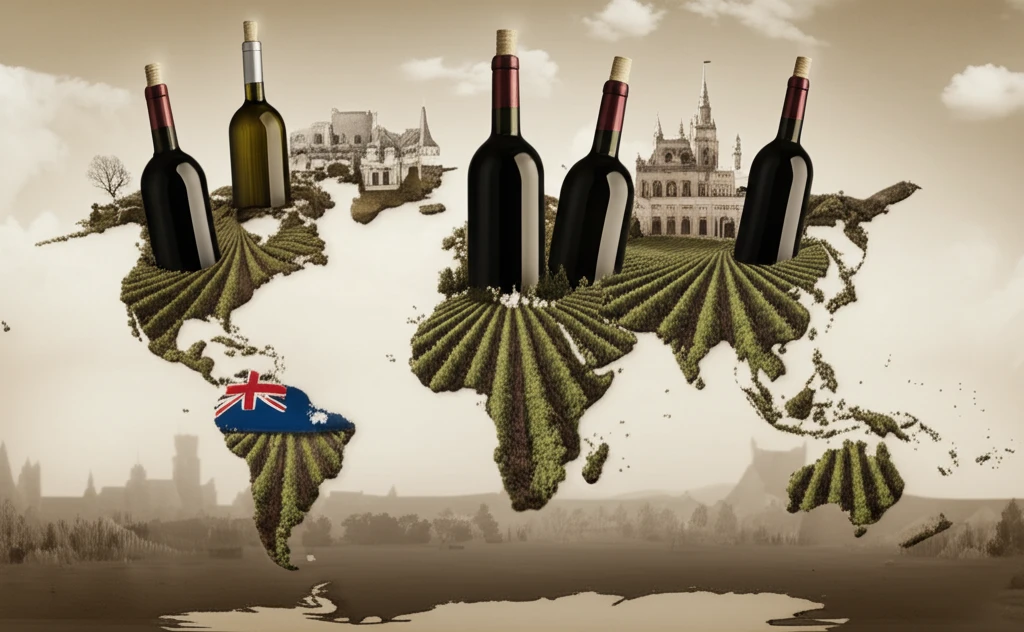
World map with vineyards in New World countries and wine bottle skyscrapers.

Uncorking Success: What's Behind the Rise of New World Wines?

"Explore the shift in global wine dominance and how New World producers are reshaping the industry."


For centuries, the Old World—Europe—dictated the global wine scene. Countries like France and Italy held an almost unshakeable grip on production, consumption, and export. But the last few decades have witnessed a dramatic shift. New World wine producers—think Australia, the United States, Chile, and Argentina—have emerged as major players, captivating consumers with their distinct styles and challenging the established order.

This rise wasn't accidental. It's the result of complex interplay of factors, ranging from evolving consumer tastes and innovative production techniques to strategic marketing and even governmental support. Understanding these dynamics is crucial for anyone involved in the wine industry, from producers and distributors to retailers and consumers.

This article delves into the fascinating story of New World wine success. We'll explore the key elements that have enabled these regions to not only compete but often thrive in a market long dominated by European tradition. By examining the economic and consumer trends driving this transformation, we'll uncover the secrets behind the uncorking of a new era in the world of wine.

The Shifting Palate: How Consumer Preferences Fueled the New World Wine Boom

World map with vineyards in New World countries and wine bottle skyscrapers.

One of the primary drivers behind the rise of New World wines is a fundamental shift in consumer preferences. Traditional European wines often come with a certain level of complexity and, for some, a barrier to entry. New World wines, on the other hand, have often been characterized by their fruit-forward profiles and straightforward labeling, making them more accessible to a broader audience.

Consider these factors driving this shift:

  • Accessibility: New World wines often emphasize varietal labeling (e.g., Chardonnay, Cabernet Sauvignon) rather than obscure regional designations, simplifying the selection process for novice wine drinkers.
  • Fruit-Forward Flavors: Many New World wines are known for their bolder, more pronounced fruit flavors, appealing to palates seeking immediate gratification.
  • Innovation: New World producers have been quicker to adopt new technologies and winemaking techniques, allowing them to fine-tune their wines to match evolving tastes.
  • Value Proposition: New World wines often offer excellent quality for the price, attracting consumers looking for affordable luxury.
This isn't to say that Old World wines are declining in popularity. Rather, the emergence of New World wines has broadened the appeal of wine in general, attracting new consumers and creating a more dynamic global market.

The Future of Wine: A World of Blended Traditions and Innovation

The success story of New World wines isn't just about market share; it's a testament to the power of innovation, adaptation, and understanding evolving consumer preferences. As the global wine market continues to evolve, we can expect to see a blend of Old World traditions and New World ingenuity, resulting in a more diverse and exciting landscape for wine lovers around the world.

About this Article -

This article was crafted using a human-AI hybrid and collaborative approach. AI assisted our team with initial drafting, research insights, identifying key questions, and image generation. Our human editors guided topic selection, defined the angle, structured the content, ensured factual accuracy and relevance, refined the tone, and conducted thorough editing to deliver helpful, high-quality information.See our About page for more information.

Everything You Need To Know

1

What are the key differences between Old World and New World wines that have led to the latter's rise in popularity?

The rise of New World wines stems from several key differences compared to Old World wines. One significant factor is accessibility; New World producers, such as those in the United States, Australia, Chile, and Argentina, often use varietal labeling (e.g., Chardonnay, Cabernet Sauvignon), making it easier for consumers to understand the wine's characteristics. This contrasts with the Old World's tradition of using regional designations, which can be confusing for those unfamiliar with the nuances of European wine regions like France and Italy. Additionally, New World wines tend to have fruit-forward flavors, appealing to a broader range of palates, while Old World wines may have more complex flavor profiles that require more experienced tasting. The value proposition also plays a role, with many New World wines offering excellent quality at a more affordable price point.

2

How did consumer preferences influence the success of New World wines?

Consumer preferences were pivotal in the success of New World wines. A shift towards wines that are easier to understand and enjoy, with bolder flavors, paved the way for their popularity. New World producers recognized and catered to this shift. They often prioritized fruit-forward flavors and simpler labeling, making their wines more approachable for novice wine drinkers. Furthermore, the emphasis on value, offering high-quality wines at competitive prices, attracted consumers seeking affordable luxury. These factors combined created a strong appeal, drawing new consumers into the world of wine and contributing to the New World's dominance.

3

What innovative practices did New World producers employ to gain an advantage over the established Old World wine producers?

New World producers embraced innovation to gain a competitive edge. They were quicker to adopt new technologies and winemaking techniques compared to traditional Old World wineries. This allowed them to fine-tune their wines to align with evolving consumer tastes. For example, they invested in modern equipment to control fermentation and aging processes, which is not the case in the production of the Old World wines. This willingness to experiment and adapt helped New World producers offer consistent quality and appeal to a broader consumer base, distinguishing them from the sometimes rigid traditions of European winemaking.

4

Besides consumer preference and innovative practices, what other factors contributed to the success of New World wines?

Beyond consumer preferences and innovative practices, strategic marketing and even governmental support contributed to the success of New World wines. New World producers were adept at promoting their wines, emphasizing their unique characteristics, and reaching new markets. Additionally, in some cases, governmental policies provided support for the wine industry, which aided in production, distribution, and export. These combined factors created a favorable environment for New World wines to flourish, challenging the long-standing dominance of Old World producers.

5

In what ways is the future of the global wine market expected to evolve, given the rise of New World wines?

The future of the global wine market is expected to feature a blend of Old World traditions and New World ingenuity. As New World wines have gained prominence, they have broadened the appeal of wine, attracting new consumers and creating a more dynamic market. The global wine market is expected to become more diverse and exciting as both Old World and New World producers continue to innovate and adapt to changing consumer preferences. This could lead to a wider variety of wine styles and greater availability of high-quality wines at various price points, making the world of wine more accessible and enjoyable for everyone.

Newsletter Subscribe

Subscribe to get the latest articles and insights directly in your inbox.