
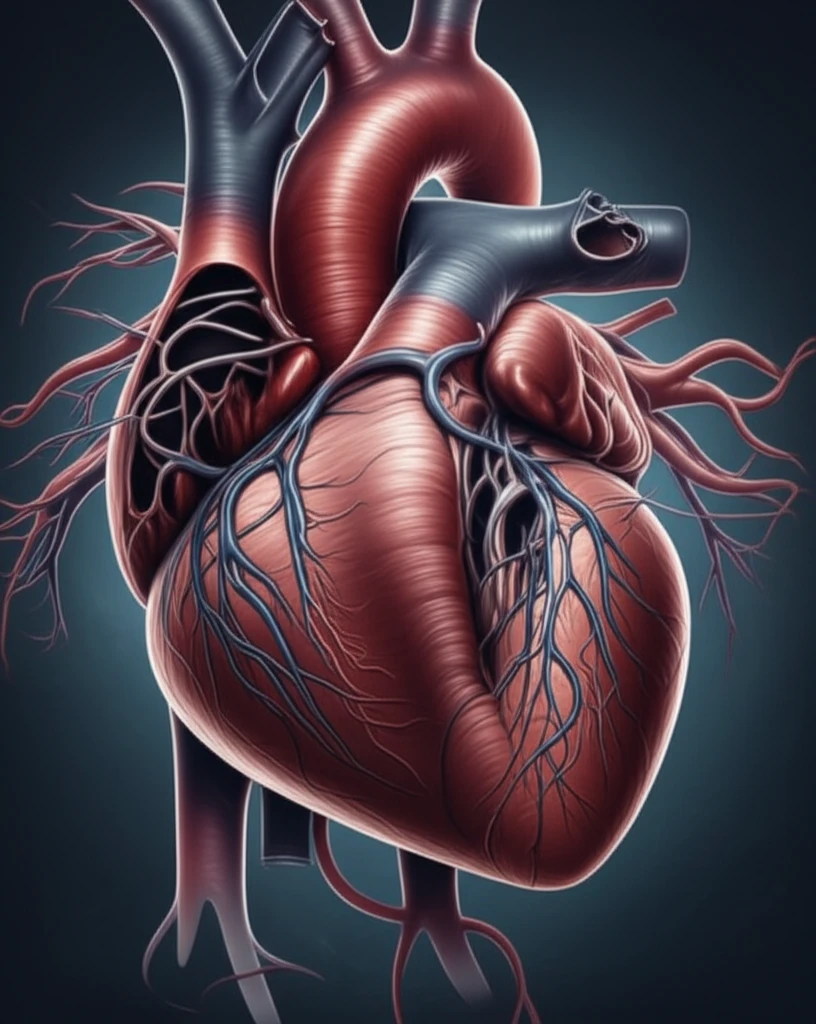
Surreal illustration of a heart with a fragmented right ventricle and microvascular system.

Uncommon Heart Condition Link: When ARVC Mimics Cardiac Microvascular Disease

"Explore the rare connection between Arrhythmogenic Right Ventricular Cardiomyopathy (ARVC) and cardiac microvascular disease, uncovering potential risks and diagnostic challenges."


Arrhythmogenic Right Ventricular Cardiomyopathy (ARVC) is a heart condition marked by dangerous ventricular arrhythmias, an elevated risk of sudden cardiac death (SCD), and impaired right ventricular function. It's like a perfect storm in your heart, where electrical glitches meet structural changes, potentially leading to life-threatening events.

Microvascular disease occurs when the small blood vessels of the heart don't dilate properly, limiting blood flow. This can lead to chest pain and other symptoms, even when the main coronary arteries appear normal. It’s like having a hidden network of tiny blockages that starve your heart muscle of oxygen.

Normally, these conditions are seen as separate issues, but what happens when they occur together? This article explores a fascinating case study that suggests a possible link between ARVC and cardiac microvascular disease, raising important questions about diagnosis, risk assessment, and treatment strategies.

A Unique Case: ARVC Masquerading as Microvascular Disease

Surreal illustration of a heart with a fragmented right ventricle and microvascular system.

In 1999, a 59-year-old woman with a history of "crescendo" angina (increasingly frequent and severe chest pain) underwent evaluation. Her father had died at age 60 from a heart attack, adding to the concern. Initially, her physical examination seemed normal, and an electrocardiogram (ECG) showed a regular sinus rhythm with some minor T-wave abnormalities.

However, further tests revealed troubling signs:

  • Echocardiogram: Showed dilation and reduced ejection fraction in the right ventricle, but no issues in the left ventricle.
  • 24-hour ECG (Holter monitor): Recorded two episodes of ST-segment depression, coinciding with chest pain.
  • Treadmill stress test: Provoked chest pain during exercise, along with ST-segment depression on the ECG.
  • Cardiac MRI: Confirmed fibro-fatty replacement of the myocardium (heart muscle) and right chamber enlargement, along with thinning and aneurysmal dilatation of the right ventricular wall.
  • Coronary angiography: Showed normal coronary arteries, but an invasive coronary flow reserve study revealed increased coronary flow resistance and impaired response to certain medications.
  • Endomyocardial biopsies: Revealed fibro-fatty tissue replacement in both the right and left ventricles.
Following these findings, she was treated with verapamil, an ACE inhibitor, and a statin. Bisoprolol was later added to her regimen. Despite ongoing treatment, follow-up examinations over the next 12 years showed progressive enlargement of the right ventricle. She continued to experience angina-like chest pain, and stress tests remained positive for myocardial ischemia.

What Does This Mean for You?

This case highlights the complex nature of heart disease and the importance of thorough evaluation. If you experience chest pain, especially with other symptoms like palpitations or shortness of breath, it’s essential to consult a cardiologist. While the link between ARVC and microvascular disease is rare, recognizing the possibility can lead to more accurate diagnoses and tailored treatment plans.

About this Article -

This article was crafted using a human-AI hybrid and collaborative approach. AI assisted our team with initial drafting, research insights, identifying key questions, and image generation. Our human editors guided topic selection, defined the angle, structured the content, ensured factual accuracy and relevance, refined the tone, and conducted thorough editing to deliver helpful, high-quality information.See our About page for more information.

Everything You Need To Know

1

What is Arrhythmogenic Right Ventricular Cardiomyopathy (ARVC)?

Arrhythmogenic Right Ventricular Cardiomyopathy, or ARVC, is a heart condition characterized by ventricular arrhythmias, an elevated risk of sudden cardiac death, and impaired right ventricular function. The presence of electrical glitches and structural changes in the heart can potentially lead to life-threatening events.

2

How does microvascular disease affect the heart, and what are its implications?

Microvascular disease impacts heart health by affecting the small blood vessels, causing them not to dilate properly, which limits blood flow. This can lead to chest pain and other symptoms. Even if the main coronary arteries appear normal, this disease can create tiny blockages, starving the heart muscle of oxygen. When combined with other conditions, such as ARVC, it may present diagnostic and treatment challenges.

3

What did the case study reveal about the patient's condition and treatment?

The case study revealed a 59-year-old woman initially evaluated for increasing chest pain. Tests revealed dilation and reduced ejection fraction in the right ventricle, ST-segment depression during chest pain, fibro-fatty replacement of the myocardium, right chamber enlargement, thinning and aneurysmal dilatation of the right ventricular wall, and increased coronary flow resistance. Ultimately, endomyocardial biopsies revealed fibro-fatty tissue replacement in both the right and left ventricles. She was treated with various medications, but follow-up examinations showed progressive enlargement of the right ventricle and continued chest pain.

4

What did the ECG and Holter monitor reveal about the patient's heart?

An ECG showed a regular sinus rhythm with minor T-wave abnormalities, and a 24-hour ECG (Holter monitor) recorded episodes of ST-segment depression coinciding with chest pain. Additionally, a treadmill stress test provoked chest pain during exercise, along with ST-segment depression on the ECG. These tests are important for understanding electrical activity and potential blood flow limitations in the heart.

5

Why is the connection between ARVC and microvascular disease significant?

The connection between ARVC and microvascular disease is significant because it highlights the complexity of heart disease and the importance of thorough evaluation. If a patient experiences chest pain, palpitations, or shortness of breath, consulting a cardiologist is essential. Recognizing the possibility of a link between these conditions can lead to more accurate diagnoses and tailored treatment plans.

Newsletter Subscribe

Subscribe to get the latest articles and insights directly in your inbox.