
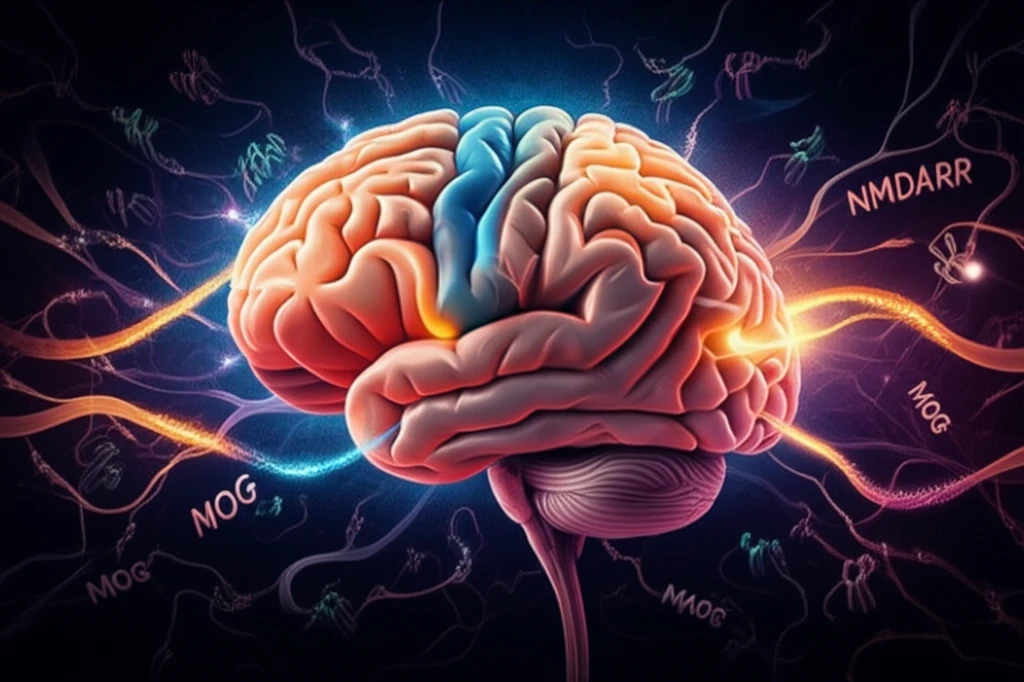
Uncommon Ground: When Autoimmune Diseases Collide in the Brain

"Discovering the linked dance of MOG-EM and NMDAR encephalitis and how understanding their biological ballet opens doors to better diagnoses and treatments."
The human body is a complex ecosystem, where the immune system plays the critical role of protector. However, sometimes this defense mechanism can go awry, leading to autoimmune diseases where the body attacks its own tissues. In the realm of neurology, this can manifest as autoimmune encephalitis, a condition where the immune system targets the brain.
Among the various types of autoimmune encephalitis, two notable players have emerged: myelin oligodendrocyte glycoprotein (MOG) antibody-associated encephalomyelitis (MOG-EM) and anti-N-methyl-D-aspartate receptor (NMDAR) encephalitis. Each has distinct characteristics, yet they can sometimes present in a tangled web of symptoms, challenging doctors and researchers alike.
In a recent case study, doctors explore the rare co-occurrence of MOG-EM and NMDAR encephalitis in a patient with recurrent optic neuritis. By examining the biological evolution of the associated antibodies, researchers hope to uncover insights into the intricate relationship between these two conditions and improve diagnostic and treatment strategies.
Decoding the Dual Diagnosis: MOG-EM and NMDAR Encephalitis
MOG-EM and anti-NMDAR encephalitis are autoimmune disorders affecting the central nervous system. MOG-EM involves antibodies attacking myelin oligodendrocyte glycoprotein (MOG), a protein crucial for the insulation of nerve fibers. Anti-NMDAR encephalitis, on the other hand, occurs when antibodies target the N-methyl-D-aspartate receptors, which play a pivotal role in brain function. Both conditions can lead to inflammation and a range of neurological symptoms, but their underlying mechanisms and clinical presentations differ.
- Optic Neuritis: Inflammation of the optic nerve, leading to vision loss and eye pain.
- MOG-EM: Autoimmune disorder targeting myelin oligodendrocyte glycoprotein, affecting nerve insulation.
- Anti-NMDAR Encephalitis: Autoimmune condition where antibodies attack N-methyl-D-aspartate receptors, disrupting brain function.
- Antibodies: Proteins produced by the immune system to fight foreign substances but, in this case, mistakenly attack the body's own tissues.
The future of autoimmune research
The intersection of MOG-EM and anti-NMDAR encephalitis underscores the complexity of autoimmune diseases affecting the brain. These findings highlight the importance of considering multiple autoimmune processes in patients with neurological symptoms. Further research is needed to fully understand the interplay between MOG-EM and anti-NMDAR encephalitis, paving the way for more targeted and effective treatments.