
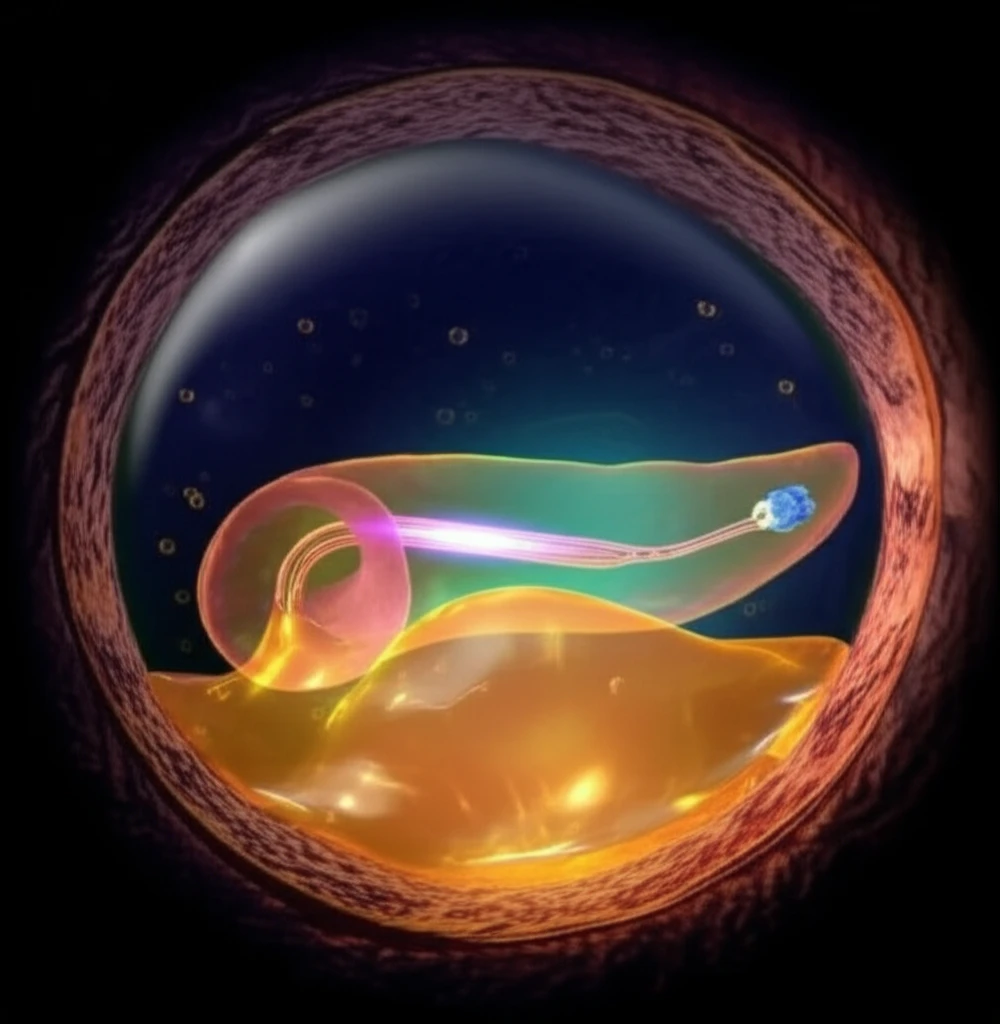
Uncommon Cause, Innovative Fix: How a Pancreatic Duct Stent Resolved a Rare Pleural Fistula

"Discover the journey of a 34-year-old man whose pancreaticopleural fistula was successfully treated with a pancreatic duct stent, highlighting the importance of prompt recognition and endoscopic intervention."
Pancreaticopleural fistula (PPF) is a rare and often challenging complication arising from pancreatitis. Affecting a small percentage of patients, PPF involves an abnormal connection between the pancreas and the pleural space, leading to fluid accumulation in the chest. Understanding this condition and its management is crucial for gastroenterologists and healthcare professionals.
In this article, we delve into a compelling case of a 34-year-old male who presented with a massive left-sided pleural effusion secondary to PPF. We'll explore the diagnostic journey, the innovative treatment approach using a pancreatic duct stent, and the successful outcome, offering valuable insights into the management of this rare condition.
While most PPFs result from the leakage of pancreatic secretions from a pseudocyst, direct leaks from the pancreatic duct are less common. This case highlights the importance of considering PPF in patients with unexplained pleural effusions, especially those with a history of pancreatitis. Prompt recognition and appropriate intervention can significantly improve patient outcomes.
Decoding Pancreaticopleural Fistula: From Symptoms to Stent Solution
The patient, a 34-year-old male with a history of alcohol-induced chronic pancreatitis, was admitted to the hospital experiencing dyspnea for three weeks. Physical examination revealed diminished air passage and dullness upon percussion of the left chest wall. Initial chest X-rays confirmed a substantial left pleural effusion, prompting further investigation with contrast-enhanced CT scans.
- Conservative Management: Initial approaches often involve medical treatment, including fasting and somatostatin analogues, to reduce fistula output.
- Endoscopic Procedures: Pancreatic duct stenting aims to create a low-resistance pathway, mechanically closing the fistula.
- Surgical Intervention: Considered when duct stenting fails or complications arise, such as infection.
Key Takeaways: Recognizing and Resolving PPF
This case underscores the significance of promptly recognizing PPF and considering endoscopic intervention with pancreatic duct stenting. While the optimal duration of stenting remains a topic for further research, this successful outcome provides valuable insights for managing this rare and challenging condition. By sharing such cases, the medical community can refine treatment strategies and improve patient outcomes.