
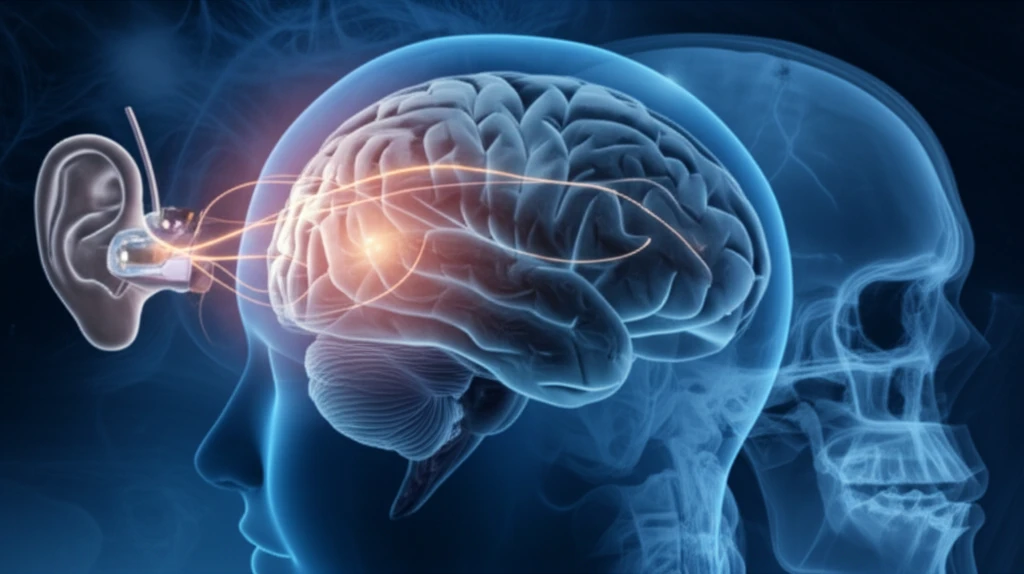
Illustration of cerebellar nodulus stroke causing vertigo.

Uncommon Cause, Common Symptom: Understanding Vertigo and Cerebellar Strokes

"New research highlights how vertigo can be an early sign of cerebellar nodulus stroke, urging vigilance in diagnosis."


Vertigo, a sensation of spinning or dizziness, is a common complaint in general practice. While many cases of vertigo are benign, some can signal more serious underlying conditions, such as stroke. Positional vertigo, specifically, requires careful evaluation to pinpoint its cause.

Benign paroxysmal positional vertigo (BPPV) is frequently identified as the culprit. It arises from displaced otolithic debris within the semicircular canals of the inner ear, disrupting the sense of balance. However, central causes, such as brain lesions, can also trigger positional vertigo. Brain-related vertigo often stems from issues in the posterior fossa, fourth ventricle, or cerebellum.

The cerebellar nodulus, a small but critical part of the cerebellum, can be a focal point for stroke-induced vertigo. What makes this particularly challenging is that nodulus-related vertigo may occur without any other obvious neurological deficits. Adding to the complexity, vertigo caused by stroke may only last briefly, from hours to a few days. In such cases, early and accurate brain imaging becomes essential for proper diagnosis. Here, we explore three cases where cerebellar nodulus stroke was diagnosed through magnetic resonance imaging (MRI).

When Vertigo Isn't Just Vertigo: Spotting Cerebellar Stroke

Illustration of cerebellar nodulus stroke causing vertigo.

The link between positional vertigo and cerebellar nodulus stroke may seem surprising, but understanding the anatomy and function of the cerebellum sheds light on this connection. The cerebellum, located at the back of the brain, plays a crucial role in coordinating movement, maintaining balance, and controlling eye movements. The nodulus, a small lobe within the cerebellum, is particularly involved in processing vestibular information, which is essential for spatial orientation and balance.

When a stroke affects the cerebellar nodulus, it can disrupt the normal processing of vestibular signals, leading to the sudden onset of positional vertigo. What makes this type of vertigo distinct is that it may occur in isolation, without other typical stroke symptoms like weakness, numbness, or speech difficulties. This can make diagnosis challenging, as clinicians may initially suspect more common causes of vertigo, such as BPPV.

  • Case 1: A 71-year-old man with mild diabetes experienced severe positional vertigo without auditory or neurological symptoms. Initially suspected of BPPV, an MRI revealed a 5 mm lacunar infarct in the right cerebellar nodulus. His vertigo resolved within four days.
  • Case 2: A 69-year-old healthy man presented with positional vertigo triggered by head movements. He had direction-changing horizontal nystagmus. An MRI showed a 6 mm lacunar infarct in the left cerebellar nodulus. His symptoms resolved in three days.
  • Case 3: An 82-year-old woman with hypertension experienced acute positional vertigo. Despite no observed nystagmus during examination, she complained of vertigo after each maneuver. An MRI revealed a 4 mm infarct in the left cerebellar nodulus. Her vertigo disappeared within 12 hours.
These cases highlight the importance of considering cerebellar stroke in patients presenting with acute positional vertigo, even in the absence of other neurological signs. Early brain imaging with MRI is crucial for accurate diagnosis and timely intervention. While cerebellar nodulus stroke is a rare cause of vertigo, recognizing this association can prevent delays in treatment and improve patient outcomes.

Act Early, Diagnose Fast

Positional vertigo without other neurological deficits can be a tricky diagnostic puzzle. Stroke-related vertigo may only last a few hours or days. Therefore, it's critical to consider central causes like cerebellar nodulus stroke, particularly in patients with risk factors such as hypertension or diabetes. Early MRI can help visualize small strokes and guide appropriate management, preventing potential complications.

About this Article -

This article was crafted using a human-AI hybrid and collaborative approach. AI assisted our team with initial drafting, research insights, identifying key questions, and image generation. Our human editors guided topic selection, defined the angle, structured the content, ensured factual accuracy and relevance, refined the tone, and conducted thorough editing to deliver helpful, high-quality information.See our About page for more information.

Everything You Need To Know

1

What is the primary connection between positional vertigo and cerebellar nodulus stroke, and why is this significant?

The core connection lies in the disruption of vestibular information processing. The cerebellar nodulus, a part of the cerebellum, plays a key role in processing vestibular signals crucial for balance and spatial orientation. When a stroke affects the cerebellar nodulus, it impairs this processing, triggering positional vertigo. This is significant because it can be the only symptom, making it easily misdiagnosed as a more benign condition like BPPV, delaying proper treatment.

2

How does a cerebellar nodulus stroke manifest differently from other causes of vertigo, and what makes it difficult to diagnose?

A cerebellar nodulus stroke can present with isolated positional vertigo, meaning vertigo occurs without other typical stroke symptoms like weakness, numbness, or speech difficulties. This makes diagnosis challenging because clinicians might initially suspect more common causes of vertigo, such as BPPV. The absence of additional neurological deficits and the potentially short duration of the vertigo further complicate diagnosis, requiring a high index of suspicion and early brain imaging.

3

Can you explain the role of the cerebellum and the cerebellar nodulus in balance, and how a stroke in this area impacts bodily functions?

The cerebellum, located at the back of the brain, is critical for coordinating movement, maintaining balance, and controlling eye movements. The cerebellar nodulus, a small lobe within the cerebellum, is particularly involved in processing vestibular information. A stroke in the cerebellar nodulus disrupts the normal processing of these vestibular signals. This leads to sudden onset of positional vertigo. The impact on bodily functions manifests as a sensation of spinning or dizziness, triggered by changes in head position, due to the brain's inability to correctly interpret spatial orientation.

4

In the context of the given cases, what was the role of MRI in the diagnosis of cerebellar nodulus stroke, and why is early imaging so crucial?

In the presented cases, MRI was the primary diagnostic tool used to identify the cerebellar nodulus stroke. In each case, MRI revealed small infarcts within the cerebellar nodulus, confirming the cause of the patient's positional vertigo. Early imaging with MRI is crucial because stroke-related vertigo may only last for a few hours or days. MRI can visualize small strokes and guide timely intervention, preventing potential complications and improving patient outcomes by allowing for prompt and accurate treatment.

5

What are the key takeaways regarding the association between vertigo and cerebellar nodulus stroke, and what should patients and healthcare providers be aware of?

The key takeaways are that positional vertigo can be an early, isolated sign of cerebellar nodulus stroke, especially when other neurological deficits are absent. Patients with positional vertigo, particularly those with risk factors like hypertension or diabetes, should be evaluated carefully, considering central causes. Healthcare providers should maintain a high index of suspicion for stroke in patients presenting with acute positional vertigo. Early MRI is critical for accurate diagnosis and timely intervention, preventing delays in treatment and improving patient outcomes. Recognizing this association is crucial for early diagnosis and effective management.

Newsletter Subscribe

Subscribe to get the latest articles and insights directly in your inbox.