
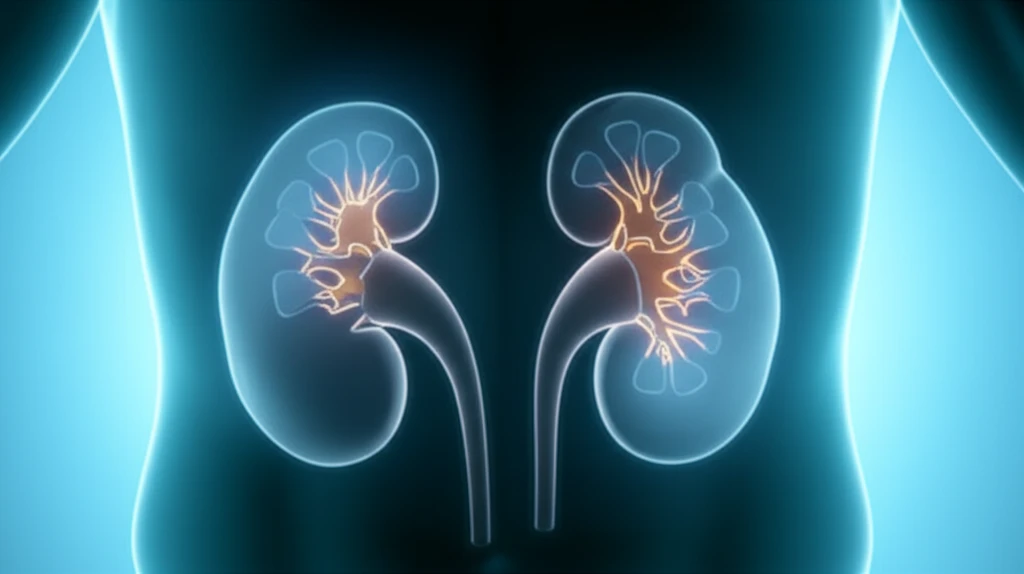
Surreal illustration of malrotated kidneys within a human torso.

Uncommon Anatomy, Unexpected Danger: When Your Kidneys Aren't Where They Should Be

"A Case Study Reveals How Bilateral Renal Malrotation Can Lead to Acute Pyelonephritis and Septic Shock, Highlighting the Need for Vigilant Diagnosis."


Imagine your body's organs are like puzzle pieces, each fitting perfectly to ensure smooth functioning. Now, picture one of those pieces—a kidney—slightly out of place. This isn't just a minor anatomical quirk; it can lead to serious health problems. Bilateral renal malrotation, a rare condition where both kidneys are abnormally rotated, can create a perfect storm for infections and other complications.

A recent case study published in the Chonnam Medical Journal sheds light on this often-overlooked condition. The study details the experience of a 71-year-old woman who presented with seemingly straightforward symptoms: left flank pain, oliguria (decreased urine output), and hypotension (low blood pressure). Initial assessments pointed towards a common culprit: pyelonephritis, a kidney infection. However, the underlying cause turned out to be far more complex.

This case underscores the critical importance of considering rare anatomical variations when diagnosing and treating seemingly common conditions. It also highlights the power of advanced imaging techniques in uncovering hidden health risks. As we delve into this case, you'll gain a deeper understanding of renal malrotation, its potential dangers, and the diagnostic steps that can save lives.

The Case Unfolds: Symptoms, Diagnosis, and the Role of Imaging

Surreal illustration of malrotated kidneys within a human torso.

The 71-year-old patient's initial symptoms were concerning but not particularly unique. Flank pain is a common complaint, and the presence of oliguria and hypotension suggested a systemic issue. Pyuria (pus in the urine) and severe sepsis quickly led to a diagnosis of acute pyelonephritis, a bacterial infection of the kidneys. Standard treatment protocols were initiated, but the underlying cause remained a mystery.

An abdominal computed tomography (CT) intravenous pyelogram was performed to visualize the kidneys and urinary tract. The images revealed that both kidneys were normal in size, but the differentiation between the cortex and medulla (the kidney's outer and inner layers) was poorly defined. More strikingly, the left kidney exhibited an amorphic, low-attenuation lesion consistent with acute pyelonephritis. Both kidneys were incompletely malrotated, with anteriorly facing hila (the point where blood vessels and the ureter enter the kidney). The renal vessels and ureter were also located laterally, an unusual positioning.

  • CT Scan Insights: The CT scan also revealed that the right kidney was positioned 5 cm lower than the left kidney, indicating renal ectopia (abnormal location). Furthermore, mild dilation was observed in the proximal ureter of the left kidney, suggesting a potential obstruction.
  • 3D Reconstruction: To gain a clearer understanding of the kidney's spatial arrangement, a three-dimensional computed tomography reconstruction image was created. This image vividly displayed the anteriorly rotated kidneys, confirming the extent of the malrotation.
These imaging findings were crucial in understanding the root cause of the patient's pyelonephritis. The malrotation and abnormal positioning of the kidneys were likely contributing to impaired drainage and increased susceptibility to infection. This case highlights the importance of detailed anatomical assessment in patients presenting with recurrent urinary tract infections or unusual kidney-related symptoms.

The Takeaway: Vigilance and Advanced Imaging for Rare Conditions

This case serves as a powerful reminder that even common conditions can have uncommon underlying causes. Bilateral renal malrotation, though rare, can significantly increase the risk of pyelonephritis and subsequent septic shock. The study underscores the importance of considering anatomical variations in patients with recurrent UTIs or atypical kidney-related symptoms. Advanced imaging techniques, such as CT intravenous pyelograms and 3D reconstructions, play a vital role in identifying these variations and guiding appropriate treatment strategies. For patients and healthcare providers alike, this case highlights the need for vigilance, thorough investigation, and a willingness to consider the less obvious possibilities when faced with complex medical presentations.

About this Article -

This article was crafted using a human-AI hybrid and collaborative approach. AI assisted our team with initial drafting, research insights, identifying key questions, and image generation. Our human editors guided topic selection, defined the angle, structured the content, ensured factual accuracy and relevance, refined the tone, and conducted thorough editing to deliver helpful, high-quality information.See our About page for more information.

This article is based on research published under:

DOI-LINK: 10.4068/cmj.2016.52.3.219, Alternate LINK

Title: A Case Of Acute Pyelonephritis In Bilateral Renal Malrotation

Subject: Immunology

Journal: Chonnam Medical Journal

Publisher: Chonnam National University Medical School

Authors: Ha Yeon Kim, Seung Jin Lee, Eun Hui Bae, Seong Kwon Ma, Soo Wan Kim

Published: 2016-01-01

Everything You Need To Know

1

What is bilateral renal malrotation?

Bilateral renal malrotation is a rare condition where both kidneys are abnormally rotated. This means that instead of being in their usual position, the kidneys are turned in a way that can affect how they function. In this case, the kidneys' unusual positions contributed to impaired drainage which made the patient more prone to infections. The specific case mentioned that both kidneys were incompletely malrotated, with anteriorly facing hila, which is where blood vessels and the ureter enter the kidney. The renal vessels and ureter were also located laterally, in an unusual positioning.

2

Why is bilateral renal malrotation important?

The importance of considering bilateral renal malrotation lies in its potential to cause severe health problems, specifically making a patient more susceptible to conditions like acute pyelonephritis and even septic shock. The case study demonstrates that even if symptoms initially suggest a common illness like a kidney infection (pyelonephritis), the underlying cause might be a rare anatomical variation. Failure to recognize the malrotation can lead to delayed diagnosis and ineffective treatment, potentially causing life-threatening complications. The abnormal positioning and rotation of the kidneys can impede proper drainage and increase the risk of infection.

3

What is the role of advanced imaging techniques in diagnosing this condition?

The role of advanced imaging techniques is vital in diagnosing bilateral renal malrotation. The case study mentions that an abdominal computed tomography (CT) intravenous pyelogram was performed to visualize the kidneys and urinary tract. This imaging revealed key details such as the incomplete malrotation of the kidneys, the abnormal positioning of the hila, and the lateral location of the renal vessels and ureter. A 3D reconstruction was also created to provide a clearer understanding of the kidneys' spatial arrangement. Such imaging methods are crucial for identifying anatomical variations that may not be apparent through standard examinations, aiding in accurate diagnosis and guiding appropriate treatment strategies.

4

What is acute pyelonephritis?

Acute pyelonephritis is a bacterial infection of the kidneys. The case study describes a 71-year-old woman who presented with symptoms of left flank pain, oliguria (decreased urine output), and hypotension (low blood pressure). Subsequent tests revealed pyuria (pus in the urine) and severe sepsis, leading to a diagnosis of acute pyelonephritis. This kidney infection was determined to be caused by the bilateral renal malrotation which made her more susceptible to infection.

5

What are the implications of bilateral renal malrotation?

The implications of bilateral renal malrotation extend to the risk of severe complications, including acute pyelonephritis and septic shock. The case study highlights that the malrotation led to impaired drainage and an increased risk of infection. When the kidneys are not positioned correctly, they may not drain urine efficiently, leading to a build-up of bacteria, which causes infection. If the infection spreads, it can lead to sepsis, a life-threatening condition where the body's response to the infection damages its own tissues and organs. This case underscores the necessity for early diagnosis and management of the underlying anatomical issue to prevent such severe outcomes.

Newsletter Subscribe

Subscribe to get the latest articles and insights directly in your inbox.