
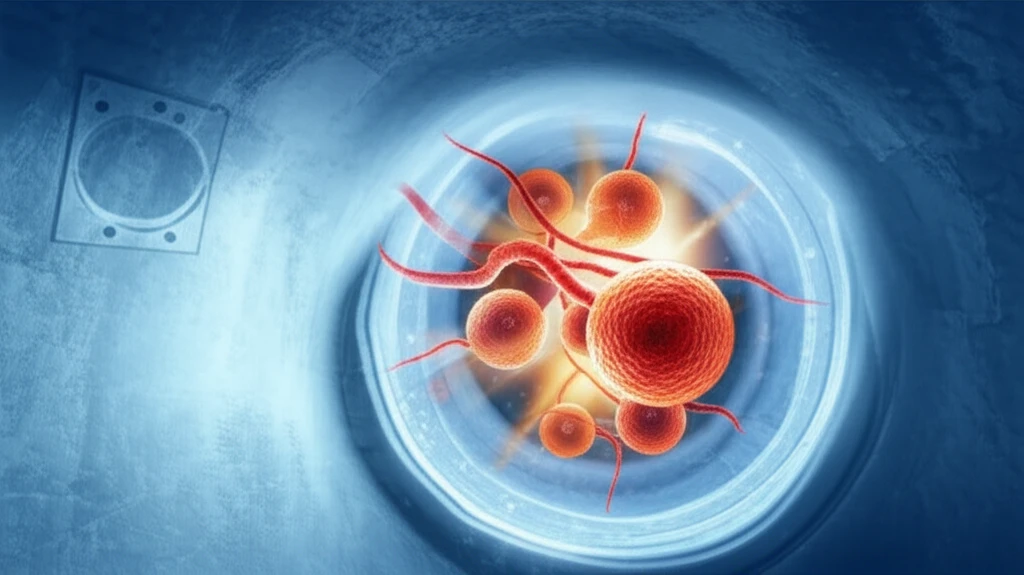
Umbilical Cord Stem Cells Emerging from Cryopreservation Chamber with Platelet-Rich Plasma

Umbilical Cord Stem Cells: Can Platelet-Rich Plasma Boost Their Potential?

"Research suggests that using platelet-rich plasma (PRP) as a supplement in cryopreservation could improve the viability and function of human umbilical cord stem cells."


Stem cells are building blocks with the unique ability to transform into various specialized cells in the body. This makes them a powerful tool in regenerative medicine, with the potential to repair damaged tissues and treat diseases. Umbilical cord stem cells, in particular, are a promising source due to their easy accessibility and ethical advantages.

To ensure these valuable cells are available when needed, cryopreservation (freezing) is essential. The standard method often involves using Fetal Bovine Serum (FBS) as a supplement in the freezing medium. However, FBS carries the risk of introducing foreign proteins that can trigger immune responses.

Scientists are actively searching for safer, 'xenofree' alternatives to FBS. Platelet-Rich Plasma (PRP), rich in growth factors and albumin, has emerged as a strong candidate. A recent study investigates PRP's potential to enhance the viability, morphology, and proliferation of human umbilical cord stem cells after cryopreservation, paving the way for more effective stem cell therapies.

PRP: A Natural Boost for Stem Cell Preservation?

Umbilical Cord Stem Cells Emerging from Cryopreservation Chamber with Platelet-Rich Plasma

The study published in the Online Journal of Biological Sciences compared the effects of PRP and FBS as supplements in cryopreservation medium. Researchers isolated stem cells from umbilical cord tissue and subjected them to eight different freezing protocols, varying the type and concentration of supplement (PRP or FBS) and the cell concentration.

After thawing, the researchers carefully assessed the stem cells, focusing on:

  • Cell Viability: The percentage of cells that survived the freezing and thawing process.
  • Cell Morphology: The shape and appearance of the cells, indicating their health and functionality.
  • Cell Size: An indicator of cell health and potential.
  • Cell Proliferation: The ability of the cells to multiply and grow.
The results revealed that PRP was as effective as FBS in maintaining cell viability and morphology. Importantly, the PRP-supplemented medium showed better results in terms of cell size and proliferation, suggesting a potential advantage for PRP in promoting stem cell growth after thawing.

The Future of Stem Cell Preservation

This research offers promising evidence that PRP can serve as a viable alternative to FBS in cryopreservation medium for human umbilical cord stem cells. The potential benefits of PRP, particularly in enhancing cell size and proliferation, warrant further investigation. As stem cell therapies continue to advance, optimizing preservation methods with safe and effective supplements like PRP will be crucial for unlocking their full potential in treating a wide range of diseases and injuries.

About this Article -

This article was crafted using a human-AI hybrid and collaborative approach. AI assisted our team with initial drafting, research insights, identifying key questions, and image generation. Our human editors guided topic selection, defined the angle, structured the content, ensured factual accuracy and relevance, refined the tone, and conducted thorough editing to deliver helpful, high-quality information.See our About page for more information.

Everything You Need To Know

1

What are umbilical cord stem cells and why are they important?

Umbilical cord stem cells are special because they can turn into different types of cells in the body. This ability makes them useful in regenerative medicine, where they can potentially help repair damaged tissues and treat various diseases. They are considered a readily accessible source and have fewer ethical concerns compared to other stem cell sources.

2

Why is cryopreservation necessary for umbilical cord stem cells?

Cryopreservation is important because it allows us to freeze and store umbilical cord stem cells for future use. This ensures that the cells are available when needed for potential therapies. The standard method uses Fetal Bovine Serum (FBS) but this carries the risk of immune responses. Therefore safer alternatives are being sort, such as Platelet-Rich Plasma.

3

What is Platelet-Rich Plasma, and why is it being researched for stem cell preservation?

Platelet-Rich Plasma, or PRP, is a component of blood that is rich in growth factors. It is being explored as a supplement to Fetal Bovine Serum (FBS) in cryopreservation because it may enhance the viability, morphology, and proliferation of human umbilical cord stem cells after they have been frozen and thawed. The potential benefits of PRP warrant further investigation for stem cell therapies.

4

What specific characteristics of stem cells were assessed in the study, and why are they important?

The study looked at cell viability (the number of cells that survive freezing and thawing), cell morphology (the shape and appearance of cells), cell size, and cell proliferation (the ability of cells to multiply). These factors help determine the health and functionality of the stem cells after cryopreservation. These indicators are important to determine if the cells are still healthy and functional for future use.

5

What were the main findings of the study regarding the use of Platelet-Rich Plasma in stem cell preservation?

Platelet-Rich Plasma is as effective as Fetal Bovine Serum in maintaining cell viability and morphology, but PRP showed better results in cell size and proliferation after thawing. This suggests that PRP could be a better option for promoting stem cell growth after cryopreservation. The study suggests that PRP can serve as a viable alternative to FBS.

Newsletter Subscribe

Subscribe to get the latest articles and insights directly in your inbox.