
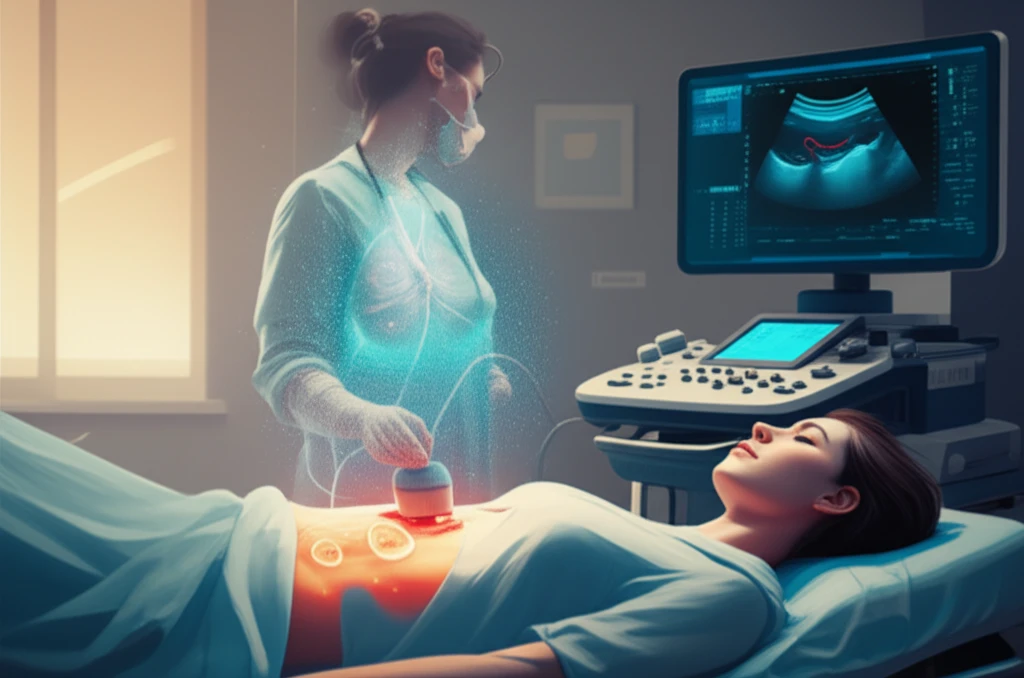
Illustration of a doctor using ultrasound to diagnose pneumonia

Ultrasound for Lung Health: A Hidden Ally in Diagnosing Pneumonia

"Unveiling the Power of Ultrasound in Detecting and Managing Lung Infections: A Comprehensive Guide"


In the realm of medical diagnostics, the spotlight often shines on advanced technologies like MRIs and CT scans. Yet, a more accessible and versatile tool, ultrasound, is quietly revolutionizing how doctors approach various health issues, including lung conditions. This article explores the crucial role of ultrasound in identifying and managing pneumonia, offering insights into its benefits and applications.

Pneumonia, an infection that inflames the air sacs in one or both lungs, can be a serious condition. Early and accurate diagnosis is key to effective treatment. Traditional methods, such as chest X-rays, have long been the standard, but they sometimes fall short in providing a comprehensive view. Ultrasound, however, is emerging as a powerful complement, providing a detailed look at the lungs in real-time, often at the bedside.

This guide delves into the utilization of ultrasound in diagnosing and monitoring pneumonia. We will explore how this technology aids in early detection, differential diagnosis, and treatment monitoring, ultimately leading to improved patient outcomes. The article is designed for anyone interested in understanding the benefits of ultrasound in respiratory health.

How Ultrasound Revolutionizes Pneumonia Diagnosis and Care

Illustration of a doctor using ultrasound to diagnose pneumonia

Ultrasound offers several advantages over traditional diagnostic methods. It's portable, allowing doctors to examine patients at their bedside, in the emergency room, or even in intensive care units. This eliminates the need to transport patients, which can be especially crucial for those who are severely ill. Furthermore, ultrasound is radiation-free, making it a safer option, especially for pregnant women and children.

One of the key benefits of ultrasound is its ability to visualize the lungs in real-time. This allows doctors to see details that might be missed by other imaging techniques. For instance, ultrasound can detect fluid buildup, such as pleural effusion (fluid around the lungs), which is a common complication of pneumonia. It can also identify areas of lung consolidation, where the air sacs are filled with fluid or pus, a hallmark of pneumonia.

  • Bedside Convenience: Portable, allowing for immediate assessment.
  • Real-Time Imaging: Provides dynamic views for detailed examination.
  • Radiation-Free: Safe for all patient groups.
  • Early Detection: Aids in identifying pneumonia complications.
  • Treatment Monitoring: Helps assess the effectiveness of interventions.
Moreover, ultrasound is instrumental in guiding procedures such as thoracentesis, the removal of fluid from the pleural space. By visualizing the fluid and guiding the needle, ultrasound helps doctors perform this procedure safely and effectively, minimizing the risk of complications.

Embracing the Future of Lung Health with Ultrasound

Ultrasound represents a significant advancement in diagnosing and managing pneumonia. Its portability, safety, and real-time imaging capabilities make it an invaluable tool for healthcare professionals. As technology evolves, the integration of ultrasound in respiratory care is likely to expand further, improving patient outcomes and enhancing the quality of care. Embracing this technology can lead to earlier diagnosis, more effective treatments, and a healthier future for all.

About this Article -

This article was crafted using a human-AI hybrid and collaborative approach. AI assisted our team with initial drafting, research insights, identifying key questions, and image generation. Our human editors guided topic selection, defined the angle, structured the content, ensured factual accuracy and relevance, refined the tone, and conducted thorough editing to deliver helpful, high-quality information.See our About page for more information.

Everything You Need To Know

1

How does ultrasound improve pneumonia diagnosis compared to traditional methods like chest X-rays?

Ultrasound offers several advantages over traditional chest X-rays in pneumonia diagnosis. Unlike chest X-rays, ultrasound is portable, enabling bedside examinations in emergency rooms or intensive care units, eliminating patient transport. Ultrasound is radiation-free, making it safer, especially for pregnant women and children. It provides real-time imaging, allowing visualization of details that chest X-rays might miss, such as fluid buildup (pleural effusion) and lung consolidation. Furthermore, ultrasound can guide procedures like thoracentesis, enhancing safety and effectiveness. While chest X-rays are still valuable, ultrasound serves as a powerful complement, offering detailed and dynamic lung assessment.

2

What makes ultrasound a safer option for diagnosing lung conditions, particularly pneumonia, compared to other imaging techniques?

Ultrasound is a safer option because it is radiation-free. Unlike techniques like CT scans or X-rays, which use ionizing radiation, ultrasound uses sound waves to create images. This absence of radiation makes ultrasound especially suitable for vulnerable populations such as pregnant women and children, where minimizing radiation exposure is crucial. The non-invasive nature of ultrasound ensures repeated examinations can be performed without the risks associated with cumulative radiation exposure, offering a safer approach to monitoring lung health.

3

In what specific ways does real-time imaging with ultrasound benefit the diagnosis and management of pneumonia?

Real-time imaging with ultrasound allows doctors to visualize the lungs dynamically, providing detailed insights not always available with static imaging techniques. This capability enables the detection of fluid buildup (pleural effusion), a common pneumonia complication, and the identification of areas of lung consolidation, where air sacs fill with fluid or pus, a pneumonia hallmark. Furthermore, real-time imaging assists in guiding procedures such as thoracentesis, ensuring accurate and safe fluid removal from the pleural space. This dynamic view aids in early detection, differential diagnosis, and monitoring treatment effectiveness, ultimately leading to improved patient outcomes.

4

How does the portability of ultrasound devices impact the care and treatment of patients with pneumonia, especially in critical care settings?

The portability of ultrasound devices significantly enhances the care and treatment of pneumonia patients, especially in critical care settings. Portable ultrasound eliminates the need to transport patients to radiology departments, enabling immediate bedside assessments in emergency rooms or intensive care units. This is particularly crucial for severely ill patients where movement can be risky or impractical. Bedside convenience allows for quicker diagnoses, faster treatment initiation, and continuous monitoring of lung conditions, contributing to improved patient outcomes and more efficient resource utilization.

5

Beyond diagnosis, how does ultrasound contribute to the ongoing management and treatment of pneumonia and related complications?

Beyond diagnosis, ultrasound plays a vital role in the ongoing management and treatment of pneumonia and related complications. Its real-time imaging capabilities allow for monitoring the effectiveness of interventions, such as antibiotic therapy or fluid management. Ultrasound is instrumental in guiding procedures like thoracentesis, where fluid is removed from the pleural space, ensuring the procedure is performed safely and accurately. By providing continuous visual feedback, ultrasound helps healthcare professionals adjust treatment plans as needed, leading to more effective and personalized care. While the text focuses on pneumonia, ultrasound is also used for a variety of additional conditions. The absence of radiation also allows for frequent re-evaluation of the patient which is critical in treatment.

Newsletter Subscribe

Subscribe to get the latest articles and insights directly in your inbox.