
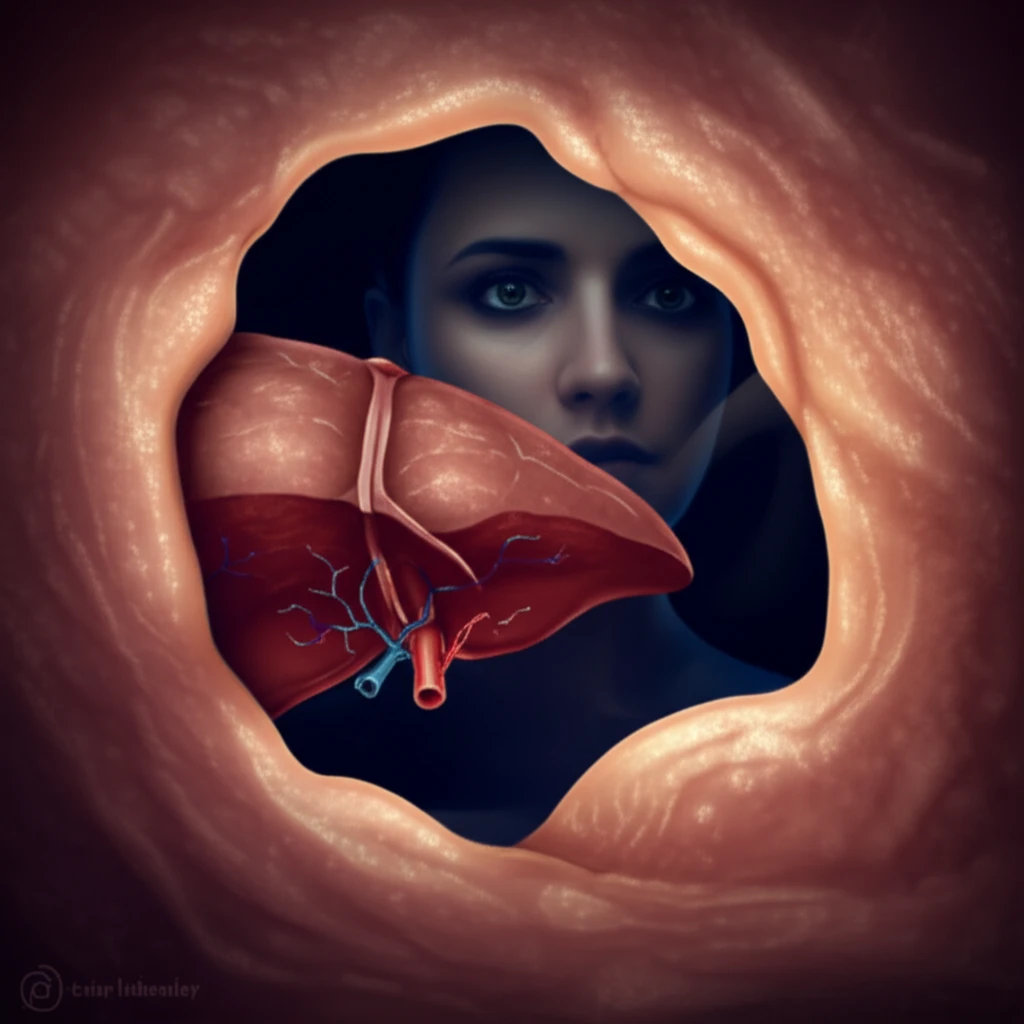
Surreal illustration of a twisted liver herniating into the chest, symbolizing vigilance in women's health.

Twisted Liver Surprise! When a Hernia Turns Unexpected

"Unraveling a rare case of liver volvulus and intrathoracic herniation: What women should know about this unusual abdominal twist."


Imagine your organs playing a game of hide-and-seek, only the stakes are your health. In a perplexing medical case, a woman’s liver, along with her stomach and colon, decided to take a detour, squeezing through a diaphragmatic defect and relocating into her chest cavity. This rare condition, known as a liver volvulus with intrathoracic herniation, is a twist no one expects.

The medical community has been intrigued by this case, published in the Annals of the Royal College of Surgeons of England, because it's like piecing together a medical puzzle where the pieces don't quite fit. Typically, a liver hernia, where the liver pokes through the diaphragm (the muscle separating the chest from the abdomen), is rare enough. But for it to twist (volvulus) and then venture into the chest? That’s a medical head-scratcher.

This article aims to unpack this unusual condition, exploring what it means for you, especially if you're a woman—since health conditions can sometimes manifest differently based on gender. We’ll break down the medical jargon, discuss the symptoms, and outline how such a rare condition is managed, ensuring you’re well-informed and prepared.

What is Liver Volvulus with Intrathoracic Herniation?

Surreal illustration of a twisted liver herniating into the chest, symbolizing vigilance in women's health.

To understand this condition, let’s break it down. A volvulus occurs when an organ twists on itself, causing obstruction. In the case of the liver, this twisting can cut off its blood supply, leading to serious complications. Now, add a hernia to the mix—specifically, an intrathoracic hernia—where abdominal organs push through an opening in the diaphragm and enter the chest cavity. Combine these two, and you have a liver volvulus with intrathoracic herniation: a twisted liver making an unwelcome appearance in the chest.

This condition is so rare that it often presents diagnostic challenges. The symptoms can be vague and mimic other more common ailments, leading to delays in diagnosis. This is why understanding the potential signs and knowing your body is crucial.

  • Severe abdominal pain that may radiate to the chest.
  • Difficulty breathing or shortness of breath.
  • Nausea and vomiting.
  • Abdominal tenderness.
  • Changes in bowel habits.
In the featured case, the 65-year-old woman initially experienced left-sided epigastric pain radiating to her chest. Her history of sarcoidosis and previous pericardial effusions, treated with a subxiphoid window fenestration (a surgical opening to drain fluid around the heart), further complicated the picture. It wasn't until her symptoms worsened and a CT scan revealed the extent of the herniation and twisting that the true diagnosis was made.

The Takeaway: Stay Informed, Stay Vigilant

The case of liver volvulus with intrathoracic herniation serves as a reminder of the importance of staying informed about your health and advocating for thorough medical evaluations when symptoms persist. While such conditions are rare, understanding the possibilities can lead to earlier diagnosis and more effective treatment. Don't hesitate to discuss any unusual or persistent symptoms with your healthcare provider. Your health is a story, and you deserve to know every chapter.

About this Article -

This article was crafted using a human-AI hybrid and collaborative approach. AI assisted our team with initial drafting, research insights, identifying key questions, and image generation. Our human editors guided topic selection, defined the angle, structured the content, ensured factual accuracy and relevance, refined the tone, and conducted thorough editing to deliver helpful, high-quality information.See our About page for more information.

This article is based on research published under:

DOI-LINK: 10.1308/003588414x13946184903324, Alternate LINK

Title: Volvulus Of The Liver With Intrathoracic Herniation

Subject: General Medicine

Journal: The Annals of The Royal College of Surgeons of England

Publisher: Royal College of Surgeons of England

Authors: G Moussa, Pm Thomson, A Bohra

Published: 2014-10-01

Everything You Need To Know

1

What exactly is a liver volvulus with intrathoracic herniation?

A liver volvulus with intrathoracic herniation is a rare condition where the liver twists on itself (volvulus), obstructing blood supply, and simultaneously pushes through an opening in the diaphragm, entering the chest cavity (intrathoracic herniation). The 'volvulus' component involves the liver twisting, which can cut off its blood supply, potentially leading to serious complications. The 'intrathoracic herniation' component means that abdominal organs, including the liver, move through an opening in the diaphragm and end up in the chest. The combination of these two conditions creates a complex and dangerous medical situation. While other types of hernias exist, this specific combination is exceptionally rare.

2

What are the primary symptoms someone might experience with a liver volvulus and intrathoracic herniation, and why is diagnosis often delayed?

Symptoms of a liver volvulus with intrathoracic herniation can include severe abdominal pain radiating to the chest, difficulty breathing or shortness of breath, nausea and vomiting, abdominal tenderness, and changes in bowel habits. Diagnosis is often delayed because these symptoms are vague and can mimic more common ailments. The rarity of the condition also contributes to diagnostic challenges, as medical professionals may not immediately consider it. Further complicating diagnosis, pre-existing conditions and prior surgeries, such as the patient's history of sarcoidosis and subxiphoid window fenestration, can obscure the clinical picture and delay the recognition of the liver volvulus with intrathoracic herniation.

3

Why is the case of liver volvulus with intrathoracic herniation particularly relevant to women's health?

The discussion emphasizes the condition's relevance to women's health because certain health conditions can manifest differently based on gender. While the source material doesn't provide specific details as to why women might be more susceptible to liver volvulus with intrathoracic herniation, it highlights the importance of awareness and vigilance among women regarding unusual symptoms. Understanding the potential signs of rare conditions can lead to earlier diagnosis and more effective treatment, underscoring the need for women to be proactive in discussing any persistent or unusual symptoms with their healthcare providers. It's important to note that further research would be needed to establish any definitive gender-specific links to this particular condition.

4

How is a liver volvulus with intrathoracic herniation typically diagnosed, and what role do imaging techniques play?

A liver volvulus with intrathoracic herniation is typically diagnosed through a combination of clinical evaluation and imaging techniques. Given the vague and non-specific nature of the symptoms, imaging plays a crucial role in confirming the diagnosis. A CT scan is instrumental in revealing the extent of the herniation and twisting of the liver, providing a clear picture of the organ's abnormal position within the chest cavity. Other imaging modalities, such as MRI, may also be used to further assess the condition and rule out other potential causes of the symptoms. The imaging helps differentiate this rare condition from more common ailments with similar presentations, which is essential for timely and appropriate management.

5

What are the potential complications of a liver volvulus and what treatment options are available to correct intrathoracic herniation?

The twisting of the liver in a liver volvulus can cut off its blood supply, leading to ischemia and potentially liver failure. The intrathoracic herniation can compress other organs in the chest cavity, such as the lungs and heart, causing respiratory distress or cardiovascular compromise. Treatment typically involves surgical intervention to untwist the liver, restore its blood supply, and repair the diaphragmatic defect to prevent recurrence of the herniation. The specific surgical approach may vary depending on the patient's overall health and the extent of the condition, but the primary goals are to alleviate the obstruction, restore normal anatomy, and prevent further complications.

Newsletter Subscribe

Subscribe to get the latest articles and insights directly in your inbox.