
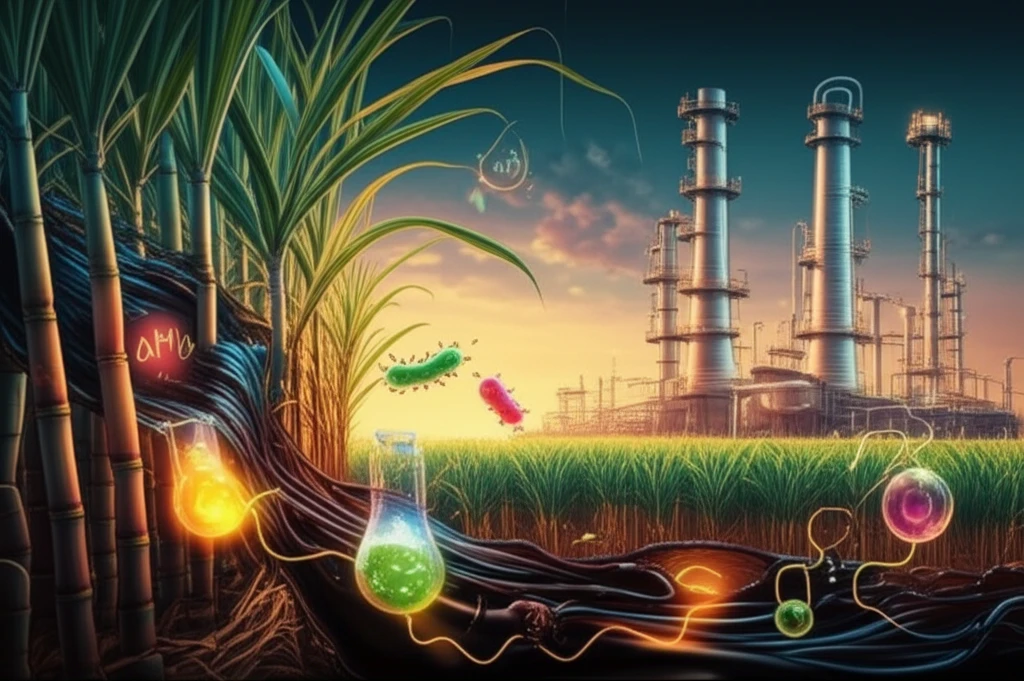
Turning Waste into Gold: How Sugarcane Byproduct Can Fuel Sustainable Chemical Production

"Unlock the potential of sugarcane vinasse and discover how fermentation can transform this waste stream into valuable organic acids and alcohols, driving sustainability in the chemical industry."
In an era defined by increasing environmental consciousness and the dwindling supply of fossil fuels, the quest for sustainable alternatives has never been more critical. Industries are under mounting pressure to re-evaluate their waste streams, seeking opportunities to minimize environmental impact while unlocking economic value. Anaerobic digestion (AD) stands out as a promising solution, offering a dual benefit: waste treatment and the recovery of energy or valuable by-products.
Among the by-products garnering significant attention are organic acids and alcohols, essential building blocks for a wide range of industrial applications. Butyric acid, CH3(CH2)2COOH, an intermediate compound of AD systems, holds particular promise, finding applications in the chemical, textile, plastic, food, beverage, dairy, and pharmaceutical sectors. Traditionally, butyric acid production relies on chemical synthesis using crude oil, a process that is becoming increasingly unsustainable. The need to transition to renewable resources is imperative.
This article explores the innovative use of sugarcane vinasse, a significant waste stream from ethanol production, as a substrate for microbial fermentation. By employing enriched microbial consortia and carefully controlling fermentation conditions, we can unlock the potential to produce value-added short-chain organic acids (SCOA) and alcohols, thus contributing to a more sustainable and circular economy.
Unlocking Value: How Sugarcane Vinasse Can Be Transformed into Valuable Chemicals?
Sugarcane vinasse, a byproduct of ethanol production, presents a significant environmental challenge due to its high volume and pollutant load. However, this waste stream also represents a valuable resource. Researchers have been exploring anaerobic digestion (AD) of vinasse to produce biogas, but there is growing interest in diverting the process towards the generation of short-chain organic acids (SCOA) and alcohols, which have a wider range of industrial applications.
- Inoculum Pretreatment: Thermal (TT) and acid-thermal (AT) pretreatments are applied to enhance spore-forming bacteria.
- Vinasse Dosage: Macronutrients and micronutrients are replaced with increasing proportions of vinasse (1:3, 1:1, and 2:1 ratios).
- Subculturing: Serial subculturing adapts microorganisms to increasing vinasse concentrations.
Future Implications and Sustainability
By transforming a troublesome waste stream into valuable chemical building blocks, we not only reduce environmental impact but also create new revenue streams for sugarcane biorefineries. This approach aligns with the principles of a circular economy, where resources are used and reused to minimize waste and maximize value. The biochemical production of butyrate from vinasse diversifies the product portfolio of sugarcane biorefineries and minimizes bioenergy losses by converting residual carbon fractions.