
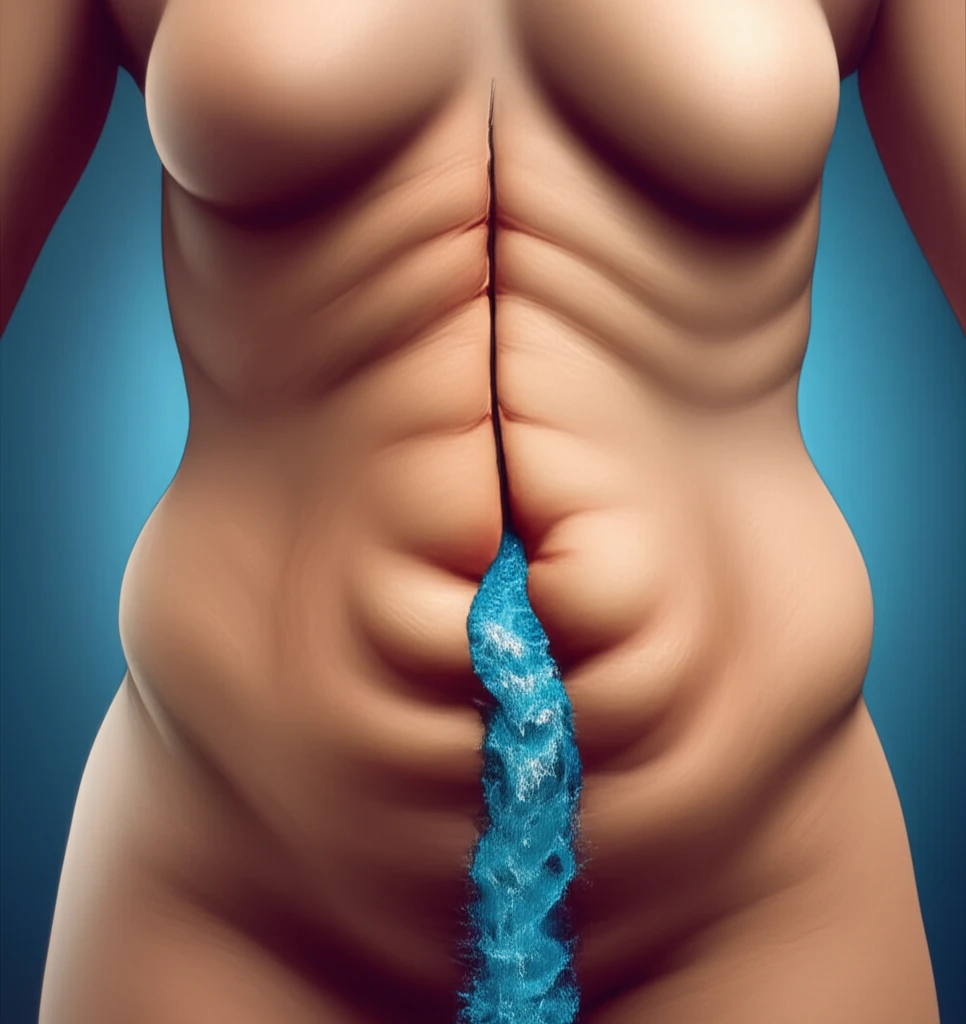
Tummy Tuck Revolution: The Vertical Abdominoplasty for Post-Weight Loss Transformation

"Discover how vertical abdominoplasty offers a promising solution for excess abdominal skin after massive weight loss, providing improved contours and renewed confidence."
Bariatric surgery has become an increasingly common and effective intervention for individuals grappling with morbid obesity. These procedures facilitate significant weight loss, which dramatically improves health and wellness. However, this rapid transformation often leaves behind an unwelcome side effect: excess skin and subcutaneous tissue, particularly in the abdominal region.
The presence of excess skin is more than a cosmetic concern. It can lead to various physical discomforts, including skin irritation, infections, and difficulties with hygiene and mobility. These issues can undermine the positive outcomes of weight loss surgery, affecting body image and overall quality of life. Many individuals find themselves seeking additional procedures to refine their body contours and address these lingering problems.
Traditional abdominoplasty, commonly known as a tummy tuck, is designed to address excess skin and fat in the lower abdomen. However, massive weight loss often results in excess skin that extends vertically as well as horizontally, requiring a different approach. This is where vertical abdominoplasty comes into play, offering an innovative solution tailored to the unique needs of post-bariatric surgery patients. Let's explore how this technique is reshaping lives and providing renewed confidence.
What is Vertical Abdominoplasty and How Does It Work?
Vertical abdominoplasty is a surgical procedure designed to remove excess skin and tissue in the abdominal area following significant weight loss. Unlike a traditional tummy tuck that uses a horizontal incision, the vertical abdominoplasty primarily utilizes a vertical incision along the midline of the abdomen. This approach allows surgeons to address excess skin that hangs both vertically and horizontally, providing a more comprehensive contouring solution.
- Initial Assessment and Marking: The surgeon evaluates the amount and distribution of excess skin, marking the planned incision lines with the patient in a supine (lying on the back) position. The vertical incision is carefully planned to compensate for skin excess in both the craniocaudal (head-to-tail) and lateral directions.
- Anesthesia: The patient is placed under general anesthesia to ensure comfort and relaxation throughout the surgery.
- Incision and Resection: The surgeon makes a vertical incision along the marked line, extending from the lower abdomen up towards the upper abdomen as needed. The excess skin and subcutaneous tissue are carefully resected (removed) en bloc, meaning in one piece, without unnecessary additional detachments. The preaponeurotic plane, which lies just above the abdominal muscles, serves as the deepest limit of the resection.
- Navel Repositioning: The umbilicus (navel) is separated from the surrounding skin and tissue before resection. It is carefully preserved and repositioned in its natural anatomical location after the excess skin has been removed.
- Muscle Repair (Plication): In most cases, patients who have experienced massive weight loss also have diastasis recti, a separation of the rectus abdominis muscles (the "six-pack" muscles). The surgeon performs a plication, which involves suturing the muscles together in two layers using non-absorbable sutures. This step not only corrects the muscle separation but also helps to flatten and strengthen the abdominal wall.
- Closure: The skin is closed in multiple layers using absorbable sutures. The vertical incision is carefully aligned to minimize tension and promote optimal scar healing. In some cases, a small horizontal component may be added at the lower end of the incision to further compensate for skin excess.
- Drains: The placement of drains is determined on a case-by-case basis, depending on the extent of the surgery and the surgeon's preference. Drains help to remove excess fluid from the surgical site, reducing the risk of seroma formation (fluid collection).
- Post-operative Care: Patients are typically instructed to wear a compression garment for several weeks to support the healing tissues and minimize swelling. Regular follow-up appointments are scheduled to monitor progress and address any concerns.
Is Vertical Abdominoplasty Right for You?
If you've experienced significant weight loss and are bothered by excess skin in your abdominal area, vertical abdominoplasty may be a viable option. It's essential to consult with a board-certified plastic surgeon who has experience with post-bariatric surgery body contouring. They can assess your individual needs and goals, discuss the potential benefits and risks of the procedure, and help you determine if vertical abdominoplasty is the right choice for achieving your desired outcome.