
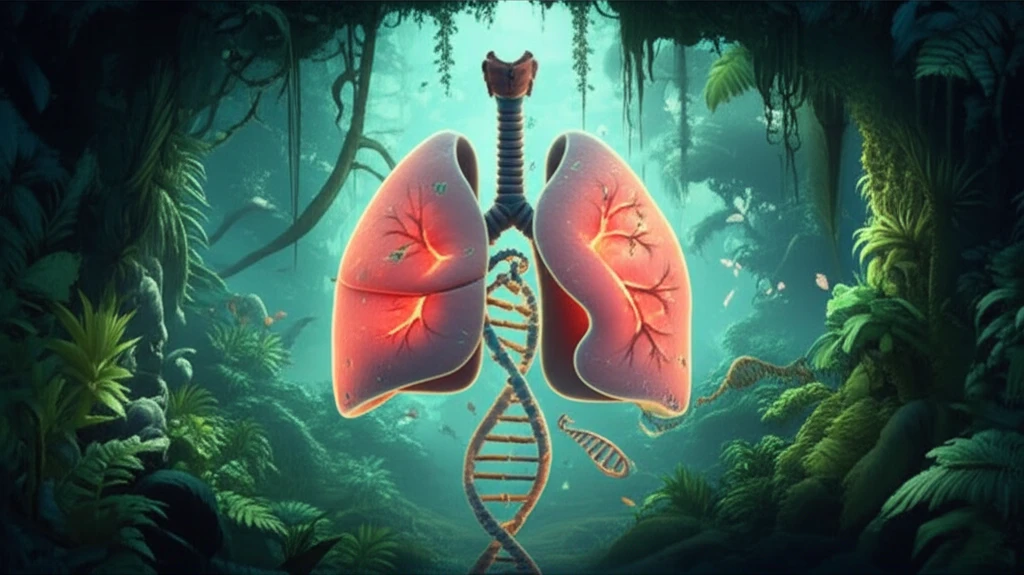
Lungs in rainforest digital illustration, symbolizing fight against TB

Tuberculosis in Roraima: Understanding Diagnosis and Prevention

"A closer look at the challenges and progress in tackling pleural tuberculosis in the Brazilian state of Roraima."


Tuberculosis (TB) remains a significant global health challenge, with approximately one-third of the world's population infected with Mycobacterium tuberculosis. In 2012 alone, 8.6 million people developed TB, resulting in 1.4 million deaths worldwide. Brazil, despite concerted public health efforts, is among the 22 countries that account for 80% of all TB cases globally. In 2008, TB was the fourth leading cause of death from infectious diseases and the leading cause of death in individuals with AIDS in Brazil.

Among the various forms of TB, extrapulmonary tuberculosis, particularly pleural tuberculosis, is most common in HIV-seronegative adults. Diagnosing pleural tuberculosis typically involves detecting M. tuberculosis through direct examination or culture of pleural fluid or tissue samples, as well as identifying specific granulomas through histopathological analysis. A combination of histological examination and culture of pleural tissue specimens can lead to a diagnosis in up to 90% of cases.

The state of Roraima, located in northern Brazil within the Amazon region, shares borders with Guyana and Venezuela. Roraima has a large indigenous population. These populations are more vulnerable to TB, with incidence rates up to ten times higher than in the general population. Although the National Tuberculosis Control Program has been fully implemented, diagnosing pleural tuberculosis remains challenging due to limited access to specialized facilities.

Key Findings on Pleural Tuberculosis in Roraima

Lungs in rainforest digital illustration, symbolizing fight against TB

A cross-sectional study was conducted to evaluate the quality of diagnosis and epidemiological profile of pleural tuberculosis in Roraima between 2005 and 2013. The study used secondary data from the Brazilian Case Registry Database to determine the prevalence of pleural TB and evaluate diagnostic criteria. A high-quality diagnosis was defined as one based on bacteriological or histopathological confirmation.

Out of 1,395 reported TB cases, 116 (8.3%) were pleural tuberculosis, accounting for 38.9% of extrapulmonary TB cases. Unlike pulmonary TB, the incidence of pleural TB did not show a downward trend. Only 28.5% of cases had a high-quality diagnosis. Univariate analysis found no significant impact from demographic or clinical characteristics on diagnostic outcomes.

  • Prevalence: Pleural tuberculosis accounted for 8.3% of all TB cases in Roraima during the study period.
  • Diagnosis Quality: Only 28.5% of pleural TB cases received a high-quality diagnosis based on bacteriological or histopathological confirmation.
  • Incidence Trends: The incidence rate of pleural tuberculosis did not follow the declining trend observed for pulmonary tuberculosis.
  • Risk Factors: No specific demographic or clinical factors were identified as significantly influencing the quality of diagnosis.
The study revealed that the quality of diagnoses was unsatisfactory, potentially due to limited access to specific diagnostic methods. The results emphasize the need for better diagnostic tools and strategies to combat TB effectively in the region. The study also sought to assess the impact of the availability of specific diagnostic techniques within the public health system of Boa Vista, the state capital, on the quality of diagnosis.

Moving Forward: Enhancing TB Control in Roraima

The study underscores the importance of improving diagnostic quality and access to specialized services for pleural tuberculosis in Roraima. By addressing these gaps, healthcare providers can ensure timely and accurate diagnoses, leading to better treatment outcomes and reduced transmission rates. Further research and targeted public health policies are essential to combat TB effectively and protect vulnerable populations in the region. It is crucial to improve diagnostic methods and patient referral policies to ensure broader access to healthcare services. By prioritizing these strategies, Roraima can better address TB and protect its communities.

About this Article -

This article was crafted using a human-AI hybrid and collaborative approach. AI assisted our team with initial drafting, research insights, identifying key questions, and image generation. Our human editors guided topic selection, defined the angle, structured the content, ensured factual accuracy and relevance, refined the tone, and conducted thorough editing to deliver helpful, high-quality information.See our About page for more information.

Everything You Need To Know

1

What exactly is Tuberculosis (TB) and why is it considered a major health concern?

Tuberculosis (TB) is an infectious disease caused by Mycobacterium tuberculosis. It is a significant global health problem because approximately one-third of the world's population is infected, leading to millions of cases and deaths annually. In places like Brazil, it remains a leading cause of death from infectious diseases, especially among individuals with AIDS, highlighting the urgent need for effective control and prevention strategies.

2

What is pleural tuberculosis and how is it typically diagnosed?

Pleural tuberculosis is a form of extrapulmonary tuberculosis that affects the pleura, the lining surrounding the lungs. Diagnosing it often involves detecting Mycobacterium tuberculosis in pleural fluid or tissue samples through direct examination or culture, along with identifying specific granulomas via histopathological analysis. Accurate diagnosis is crucial because it allows for targeted treatment and helps prevent the spread of the infection. Failure to diagnose pleural tuberculosis correctly can lead to delayed treatment and increased morbidity.

3

What is the National Tuberculosis Control Program, and why is its implementation so important?

The National Tuberculosis Control Program aims to combat tuberculosis through various strategies, including early detection, treatment, and prevention efforts. Its full implementation is vital because it provides a framework for addressing TB at a national level, coordinating efforts between healthcare providers and public health agencies. However, even with such programs in place, challenges like limited access to specialized facilities can hinder the diagnosis and management of pleural tuberculosis, emphasizing the need for continuous improvement and adaptation of control strategies.

4

What does it mean to have a 'high-quality diagnosis' of pleural tuberculosis, and why is it so important?

A high-quality diagnosis of pleural tuberculosis refers to a diagnosis based on bacteriological or histopathological confirmation of Mycobacterium tuberculosis in pleural fluid or tissue. This is important because it ensures that the diagnosis is accurate and reliable, leading to appropriate treatment decisions. In Roraima, only a small percentage of pleural TB cases receive a high-quality diagnosis, indicating a need for improved diagnostic capabilities and access to specialized services.

5

What is the Brazilian Case Registry Database and how does it help in managing TB cases?

The Brazilian Case Registry Database is a crucial tool for monitoring and managing tuberculosis cases. By collecting and analyzing data on TB cases, this database helps to track prevalence, evaluate diagnostic quality, and identify trends over time. This information is valuable for public health officials and healthcare providers in understanding the epidemiology of TB and developing targeted interventions. In Roraima, the registry data revealed insights into the prevalence of pleural TB and the challenges in achieving high-quality diagnoses, highlighting the database's importance in guiding public health strategies.

Newsletter Subscribe

Subscribe to get the latest articles and insights directly in your inbox.