
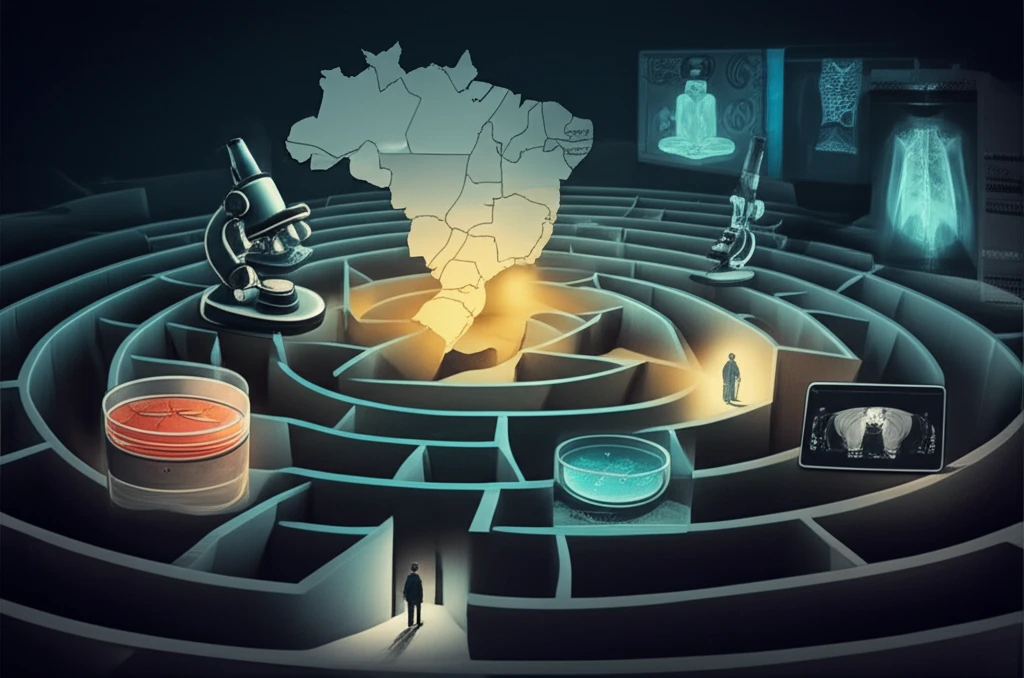
Surreal illustration of a diagnostic maze for tuberculosis in Roraima.

Tuberculosis in Roraima: Are We Missing Cases?

"A deep dive into the quality of tuberculosis diagnosis in a Brazilian state reveals gaps in detection and care, impacting vulnerable populations."


Tuberculosis (TB) remains a significant global health challenge, with approximately one-third of the world's population infected. In 2012 alone, 8.6 million people developed TB, and 1.4 million died from the disease. Brazil, like many other countries, grapples with the persistent threat of TB despite ongoing public health efforts. In 2008, it was the fourth leading cause of death from infectious diseases and the leading cause of death in AIDS patients in Brazil.

Extrapulmonary tuberculosis, which occurs outside the lungs, includes pleural tuberculosis, a common form among HIV-seronegative adults. Diagnosing pleural TB typically involves detecting Mycobacterium tuberculosis through direct examination or culture of pleural fluid or tissue samples. The combination of histological examination and culture of pleural tissue can lead to diagnosis in up to 90% of cases.

In the Brazilian state of Roraima, bordering Guyana and Venezuela, TB presents unique challenges. Roraima has a significant indigenous population, making up approximately 15% of its residents. This demographic is considered more vulnerable to developing tuberculosis, with incidence rates up to ten times higher than in the general population. The state's TB control program faces hurdles, especially in diagnosing pleural TB, as the necessary assessments are primarily available at a single tertiary referral center that recently opened.

The Diagnostic Dilemma: Quality of TB Diagnosis in Roraima

Surreal illustration of a diagnostic maze for tuberculosis in Roraima.

A cross-sectional study was conducted to evaluate the quality of pleural TB diagnosis in Roraima between 2005 and 2013. Data was gathered from the Brazilian Case Registry Database, focusing on reported cases of pleural TB. High-quality diagnoses were defined as those confirmed through bacteriological or histopathological methods.

The study revealed that among 1,395 reported TB cases, 116 (8.3%) were pleural TB, representing 38.9% of extrapulmonary TB cases. Unlike pulmonary TB, the incidence rate of pleural TB did not show a downward trend during the study period. Alarmingly, only 28.5% of cases had a high-quality diagnosis.

  • Limited Diagnostic Access: Despite the availability of diagnostic services, access to methods remained a challenge.
  • No Significant Improvement: No statistical improvements were observed in the quality of diagnoses during the study period.
  • Univariate Analysis: No collected demographic or clinical characteristics had a significant impact on the outcome.
The findings underscore the need for improved diagnostic practices and accessibility. Limited access to specific diagnostic methods appears to be a significant factor affecting the quality of TB diagnoses in Roraima. This situation impacts vulnerable populations disproportionately, including indigenous communities and those in correctional facilities.

Moving Forward: Improving TB Diagnostics and Care

The study's results highlight a critical need for enhanced TB diagnostics and healthcare accessibility in Roraima. By addressing these gaps, healthcare professionals and policymakers can work towards improving outcomes for vulnerable populations and reducing the burden of this persistent infectious disease. Further research is essential to develop targeted interventions and strategies that will improve the quality of TB diagnosis and care in the region.

About this Article -

This article was crafted using a human-AI hybrid and collaborative approach. AI assisted our team with initial drafting, research insights, identifying key questions, and image generation. Our human editors guided topic selection, defined the angle, structured the content, ensured factual accuracy and relevance, refined the tone, and conducted thorough editing to deliver helpful, high-quality information.See our About page for more information.

Everything You Need To Know

1

What is the primary challenge in diagnosing pleural tuberculosis in Roraima?

The primary challenge in diagnosing pleural tuberculosis in Roraima is limited access to diagnostic methods. This is exacerbated by the fact that necessary assessments are primarily available at a single tertiary referral center. This restriction particularly affects vulnerable populations, hindering the quality of diagnosis and care.

2

Why are the indigenous populations of Roraima particularly vulnerable to tuberculosis?

The indigenous population of Roraima is considered more vulnerable to tuberculosis because they experience incidence rates up to ten times higher than the general population. This increased susceptibility may be due to various factors, including socioeconomic conditions, healthcare access, and potentially genetic predispositions.

3

What diagnostic methods are used to confirm pleural tuberculosis?

Diagnosing pleural tuberculosis typically involves detecting Mycobacterium tuberculosis through direct examination or culture of pleural fluid or tissue samples. The combination of histological examination and culture of pleural tissue can lead to diagnosis in up to 90% of cases. These methods are critical for providing high-quality diagnoses, yet their accessibility is a key concern in Roraima.

4

What were the key findings regarding the quality of pleural tuberculosis diagnoses in Roraima between 2005 and 2013?

A cross-sectional study revealed that, among reported TB cases, 8.3% were pleural TB, representing 38.9% of extrapulmonary TB cases. However, only 28.5% of these cases had a high-quality diagnosis. The study also found that there was no significant improvement in the quality of diagnoses during the study period, highlighting the need for improved diagnostic practices and accessibility.

5

How can healthcare in Roraima improve the outcomes for those affected by tuberculosis?

Healthcare in Roraima can improve outcomes by enhancing tuberculosis diagnostics and healthcare accessibility. This involves addressing the gaps in diagnostic capabilities and ensuring that all residents, especially vulnerable populations like indigenous communities, have access to necessary assessments. Further research is essential to develop targeted interventions and strategies that will improve the quality of TB diagnosis and care in the region, thereby reducing the burden of this infectious disease.

Newsletter Subscribe

Subscribe to get the latest articles and insights directly in your inbox.