
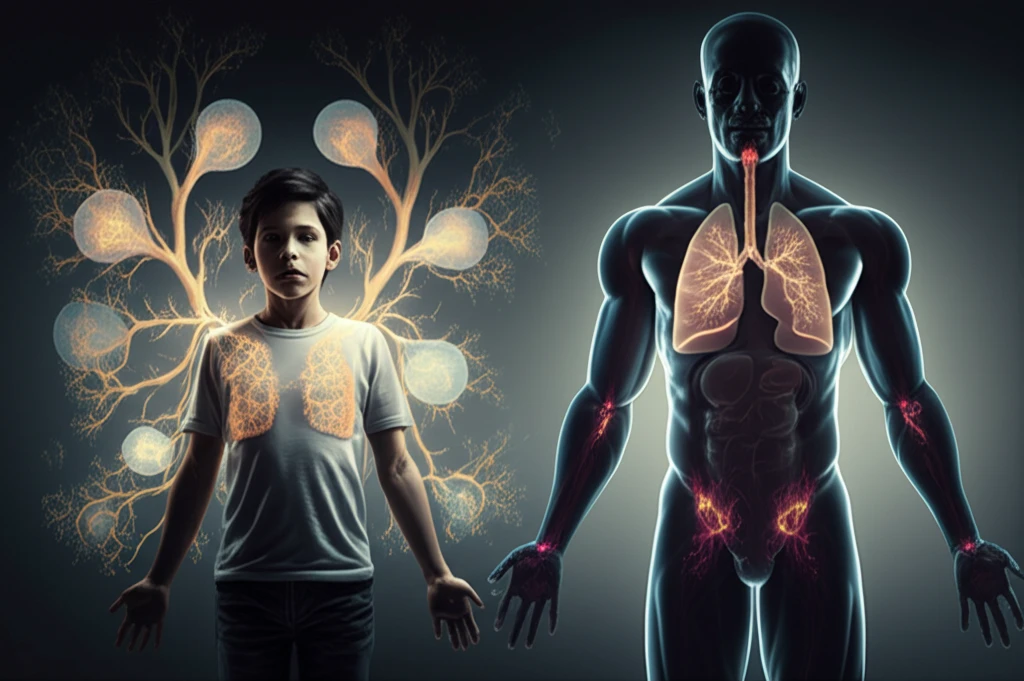
Tuberculosis in Children vs. Adults: What Are The Key Differences?

"A new study from Abidjan reveals significant contrasts in how TB manifests and affects children compared to adults, crucial for improving diagnosis and treatment strategies."
Tuberculosis (TB) remains a significant global health challenge, particularly in developing countries. While often thought of as an adult disease, TB affects children substantially, accounting for an estimated 5% to 20% of all TB cases worldwide. Understanding how TB presents differently in children versus adults is crucial for effective diagnosis, treatment, and public health management.
A recent study conducted in Abidjan, Côte d'Ivoire, sheds light on the specific differences between childhood TB (TBE) and adult TB (TBA). This retrospective analysis, which examined data from thousands of TB cases, highlights key variations in epidemiology, clinical presentation, and treatment outcomes. The findings offer valuable insights for healthcare professionals and policymakers aiming to improve TB control strategies.
This article explores the salient points of the Abidjan study, providing a comprehensive overview of how TB uniquely impacts children. By understanding these differences, we can advocate for more targeted interventions, ultimately reducing the burden of this disease on vulnerable populations.
Key Differences in TB Presentation: Children vs. Adults
The study in Abidjan meticulously compared 2,617 cases of childhood TB (TBE) with 36,648 cases of adult TB (TBA), uncovering notable distinctions:
- HIV Co-infection: Children with TB had a significantly lower rate of HIV co-infection (24.5%) compared to adults (44%).
- Type of TB: The study revealed differences in the types of TB prevalent in children versus adults. Pulmonary TB (TB affecting the lungs) was common in both groups, but children were more likely to have smear-negative pulmonary TB.
- Location of TB: Extrapulmonary TB (TB occurring outside the lungs) also showed variations in location. Lymph node involvement was more frequent among children (30.1%) than adults (12.1%), while pleural TB (TB affecting the lining of the lungs) was more common in adults (51.3%) compared to children (26.2%).
- Treatment Outcomes: Children experienced better treatment outcomes compared to adults. The rate of treatment failure or death was significantly lower in children (1.9%) than in adults (3.9%).
Tailoring TB Strategies for Children: A Call to Action
The Abidjan study provides critical insights into the unique characteristics of tuberculosis in children. By recognizing these differences in presentation, HIV co-infection rates, and treatment outcomes, healthcare systems can develop more targeted and effective strategies to combat TB in this vulnerable population. This includes focusing on early diagnosis, tailored treatment regimens, and preventive measures, ultimately reducing the burden of TB and improving the health and well-being of children worldwide.