
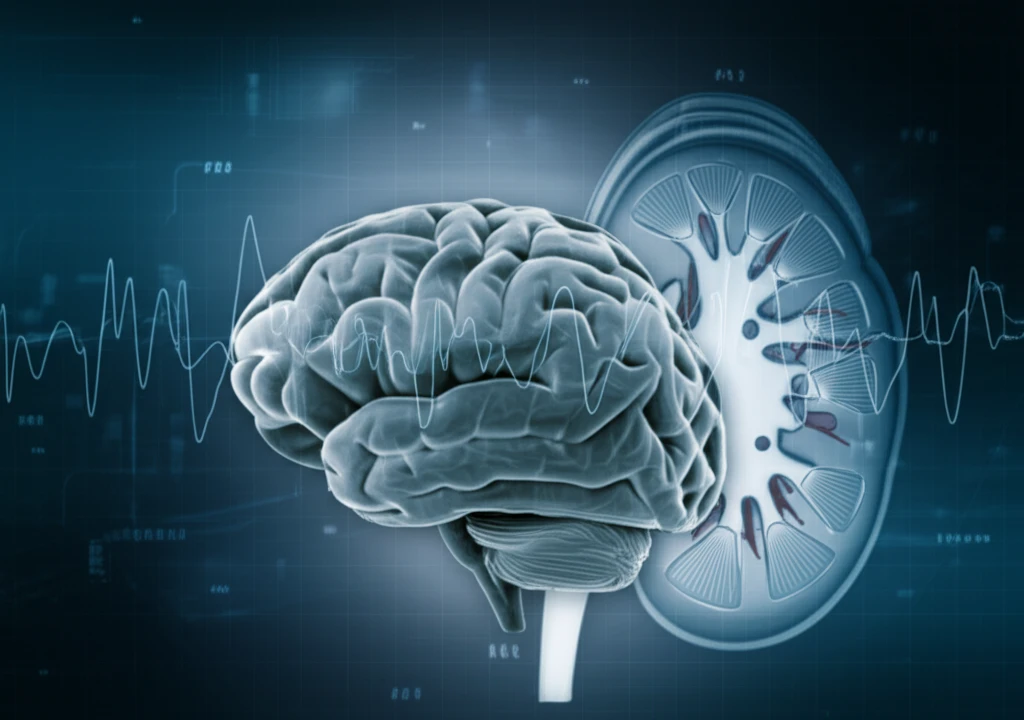
Surreal illustration of brain with triphasic waves and kidney symbol, representing pregabalin toxicity.

Triphasic Waves: Decoding Brain Signals and Medication Toxicity

"Unraveling the connection between triphasic brainwaves, encephalopathy, and pregabalin toxicity, especially in individuals with kidney issues."


Since their initial observation in 1955 as indicators of hepatic issues, triphasic waves have been linked to several health conditions. These include everything from hypertensive encephalopathy and electrolyte imbalances to brain abscesses and medication side effects. They are especially common in individuals with pre-existing white matter lesions or general cerebral atrophy.

Certain medications have been reported to trigger triphasic waves. Valproate, a mood stabilizer, has been implicated, along with substances like baclofen, lithium, and even some antibiotics. Continuous triphasic waves are rare, and an association between these unusual brainwave patterns and pregabalin toxicity is even less common.

This article explores a fascinating case where a patient with underlying white matter lesions developed triphasic waves. These waves were triggered by pregabalin toxicity due to renal insufficiency, shedding light on the complexities of medication side effects and brain function.

The Case: Pregabalin Toxicity and Triphasic Waves

Surreal illustration of brain with triphasic waves and kidney symbol, representing pregabalin toxicity.

A 41-year-old woman was admitted to the neurology service, experiencing acute encephalopathy, or a change in mental status. Her medical history was complex, including type 1 diabetes with related nerve and eye damage, a past pancreas transplant, recurring urinary tract infections, hypothyroidism, migraine headaches, and gastroesophageal reflux. She was on multiple medications to manage these conditions.

Over a few days, the patient became increasingly lethargic and stopped eating properly. When she arrived at the hospital, she was only responsive to painful stimuli and had difficulty staying awake during examinations. Though she couldn't follow commands, her reflexes were mostly intact. Initial lab tests revealed elevated creatinine levels, indicating kidney problems.

  • Elevated Creatinine: Serum creatinine was high at 2.5 mg/dL, up from her baseline of 1.5 mg/dL.
  • Normal Ammonia & Glucose: Her ammonia and glucose levels were within the normal range.
  • Cerebrospinal Fluid Analysis: A lumbar puncture showed a normal opening pressure and cell counts, ruling out infection.
  • MRI Findings: Brain MRI showed extensive white matter hyperintensities, which were attributed to her long-standing diabetes.
An EEG (electroencephalogram) was performed, revealing ongoing, bilateral synchronous discharges. These discharges, a type of abnormal brainwave activity, temporarily improved with stimulation but didn't respond to lorazepam, an anti-seizure medication. Given the patient's declining kidney function, doctors suspected pregabalin toxicity. The medication was stopped, and she received intravenous fluids. Over the next few days, her mental state significantly improved, and a repeat EEG confirmed the improvement, even though her kidney function remained impaired.

The Significance: Recognizing Medication-Induced Encephalopathy

This case underscores the importance of considering medication toxicity in patients with renal or hepatic failure who present with triphasic waves and confusion. It can be challenging to differentiate between purely metabolic causes and drug-related effects. Pregabalin, while helpful for managing nerve pain and anxiety, can accumulate to toxic levels when kidney function declines. Recognizing medication-induced encephalopathy is critical because it’s often reversible with prompt intervention.

About this Article -

This article was crafted using a human-AI hybrid and collaborative approach. AI assisted our team with initial drafting, research insights, identifying key questions, and image generation. Our human editors guided topic selection, defined the angle, structured the content, ensured factual accuracy and relevance, refined the tone, and conducted thorough editing to deliver helpful, high-quality information.See our About page for more information.

Everything You Need To Know

1

What are triphasic waves, and what do they indicate about brain health?

Triphasic waves are a type of abnormal brainwave activity, often linked to various health issues. They were initially observed in 1955 and have been associated with conditions like hepatic issues, hypertensive encephalopathy, electrolyte imbalances, and medication side effects. The presence of triphasic waves can indicate metabolic imbalances or, as the case highlights, medication toxicity, particularly in individuals with pre-existing conditions like white matter lesions or cerebral atrophy. Their appearance in an EEG (electroencephalogram) signals a potential disruption in normal brain function, requiring further investigation to determine the underlying cause.

2

How is pregabalin toxicity linked to triphasic waves, and what are the implications of this connection?

Pregabalin, used to manage nerve pain and anxiety, can lead to toxicity when kidney function is compromised. This toxicity can manifest as triphasic waves on an EEG. The implications of this connection are significant. In cases of renal insufficiency, pregabalin can accumulate to toxic levels because the kidneys are responsible for its excretion from the body. The presence of triphasic waves in a patient taking pregabalin, especially with kidney problems, should prompt immediate consideration of medication-induced encephalopathy. This is critical because the condition can often be reversed by stopping the medication and providing supportive care, as demonstrated in the case study.

3

In the context of the case presented, what were the key findings in the 41-year-old woman's diagnosis that pointed towards pregabalin toxicity?

The diagnosis of pregabalin toxicity in the 41-year-old woman was supported by several key findings. First, the patient presented with acute encephalopathy, including lethargy and decreased responsiveness. Second, initial lab tests revealed elevated creatinine levels (2.5 mg/dL, up from a baseline of 1.5 mg/dL), indicating kidney problems. Third, an EEG showed ongoing, bilateral synchronous discharges, which are triphasic waves. The doctors suspected pregabalin toxicity due to these findings combined with the patient's declining kidney function. The patient's mental state improved after stopping the medication and receiving intravenous fluids, confirming the diagnosis.

4

Besides pregabalin, what other medications are known to be associated with the occurrence of triphasic waves?

Besides pregabalin, several other medications have been implicated in triggering triphasic waves. Valproate, a mood stabilizer, is another medication that has been associated with this brainwave pattern. Other substances such as baclofen, lithium, and even some antibiotics can also contribute. The use of these medications, especially in patients with existing conditions like renal or hepatic issues, should be carefully monitored for signs of medication-induced encephalopathy, including the appearance of triphasic waves.

5

What role does kidney function play in medication-induced encephalopathy, and how does it relate to triphasic waves?

Kidney function is crucial in the context of medication-induced encephalopathy because the kidneys are responsible for clearing many medications from the body. When kidney function declines (renal insufficiency), medications like pregabalin can accumulate to toxic levels. This build-up of the drug in the system can then affect brain function, potentially leading to the appearance of triphasic waves on an EEG. The presence of both triphasic waves and impaired kidney function in a patient taking certain medications should raise suspicion of medication toxicity. The prompt recognition of this relationship is important because it can often be reversed by adjusting or stopping the medication, preventing further neurological damage.

Newsletter Subscribe

Subscribe to get the latest articles and insights directly in your inbox.