
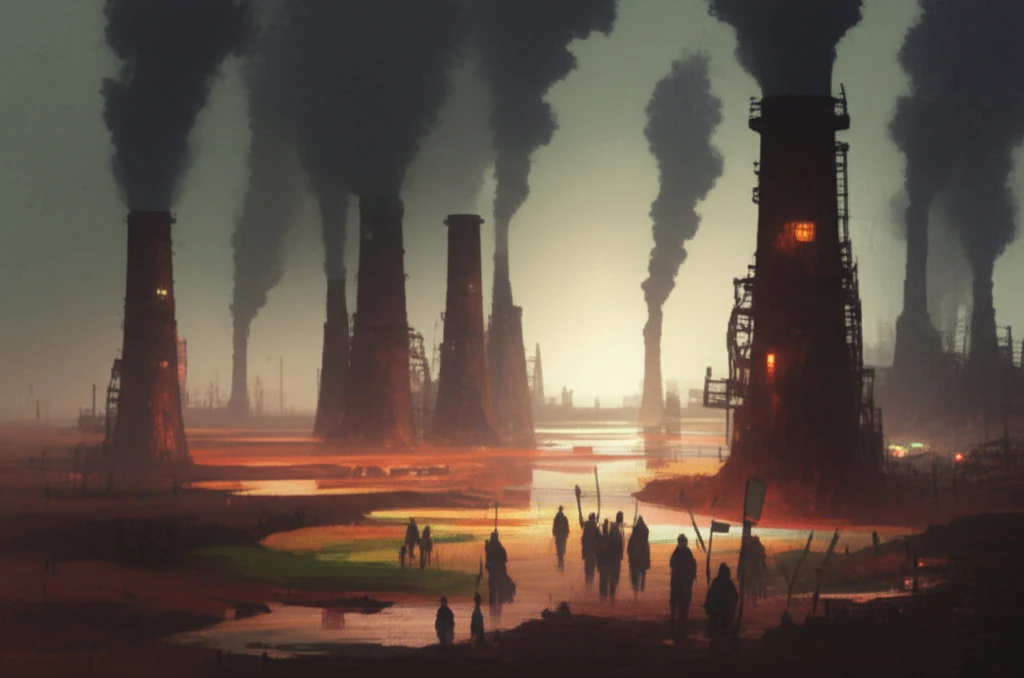
A surreal digital illustration depicting a polluted environment with distressed individuals, protesting.

Toxic Waters and Troubled Towns: How Chemical Contamination Impacts Lives in Brazil and Portugal

"Unpacking the human and environmental costs of industrial pollution, and exploring community responses in two affected regions."


Industrial progress has often come at a steep price, leaving behind a legacy of pollution that contaminates the very ground we stand on. This reality is starkly illustrated in the cases of Cidade dos Meninos in Brazil and Estarreja in Portugal, where chemical contamination has irrevocably altered the lives of residents and the landscapes they inhabit.

This article examines the profound effects of chemical contamination, highlighting the direct and indirect consequences on human health and the environment. It explores the institutional responses, or lack thereof, to these crises and the resilience and actions of the affected communities. This investigation emphasizes the intricate links between environmental pollution, public health, and social justice.

By focusing on these two specific locations, we can better understand the complex interplay of factors at play: the economic drivers of contamination, the scientific uncertainties involved, and the social vulnerabilities exposed. The goal is to provide a comprehensive picture of the devastating impact of chemical contamination.

The Grim Realities: Unveiling the Impact of Chemical Contamination

A surreal digital illustration depicting a polluted environment with distressed individuals, protesting.

Chemical contamination wreaks havoc on multiple levels. It degrades the environment, disrupts ecosystems, and poses significant risks to human health. The consequences include a rise in environmental pollution and subsequent health problems, but also extend to indirect impacts, such as economic hardship, social disruption, and psychological distress. This multifaceted nature of contamination demands a thorough analysis to fully grasp the scope of the problem.

The two case studies, Cidade dos Meninos and Estarreja, offer contrasting, yet equally compelling, examples of how chemical pollution can affect the daily lives of ordinary people.

  • Cidade dos Meninos, Brazil: This area, once home to industrial activity, now grapples with the lingering effects of past contamination. The community faces challenges in accessing clean resources, and a lack of institutional support.
  • Estarreja, Portugal: Here, the presence of an active chemical industry complex has resulted in ongoing contamination, with a complex history of toxic substances released into the environment.
These communities are not isolated; similar stories of environmental injustice can be found worldwide. Examining these cases provides a window into the broader issues of environmental inequality and the urgent need for effective policies and community-led solutions.

Moving Forward: Seeking Justice and Building Resilience

The stories of Cidade dos Meninos and Estarreja serve as a powerful reminder of the devastating impacts of industrial pollution and the urgent need for environmental justice. By raising awareness, promoting community-led solutions, and demanding accountability, we can create a healthier and more equitable world for all. The fight for clean air, water, and land is a fight for human rights and a sustainable future.

About this Article -

This article was crafted using a human-AI hybrid and collaborative approach. AI assisted our team with initial drafting, research insights, identifying key questions, and image generation. Our human editors guided topic selection, defined the angle, structured the content, ensured factual accuracy and relevance, refined the tone, and conducted thorough editing to deliver helpful, high-quality information.See our About page for more information.

This article is based on research published under:

DOI-LINK: 10.1590/s0104-12902016145753, Alternate LINK

Title: Contaminação Química: Respostas Das Instituições Responsáveis E Ações Das Populações Atingidas No Brasil E Em Portugal

Subject: Public Health, Environmental and Occupational Health

Journal: Saúde e Sociedade

Publisher: FapUNIFESP (SciELO)

Authors: Lúcia De Oliveira Fernandes, João Arriscado Nunes, Marcelo Firpo De Souza Porto

Published: 2016-03-01

Everything You Need To Know

1

What are the primary consequences of chemical contamination on communities, based on the experiences in Brazil and Portugal?

Chemical contamination leads to several adverse effects. It directly impacts human health through environmental pollution and the degradation of ecosystems. Indirectly, it causes economic hardship, social disruption, and psychological distress. The communities of Cidade dos Meninos in Brazil and Estarreja in Portugal face challenges such as accessing clean resources and dealing with the long-term presence of toxic substances, respectively. A critical aspect often missing in addressing these issues is comprehensive institutional support and effective remediation policies.

2

In what specific ways do the cases of Cidade dos Meninos and Estarreja illustrate the impact of industrial pollution on daily life?

Cidade dos Meninos exemplifies the lingering effects of past industrial activity, where the community struggles with accessing clean resources and grapples with a lack of sufficient institutional support to address the contamination. In contrast, Estarreja demonstrates the impact of ongoing contamination from an active chemical industry complex, leading to the continuous release of toxic substances into the environment. Both cases highlight how industrial pollution disrupts daily life, leading to health problems, economic strain, and social upheaval. This also raises questions about corporate responsibility and sustainable industrial practices, topics that demand further exploration.

3

What key factors contribute to environmental injustice, as highlighted by the situations in Cidade dos Meninos and Estarreja?

Environmental injustice arises from a complex interplay of economic drivers, scientific uncertainties, and social vulnerabilities. In both Cidade dos Meninos and Estarreja, the pursuit of industrial progress has led to environmental pollution, disproportionately affecting vulnerable communities. The lack of effective policies, accountability, and community-led solutions further exacerbates the problem. Moreover, the failure to address the long-term health and environmental impacts perpetuates this injustice. A related aspect that needs attention is the role of government regulations and their enforcement to prevent future contamination.

4

How can raising awareness and promoting community-led solutions contribute to environmental justice in areas affected by chemical contamination?

Raising awareness is crucial to highlight the devastating impacts of industrial pollution and to galvanize support for affected communities. Promoting community-led solutions empowers residents to take an active role in addressing the challenges they face, fostering resilience and self-determination. In places like Cidade dos Meninos and Estarreja, community involvement can drive demand for accountability from industries and governments, leading to more effective policies and remediation efforts. A missing element is often the necessary funding and technical expertise to support these community initiatives.

5

What are some missing discussions to the cases of Cidade dos Meninos and Estarreja to connect environmental pollution, public health, and social justice?

A critical missing discussion revolves around the long-term health monitoring and support for affected residents in Cidade dos Meninos and Estarreja, including epidemiological studies to fully understand the health impacts of the chemical contamination. Another aspect is a thorough investigation into the economic and social costs of the pollution, including property devaluation, loss of livelihoods, and impacts on social cohesion. Furthermore, a comparative analysis of different remediation strategies and their effectiveness in similar contaminated sites globally is lacking. Finally, addressing the ethical dimensions of industrial responsibility and the rights of communities to a healthy environment is essential for achieving true environmental justice.

Newsletter Subscribe

Subscribe to get the latest articles and insights directly in your inbox.