
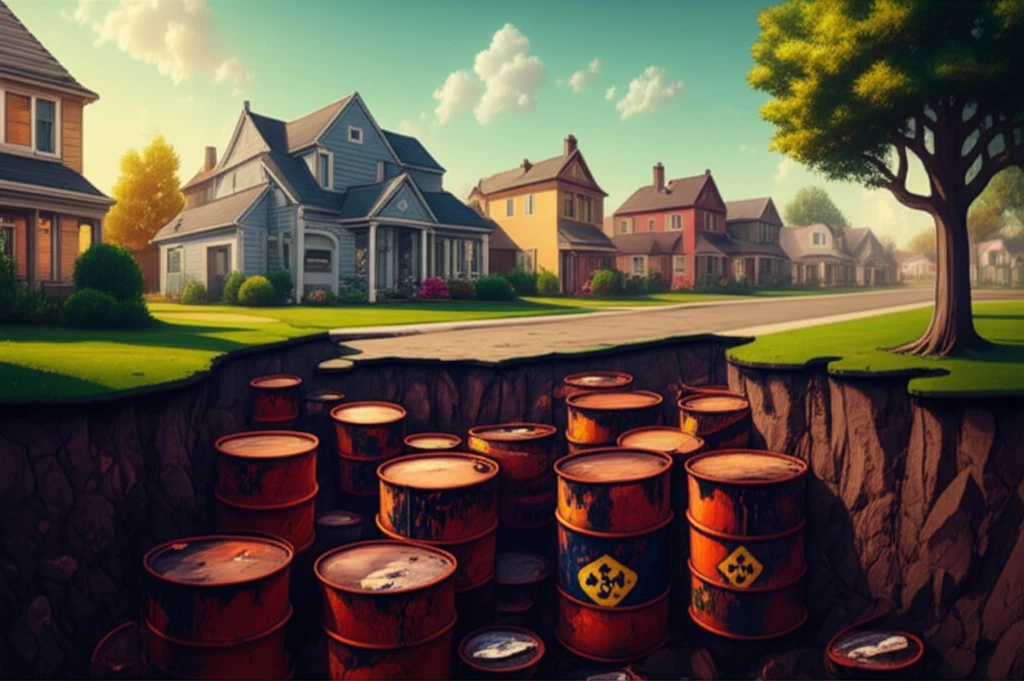
Toxic Time Bombs: Are Yesterday's 'Clean' Sites Today's Superfund Nightmares?

"As regulations evolve, 'emerging contaminants' are turning seemingly safe waste sites into potential hazards, demanding a fresh look at our cleanup strategies."
For decades, environmental toxicologists have sounded the alarm about hazardous waste sites, revealing the hidden dangers to communities living nearby. This awareness sparked regulations aimed at preventing future exposures, leading to increased research into chemical fates and environmental remediation. However, the focus has largely been on a relatively small group of well-known contaminants, such as PCBs and arsenic. But what about the overlooked substances?
A groundbreaking workshop, "Superfund Contaminants: The Next Generation," brought experts together to address a critical question: Are we overlooking a new wave of 'emerging contaminants' (CECs) that could transform seemingly safe sites into tomorrow's Superfund nightmares? This article delves into the complex issue of previously unrecognized contaminants at hazardous waste sites, shedding light on the urgent need for updated research and preventative strategies.
Recent studies of wastewater and surface waters have revealed a concerning presence of previously undetected contaminants. These discoveries were largely triggered by leaps in analytical chemistry, specifically the ability to detect polar and thermally unstable compounds using advanced techniques like liquid chromatography coupled with mass spectrometry. It's time to broaden our scope and address these potential threats.
What Makes a Superfund-Worthy Emerging Contaminant?
Not all contaminants are created equal. The workshop participants identified key characteristics that distinguish Superfund-relevant CECs:
- High-Volume Production: A high production volume acts as a surrogate marker, indicating there will likely be a higher chance of widespread occurrence.
- Persistence: Look for persistence in environments where there's also a high chance of exposure. A contaminant that lingers is far more dangerous.
- Bioavailability and Bioaccumulation: Does the contaminant accumulate in living organisms, potentially magnifying its effects up the food chain?
- Toxicity: Self explanatory. The harmful the contaminate the higher the chance of severe widespread impact.
- Localized Accumulation: Even a highly toxic substance poses less risk if it remains isolated. The danger increases when it concentrates in specific areas where people or wildlife could be exposed.
A Call to Action: Prioritizing Prevention and Proactive Research
The time to act is now. We must expand the scope of hazardous waste site remediation efforts to include emerging contaminants. This requires a multi-pronged approach. We need more research to address unconventional responses and impacts and improve our understanding of remediation technologies. We must also have more focus to localized sources and prevention. Ultimately, the most effective solution is to prevent contamination in the first place.