
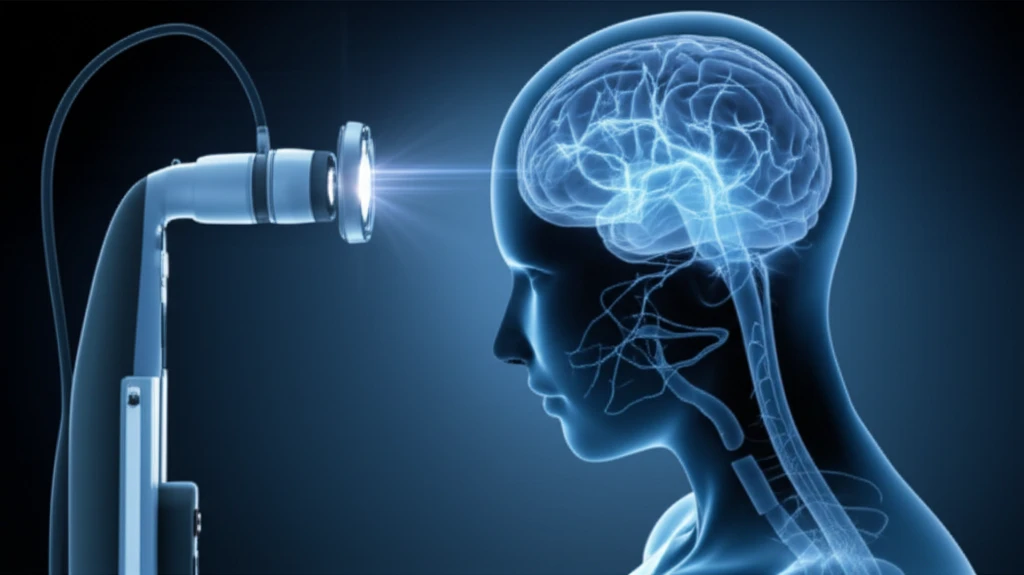
Illustration of TMS machine and the human brain with neural pathways.

TMS vs. MDD: Can Brain Stimulation Beat Depression?

"Explore the science-backed benefits of transcranial magnetic stimulation (TMS) for depression treatment."


Are you or a loved one battling the persistent grip of depression? If so, you're not alone. Millions of people worldwide grapple with this debilitating condition, often seeking effective treatments to reclaim their lives. The journey can be challenging, filled with trial and error as individuals search for solutions that truly make a difference. But what if there was a way to address depression directly, working with the brain's natural systems to lift the cloud?

Transcranial magnetic stimulation (TMS) is emerging as a promising treatment option for major depressive disorder (MDD). This non-invasive procedure uses magnetic pulses to stimulate nerve cells in the brain, particularly in areas associated with mood regulation. Unlike traditional treatments like medication and psychotherapy, TMS offers a unique approach, often without the side effects.

In this article, we will explore the world of TMS, examining its effectiveness, the science behind it, and how it's changing the landscape of mental health care. We'll dive into the details, providing you with valuable information to help you understand TMS and make informed decisions about your mental health. So, let's embark on a journey to uncover the potential of TMS in the fight against depression.

Understanding TMS: A Non-Invasive Approach to Brain Stimulation

Illustration of TMS machine and the human brain with neural pathways.

TMS is a sophisticated technique that uses magnetic fields to stimulate nerve cells in the brain. It works by delivering short, painless pulses of magnetic energy to specific brain regions associated with mood regulation. The most common target is the dorsolateral prefrontal cortex (DLPFC), which plays a vital role in mood, planning, and decision-making.

The process involves placing a magnetic coil near the scalp. This coil generates brief magnetic pulses that pass through the skull and into the brain, where they stimulate the nerve cells. There are two main types of TMS: high-frequency (HF) and low-frequency (LF). HF TMS stimulates the brain cells, while LF TMS decreases their activity.

  • Non-Invasive: TMS doesn't require surgery or medication, making it a safe and convenient option.
  • Targeted Treatment: The precision of TMS allows doctors to target specific brain regions associated with depression.
  • Well-Tolerated: Most people experience minimal side effects, such as mild headaches.
  • Outpatient Procedure: TMS sessions are typically conducted in a doctor's office or clinic.
The effectiveness of TMS has been extensively studied. Numerous clinical trials have demonstrated its ability to significantly reduce depressive symptoms in many individuals. TMS can be particularly effective for those who haven't found relief with traditional treatments. Recent research underscores TMS's value, offering a glimmer of hope for a future where depression is met with innovative and personalized solutions.

The Future of TMS in Mental Health

TMS is a rapidly evolving field, with ongoing research focusing on refining treatment protocols, optimizing targeting techniques, and exploring its application to other mental health conditions. The journey continues, driven by a shared goal: to provide more effective and accessible mental health care for all. As our understanding of the brain grows, TMS is likely to play an even more significant role in the future of mental health treatment.

About this Article -

This article was crafted using a human-AI hybrid and collaborative approach. AI assisted our team with initial drafting, research insights, identifying key questions, and image generation. Our human editors guided topic selection, defined the angle, structured the content, ensured factual accuracy and relevance, refined the tone, and conducted thorough editing to deliver helpful, high-quality information.See our About page for more information.

This article is based on research published under:

DOI-LINK: 10.3389/fpsyt.2018.00413, Alternate LINK

Title: Response And Remission Rates Following High-Frequency Vs. Low-Frequency Repetitive Transcranial Magnetic Stimulation (Rtms) Over Right Dlpfc For Treating Major Depressive Disorder (Mdd): A Meta-Analysis Of Randomized, Double-Blind Trials

Subject: Psychiatry and Mental health

Journal: Frontiers in Psychiatry

Publisher: Frontiers Media SA

Authors: Xu Cao, Chunshan Deng, Xiaolin Su, Yi Guo

Published: 2018-09-07

Everything You Need To Know

1

How does transcranial magnetic stimulation (TMS) work to alleviate symptoms of major depressive disorder (MDD)?

Transcranial magnetic stimulation (TMS) works by delivering short magnetic pulses to stimulate nerve cells in the brain, especially in areas linked to mood regulation. A common target is the dorsolateral prefrontal cortex (DLPFC), which is important for mood, planning, and decision-making. By stimulating this area, TMS aims to improve the brain's natural ability to regulate mood, offering an alternative for those who haven't found relief through traditional treatments. Further research is ongoing to refine TMS protocols and broaden its application to other mental health conditions.

2

What are the primary advantages of using transcranial magnetic stimulation (TMS) over traditional treatments like medication and psychotherapy for major depressive disorder (MDD)?

Transcranial magnetic stimulation (TMS) provides several key advantages over traditional treatments for major depressive disorder (MDD). First, it's non-invasive, meaning it doesn't require surgery or medication. TMS is a targeted treatment, allowing doctors to stimulate specific brain regions associated with depression, like the dorsolateral prefrontal cortex (DLPFC). It's generally well-tolerated, with minimal side effects such as mild headaches, and it's an outpatient procedure, allowing patients to continue their daily lives with ease. However, TMS may not be effective for everyone, and traditional treatments are also evolving and improving.

3

What is the role of the dorsolateral prefrontal cortex (DLPFC) in transcranial magnetic stimulation (TMS) treatment for major depressive disorder (MDD)?

The dorsolateral prefrontal cortex (DLPFC) plays a vital role in transcranial magnetic stimulation (TMS) treatment for major depressive disorder (MDD) because it is a key brain region associated with mood regulation, planning, and decision-making. TMS targets this area with magnetic pulses to stimulate nerve cells, aiming to improve mood and alleviate depressive symptoms. By focusing on the DLPFC, TMS seeks to directly influence the brain's natural mood regulation systems, offering a targeted approach to treating depression. This focus is based on extensive research linking DLPFC activity to depressive disorders.

4

Can you elaborate on the differences between high-frequency (HF) and low-frequency (LF) transcranial magnetic stimulation (TMS) and their respective effects on brain activity?

High-frequency (HF) and low-frequency (LF) transcranial magnetic stimulation (TMS) represent different approaches to modulating brain activity. HF TMS is designed to stimulate brain cells, increasing their activity in specific regions like the dorsolateral prefrontal cortex (DLPFC). In contrast, LF TMS aims to decrease brain cell activity. The choice between HF and LF TMS depends on the individual's condition and the specific treatment goals. Some research suggests that HF TMS is more effective for alleviating depressive symptoms by exciting underactive brain regions, but LF TMS may be used in other contexts to calm overactive areas.

5

How is research shaping the future applications of transcranial magnetic stimulation (TMS) in mental health, and what potential advancements are being explored?

Ongoing research is significantly shaping the future applications of transcranial magnetic stimulation (TMS) in mental health. Scientists are working to refine treatment protocols to enhance TMS's effectiveness for major depressive disorder (MDD) and to explore its use for other mental health conditions. Research also focuses on optimizing targeting techniques, potentially using advanced neuroimaging to precisely target brain regions like the dorsolateral prefrontal cortex (DLPFC). These advancements aim to provide more personalized and effective mental health care, expanding the role of TMS in addressing various psychiatric disorders. However, the long-term effects and optimal use of TMS are still under investigation.

Newsletter Subscribe

Subscribe to get the latest articles and insights directly in your inbox.