
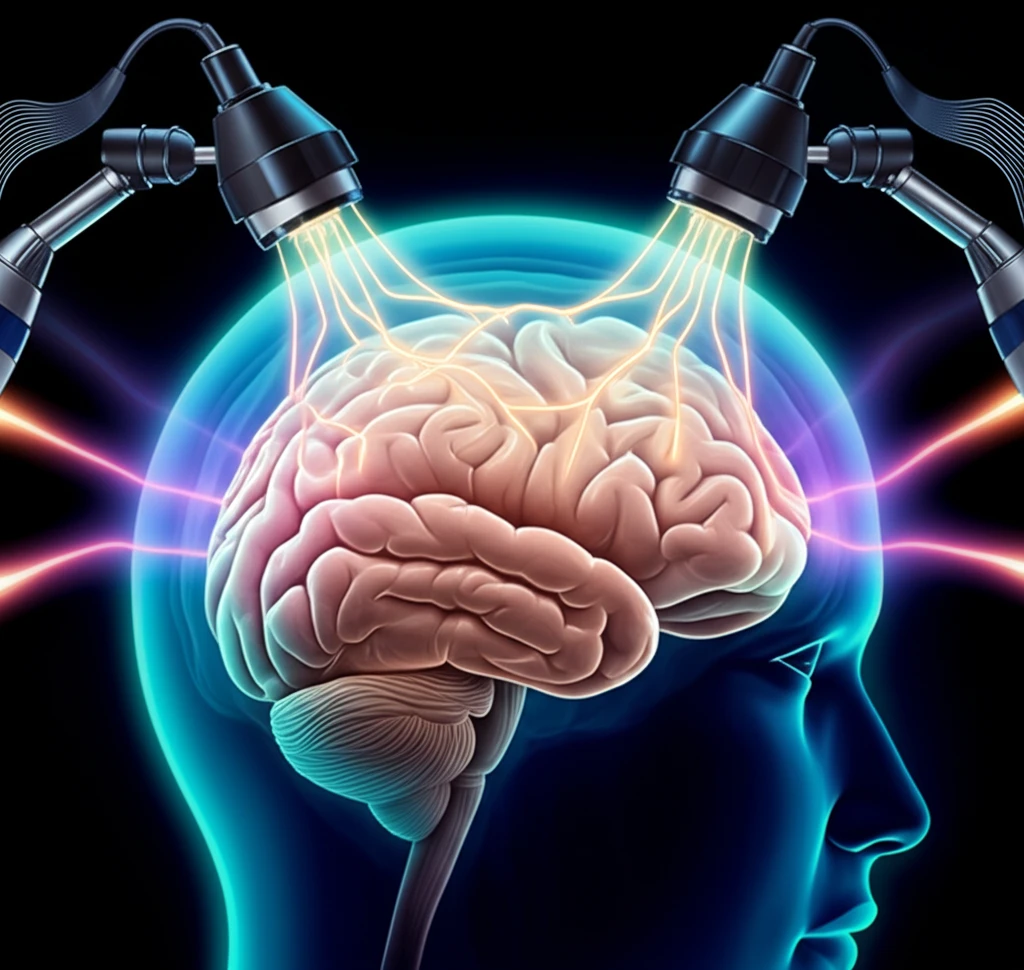
TMS Breakthrough: Are Your Depression Treatments Truly Optimized?

"New research highlights significant differences between TMS coil types, potentially transforming how refractory depression is treated."
Transcranial Magnetic Stimulation (TMS) has emerged as a beacon of hope for individuals grappling with treatment-resistant depression. This non-invasive technique uses magnetic fields to stimulate nerve cells in the brain, offering a lifeline when traditional therapies fall short. The effectiveness of TMS, however, isn't just about the technology itself, it's deeply intertwined with the specific tools used to deliver the magnetic pulses.
At the heart of TMS are the coils that generate these magnetic fields. Among the most common are the figure-8 (Fo8) coil, known for its focused stimulation, and the double-cone (DC) coil, designed to reach deeper brain structures. Each coil type possesses unique properties, influencing the depth and intensity of stimulation. This raises a critical question: Does the choice of coil significantly impact treatment outcomes in patients with refractory depression?
A recent study published in the European Journal of Psychiatry sheds light on this very question. Conducted by researchers at the Centre Hospitalier de l'Université de Montréal (CHUM), the study reveals significant differences in motor thresholds (MTs) between the Fo8 and DC coils. These findings suggest that the coil type used could substantially alter the effectiveness and safety of TMS therapy. Let's delve deeper into the implications of this research and what it could mean for those seeking relief from depression.
Decoding Motor Thresholds: Why They Matter in TMS
Before diving into the study's findings, it's important to understand the concept of motor threshold (MT). In TMS, the motor threshold refers to the minimum intensity of stimulation required to elicit a motor response, typically a twitch in a hand muscle. Determining a patient's MT is crucial because it helps clinicians personalize the treatment, ensuring that the stimulation is strong enough to be effective but not so intense as to cause discomfort or adverse effects.
- Significant Difference: The study revealed a significant difference in MTs between the two coil types. The average MT with the Fo8 coil was 57.9%, while with the DC coil, it was only 39.7%. This means that, on average, the Fo8 coil required a 31.5% higher intensity to elicit a motor response compared to the DC coil.
- Correlation: There was a strong positive correlation between the MT with the Fo8 coil and the difference in MTs between the two coils. In other words, as the MT with the Fo8 coil increased, the difference in the capacity of the coils to elicit cortical activation also increased.
- No Order Effect: The order in which the coils were tested did not affect the results, indicating that the observed differences were solely due to the coil type and not influenced by any carryover effects.
Optimizing TMS Therapy: A Call for Personalized Treatment
The study's findings emphasize the need for personalized approaches in TMS therapy. Determining MTs using the specific coil intended for treatment is crucial to ensure accurate dosing and maximize therapeutic benefits. As TMS continues to evolve, further research is needed to explore the nuances of coil design and stimulation parameters to refine treatment protocols and improve outcomes for individuals with refractory depression. By understanding the factors that influence TMS effectiveness, we can pave the way for more targeted and successful interventions, offering renewed hope for those seeking relief from this debilitating condition.