
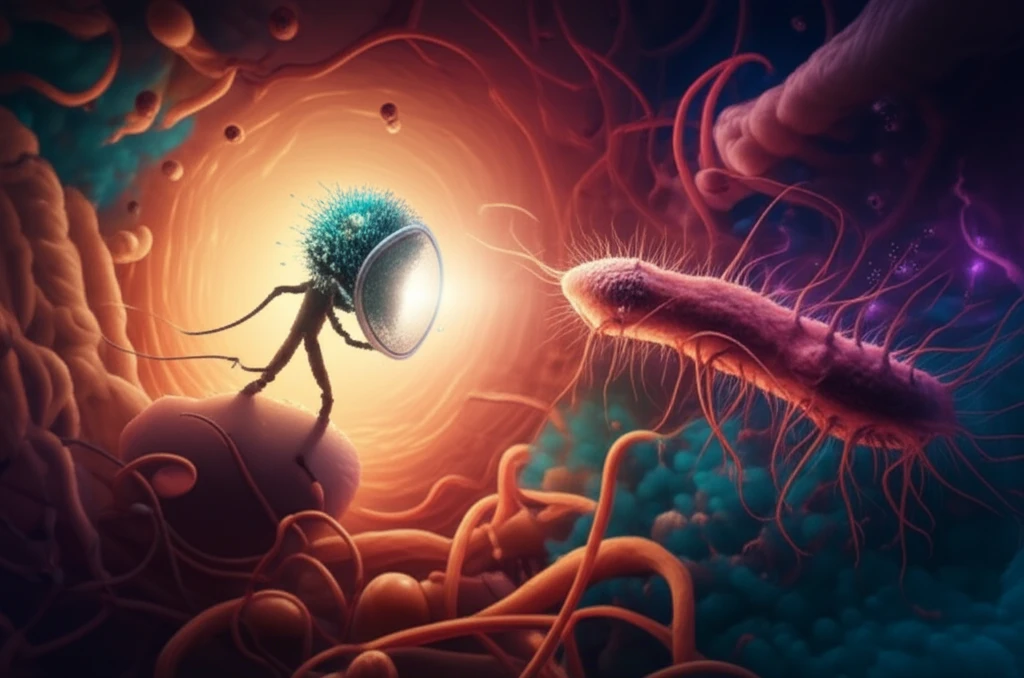
Tiny Titans vs. Amoebas: How Nanomedicine is Revolutionizing Treatment for a Common Threat

"Unlocking the Power of Nanotechnology: A Deep Dive into the Promising World of Tinidazole Nanosuspensions"
Amoebiasis, a disease caused by the parasitic protozoan Entamoeba histolytica, poses a significant global health challenge. This infection, prevalent in many parts of the world, particularly in developing countries, leads to a range of gastrointestinal symptoms and complications. Traditional treatments often face challenges related to drug efficacy and patient compliance, paving the way for innovative solutions.
Enter nanomedicine, a rapidly evolving field that harnesses the power of nanotechnology to improve drug delivery and therapeutic outcomes. One promising approach involves the use of nanosuspensions, which are ultra-fine suspensions of drug nanoparticles. These tiny particles offer several advantages, including enhanced solubility and improved bioavailability, which can lead to more effective treatments.
This article delves into the development, characterization, and evaluation of tinidazole nanosuspensions for treating amoebiasis. It explores the potential of this innovative approach to revolutionize treatment strategies, reduce side effects, and enhance patient well-being. We'll explore the science, the benefits, and the future of this exciting area of medical research.
Nanotechnology's Role in Enhancing Drug Delivery
The effectiveness of a drug isn't solely determined by its inherent properties; the way it's delivered to the body plays a pivotal role. Many drugs face challenges related to solubility and absorption, particularly when administered orally. Poor solubility can limit a drug's ability to dissolve in bodily fluids, hindering its absorption into the bloodstream and reducing its therapeutic effect.
- Increased Solubility: Nanosuspensions boost the saturation solubility of drugs, allowing them to dissolve more readily in bodily fluids.
- Enhanced Bioavailability: Improved solubility leads to increased absorption and bioavailability, ensuring that more of the drug is available to the body.
- Targeted Delivery: Nanoparticles can be engineered to target specific cells or tissues, minimizing side effects and maximizing therapeutic impact.
- Controlled Release: Nanosuspensions can be designed to release drugs at a controlled rate, extending their duration of action and improving treatment outcomes.
The Future of Nanomedicine in Combating Infectious Diseases
The development of tinidazole nanosuspensions is a testament to the transformative potential of nanomedicine. As research in this field continues to advance, we can anticipate even more innovative solutions for treating a wide range of diseases. Nanotechnology holds immense promise for enhancing drug delivery, improving therapeutic outcomes, and ultimately, improving the health and well-being of people worldwide.