
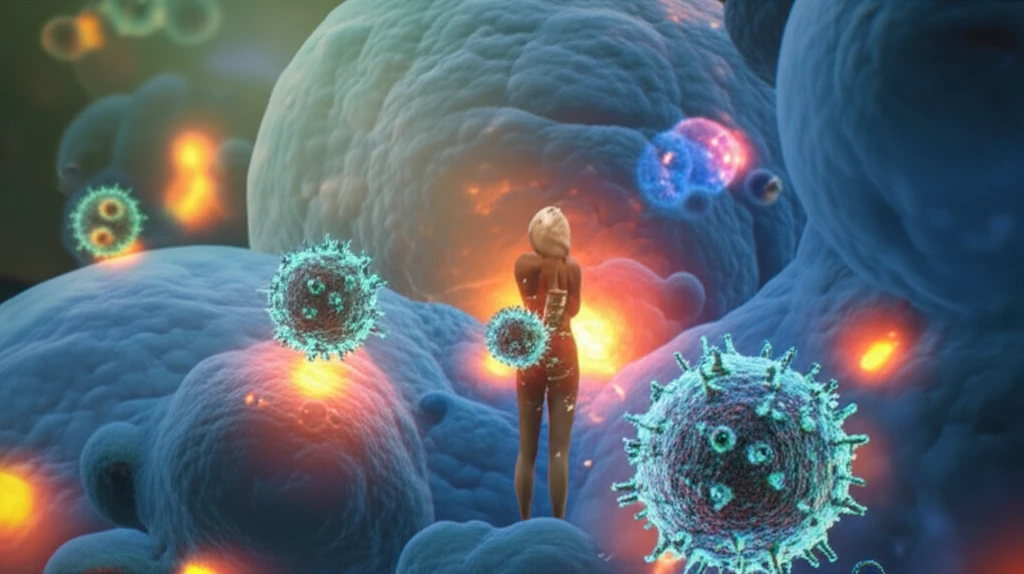
Tiny Titans: How Nanoparticles Could Revolutionize Cancer Treatment

"Scientists are exploring the potential of microscopic particles to deliver cancer-fighting drugs directly to tumors, offering new hope for patients."
Cancer, a disease that touches millions of lives, continues to challenge medical science. Traditional treatments like chemotherapy and radiation, while effective, often come with harsh side effects, damaging healthy cells along with cancerous ones. But a new frontier in cancer treatment is emerging: nanotechnology. Scientists are turning to microscopic particles, known as nanoparticles, to deliver cancer-fighting drugs with unprecedented precision.
Imagine tiny, meticulously engineered particles, smaller than the width of a human hair, navigating the complex landscape of the human body. These nanoparticles can be designed to seek out and target cancer cells, delivering their therapeutic payloads directly to the source. This approach promises to minimize harm to healthy tissues and maximize the impact of treatment.
This article delves into the fascinating world of nanoparticle-mediated cancer treatment, exploring how these tiny titans are reshaping the fight against this devastating disease. We'll examine the science behind these innovative therapies, the potential benefits they offer, and the challenges that researchers are working to overcome.
The Science Behind Nanoparticles: Tiny Packages with Big Potential
Nanoparticles are incredibly small, typically ranging from 1 to 100 nanometers in size. To put that in perspective, a nanometer is one-billionth of a meter. These minuscule dimensions allow nanoparticles to interact with biological systems at a cellular and molecular level, offering unique opportunities for drug delivery.
- Targeted Delivery: Nanoparticles can be designed to selectively target cancer cells, reducing harm to healthy tissues.
- Enhanced Drug Efficacy: By delivering drugs directly to tumors, nanoparticles can increase their effectiveness.
- Reduced Side Effects: Targeted delivery can minimize the side effects associated with traditional cancer treatments.
- Versatility: Nanoparticles can be engineered to carry various types of drugs, including chemotherapy agents, gene therapy molecules, and immunotherapy agents.
A Promising Future: The Road Ahead for Nanoparticle Cancer Therapy
Nanoparticle-mediated cancer treatment is still in its early stages, but the potential is enormous. As research continues and clinical trials progress, these tiny titans could revolutionize cancer care, offering new hope for patients and transforming the way we fight this devastating disease.