
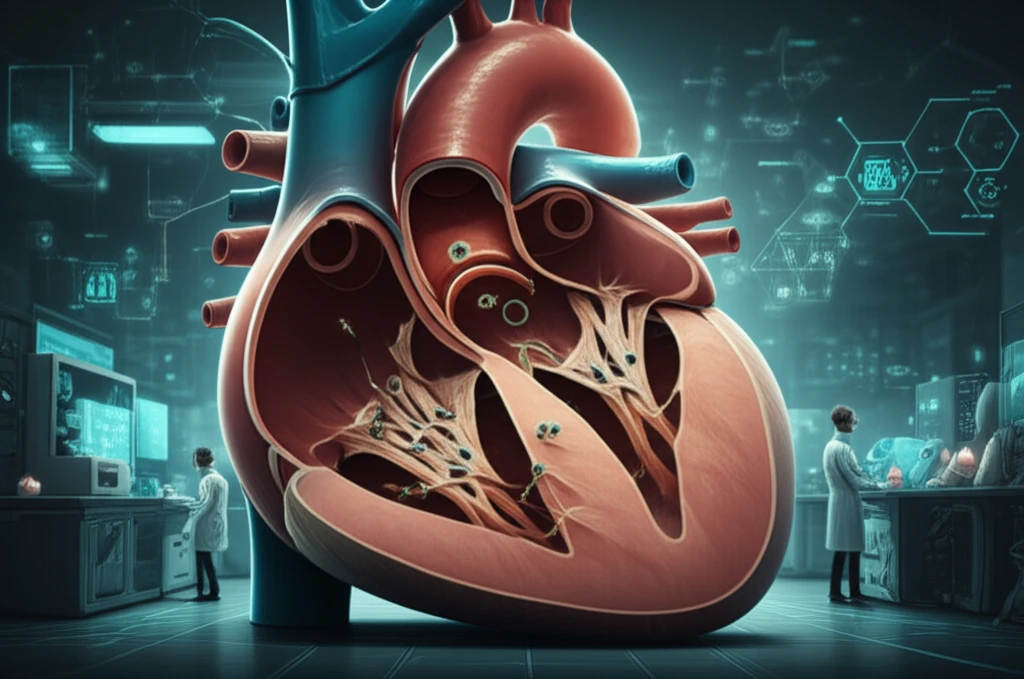
Tiny Tissues, Big Breakthroughs: How Scientists Are Building Working Human Hearts

"From the Lab to Your Body: Discover the cutting-edge science of engineered heart muscle and its potential to revolutionize medicine."
Heart disease remains a leading cause of death worldwide, but what if we could mend broken hearts? Scientists are making remarkable strides in bioengineering, crafting functional human heart muscle in the lab. These aren't just simple structures; they're complex tissues designed to mimic the real thing, offering hope for new treatments and therapies.
This groundbreaking research centers on creating 'engineered human myocardium' (EHM) – essentially, lab-grown heart muscle. Researchers are using a combination of cells, biomaterials, and cutting-edge techniques to build tissues that behave like the real thing. The goal? To create functional replacements for damaged heart tissue, potentially revolutionizing how we treat heart conditions.
This article will dive into the fascinating science behind EHM, exploring the key components, the challenges faced, and the incredible potential it holds for the future of medicine. We'll look at how these tiny tissues are built, what makes them work, and the exciting possibilities for improving heart health.
Building Blocks of a Better Heart: The Key Ingredients of Engineered Heart Muscle
Creating functional heart muscle in a lab is no small feat. It requires a precise combination of ingredients, much like a recipe. At the heart of this process are two key cell types: cardiomyocytes (CMs), the heart's muscle cells responsible for pumping blood, and fibroblasts (Fibs), cells that provide structural support and help the tissue function correctly.
- Cardiomyocytes (CMs): The workhorses of the heart, responsible for contracting and pumping blood.
- Fibroblasts (Fibs): Provide structural support and help regulate the extracellular matrix.
- Collagen Hydrogel: Acts as a scaffold, providing structure and support for the cells.
- Growth Factors and Bioactive Molecules: Help the cells mature and function properly.
A Future of Hope: The Promise of Lab-Grown Hearts
The creation of engineered human myocardium represents a significant step forward in regenerative medicine. While challenges remain, the potential benefits are enormous. EHM could revolutionize drug testing, providing a more accurate way to assess the effects of new medications. It could also lead to new treatments for heart disease, including the possibility of replacing damaged heart tissue with lab-grown replacements. As research continues, we move closer to a future where heart disease is no longer a life-threatening condition.