
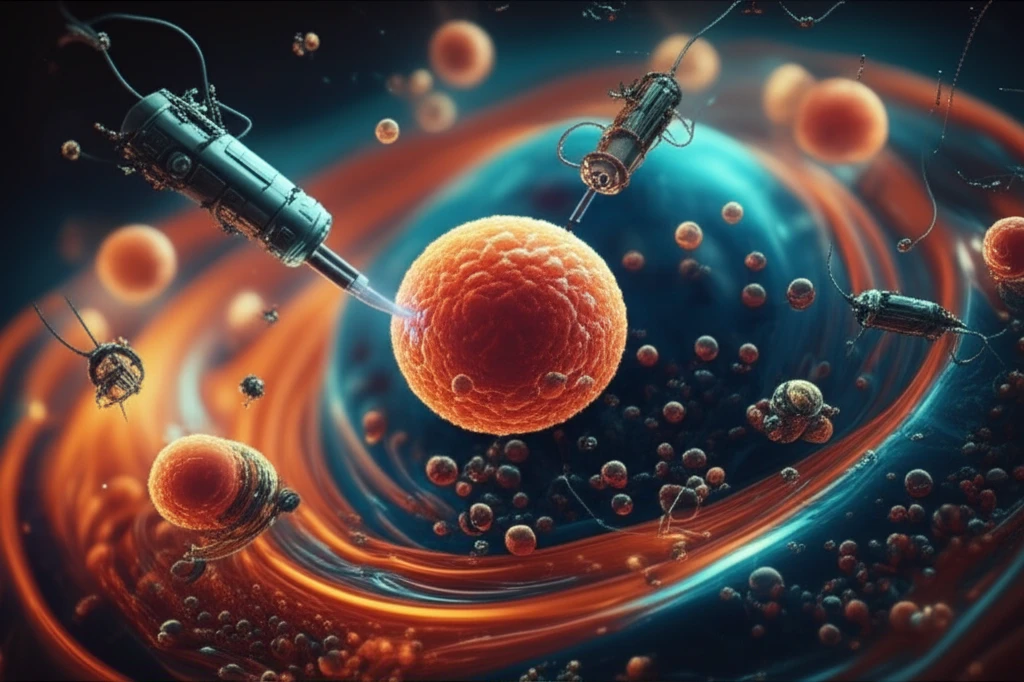
Illustration of various micro/nanomotors in action within a microscopic world, showcasing their diverse applications.

Tiny Tech Titans: How Micro/Nanomotors Are Revolutionizing Our World

"From Medical Marvels to Environmental Heroes: Exploring the Incredible Potential of Micro/Nanomotors."


Imagine a world where microscopic machines patrol our bodies, delivering drugs directly to cancer cells, or cleaning up pollutants with unparalleled efficiency. This isn't science fiction; it's the burgeoning reality of micro/nanomotors, also known as micromotors and nanomotors. These are tiny devices, often smaller than the width of a human hair, designed to move and perform tasks at the microscopic level.

Driven by various energy sources, including light, chemicals, and magnetic fields, micro/nanomotors are opening up unprecedented possibilities in fields like medicine, environmental science, and advanced manufacturing. Their ability to navigate complex environments and perform precise actions is capturing the imagination of scientists and engineers worldwide.

This article delves into the exciting world of micro/nanomotors, exploring their diverse applications, the principles behind their operation, and the challenges and opportunities that lie ahead. Get ready to be amazed by the potential of these tiny technologies to make a big impact.

The Building Blocks of a Microscopic Revolution: How Micro/Nanomotors Work

Illustration of various micro/nanomotors in action within a microscopic world, showcasing their diverse applications.

At the heart of a micro/nanomotor's function is its ability to convert energy into motion. This is achieved through a variety of mechanisms, each offering unique advantages and presenting specific design challenges. The choice of mechanism often dictates the motor's specific capabilities and the environment in which it can operate.

One of the most promising approaches involves light-driven micro/nanomotors. These tiny machines harness the power of light to propel themselves. The process often involves the use of special materials that absorb light and convert it into energy, creating temperature gradients or chemical reactions that generate movement. Chemical-powered motors utilize chemical reactions to generate thrust, similar to how a rocket engine works. Others employ magnetic fields, allowing for precise control over the motor's movement and direction.

  • Photothermal Propulsion: Utilizing light to generate heat, which creates movement.
  • Bubble Propulsion: Creating bubbles through chemical reactions to propel the motor.
  • Self-Electrophoretic Propulsion: Generating an electric field to drive motion.
  • Osmotic Propulsion: Creating concentration gradients to generate movement.
The design of a micro/nanomotor also plays a crucial role in its performance. The shape and materials used determine how efficiently it can move through fluids, interact with its environment, and perform its intended tasks. Various designs, such as spheres, rods, and tubes, are being explored, each with its unique advantages and disadvantages. Different structures are being tested for specific environments and tasks. For instance, spherical motors are often favored for their simplicity and ability to reduce resistance, while tubular motors are sometimes used for bubble-based propulsion, allowing for the generation of thrust.

The Future is Microscopic: The Road Ahead for Micro/Nanomotors

Micro/nanomotors are poised to revolutionize numerous fields, offering solutions to some of the world's most pressing challenges. However, significant hurdles remain. Improving the efficiency, precision, and biocompatibility of these tiny machines is critical. Ongoing research focuses on enhancing their ability to operate in complex environments, extending their lifespan, and developing sophisticated control systems. As this technology continues to advance, we can expect to see these tiny tech titans playing an increasingly important role in shaping a healthier, more sustainable, and technologically advanced future.

About this Article -

This article was crafted using a human-AI hybrid and collaborative approach. AI assisted our team with initial drafting, research insights, identifying key questions, and image generation. Our human editors guided topic selection, defined the angle, structured the content, ensured factual accuracy and relevance, refined the tone, and conducted thorough editing to deliver helpful, high-quality information.See our About page for more information.

Everything You Need To Know

1

What exactly are micro/nanomotors and how small are they?

Micro/nanomotors, also referred to as micromotors and nanomotors, are microscopic machines designed to move and perform tasks at the microscopic level. They are incredibly small, often smaller than the width of a human hair. These tiny devices have the potential to revolutionize fields like medicine and environmental science by performing tasks at scales previously unimaginable.

2

What are some of the ways micro/nanomotors are propelled, and what are some examples?

Micro/nanomotors can be driven by various energy sources. Light-driven micro/nanomotors harness the power of light to propel themselves, often using materials that convert light into energy. Chemical-powered motors utilize chemical reactions to generate thrust. Other motors employ magnetic fields for control. Specific propulsion methods include Photothermal Propulsion (using light to generate heat for movement), Bubble Propulsion (creating bubbles through chemical reactions), Self-Electrophoretic Propulsion (generating an electric field to drive motion), and Osmotic Propulsion (creating concentration gradients to generate movement).

3

In what fields can we expect micro/nanomotors to have the biggest impact?

Micro/nanomotors are poised to revolutionize numerous fields, with particularly significant impacts expected in medicine, environmental science, and advanced manufacturing. In medicine, they could deliver drugs directly to cancer cells. In environmental science, they could clean up pollutants with unparalleled efficiency. Their ability to navigate complex environments and perform precise actions makes them valuable in various applications.

4

What are some of the challenges in advancing micro/nanomotor technology?

Advancing micro/nanomotor technology faces several challenges. Key areas of focus include improving the efficiency, precision, and biocompatibility of these tiny machines. Researchers are working on enhancing their ability to operate in complex environments, extending their lifespan, and developing sophisticated control systems. Overcoming these hurdles is crucial for realizing the full potential of micro/nanomotors in various applications.

5

What role does the shape of a micro/nanomotor play in its performance, and what designs are being explored?

The design and shape of a micro/nanomotor are critical to its performance, influencing how efficiently it moves through fluids, interacts with its environment, and performs its tasks. Various designs are being explored, including spheres, rods, and tubes. Spherical motors are favored for their simplicity and ability to reduce resistance, while tubular motors are used for bubble-based propulsion, allowing for the generation of thrust. The structure is selected based on the specific environment and task.

Newsletter Subscribe

Subscribe to get the latest articles and insights directly in your inbox.