
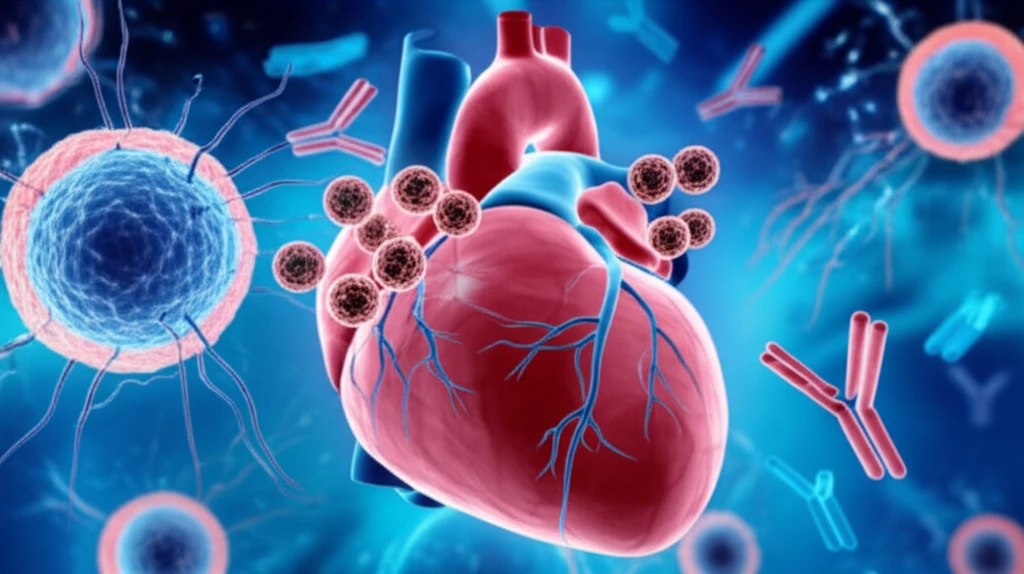
Exosomes attacking a transplanted heart, symbolizing transplant rejection.

Tiny Messengers, Big Problems: Do Exosomes Hold the Key to Transplant Rejection?

"Graft-derived exosomes are emerging as critical players in transplant rejection. New research sheds light on how these small vesicles trigger immune responses and autoimmunity, potentially leading to chronic allograft failure."


Organ transplantation offers a life-saving option for individuals with end-stage organ failure. However, the long-term success of transplants is often hampered by rejection, where the recipient's immune system attacks the new organ. While acute rejection can often be managed with immunosuppressive drugs, chronic rejection remains a significant challenge, leading to graft failure and reduced quality of life for transplant recipients.

A deeper understanding of the mechanisms driving chronic rejection is crucial for developing effective prevention and treatment strategies. Recent research has focused on the role of graft-derived exosomes – tiny vesicles released by cells in the transplanted organ – in triggering immune responses that contribute to rejection. These exosomes act as messengers, carrying molecules that can activate the recipient's immune system and promote autoimmunity.

This article explores the emerging role of exosomes in transplant rejection, drawing on insights from a recent study published in the American Journal of Transplantation. We'll delve into how these small vesicles can initiate inflammatory responses, promote autoimmunity, and ultimately contribute to chronic allograft failure, offering new perspectives on potential therapeutic targets.

How Do Exosomes Trigger Transplant Rejection?

Exosomes attacking a transplanted heart, symbolizing transplant rejection.

The immune system's response to a transplanted organ is complex, involving both direct and indirect pathways. Direct alloreactivity occurs when the recipient's T cells directly recognize and attack donor MHC (major histocompatibility complex) molecules on the surface of the transplanted organ's cells. Immunosuppressive drugs can effectively suppress these T cells, preventing acute rejection.

However, chronic rejection often involves indirect alloreactivity, where the recipient's immune system recognizes donor antigens presented by the recipient's own antigen-presenting cells (APCs). Graft-derived exosomes play a significant role in this process. These exosomes carry donor MHC molecules, which are then displayed by recipient APCs, triggering an indirect T cell response. This indirect response drives alloantibody production and is believed to be a major factor in chronic allograft rejection.

  • Direct Alloreactivity: Recipient T cells directly attack donor MHC molecules.
  • Indirect Alloreactivity: Recipient APCs present donor antigens via exosomes, triggering T cell response.
  • Autoimmunity: Exosomes contribute to the development of autoimmunity against graft tissues.
A study in the American Journal of Transplantation sheds light on the role of autoimmunity of exosomes in triggering rejection. This study used a model in which mice transplanted with a heart were injected with antibodies. The study found that administration of these antibodies at the time of transplant was enough to cause the graft to be rejected. Further analysis showed an increase in leukocyte infiltration, production of antibodies and activation of autoreactive T cells. This suggests that these exosomes can initiate a local immune process, which spreads outside the graft, leading to rejection. The researchers found that serum from rejecting mice contained exosomes carrying molecules involved in inflammation and injecting these exosomes into other mice caused heart transplant rejection. The study also found that autoimmunity and rejection did not occur in mice with stable graft function, indicating that an inflammatory environment is needed for the process to take place.

The Future of Transplant Rejection Research

The research into the mechanisms that lead to transplant rejection has uncovered the potential role that exosomes play in autoimmunity, inflammation, and ultimate graft failure. While more research is needed, understanding how exosomes trigger rejection opens new possibilities for therapeutic interventions. By targeting exosome production, uptake, or downstream signaling pathways, it may be possible to prevent or mitigate chronic allograft rejection, improving the long-term outcomes for transplant recipients. Combining new understandings and knowledge with current practices will likely lead to lower the chances of transplant rejection.

About this Article -

This article was crafted using a human-AI hybrid and collaborative approach. AI assisted our team with initial drafting, research insights, identifying key questions, and image generation. Our human editors guided topic selection, defined the angle, structured the content, ensured factual accuracy and relevance, refined the tone, and conducted thorough editing to deliver helpful, high-quality information.See our About page for more information.

This article is based on research published under:

DOI-LINK: 10.1111/ajt.14720, Alternate LINK

Title: Graft-Derived Exosomes. When Small Vesicles Play A Big Role In Transplant Rejection

Subject: Pharmacology (medical)

Journal: American Journal of Transplantation

Publisher: Wiley

Authors: Gilles Benichou, Aurore Prunevieille

Published: 2018-04-02

Everything You Need To Know

1

What exactly are graft-derived exosomes and what role do they play in transplant rejection?

Graft-derived exosomes are small vesicles released by cells in the transplanted organ. In the context of transplant rejection, exosomes act as messengers that carry molecules capable of activating the recipient's immune system. This can lead to inflammatory responses, autoimmunity, and ultimately contribute to chronic allograft failure.

2

Why is understanding chronic allograft rejection so important in organ transplantation?

Chronic allograft rejection is a major challenge in organ transplantation because it leads to graft failure and reduces the quality of life for transplant recipients. Unlike acute rejection, which can often be managed with immunosuppressive drugs, chronic rejection is more difficult to treat. Understanding the role of graft-derived exosomes can provide new therapeutic targets to prevent or mitigate chronic allograft rejection, leading to improved long-term outcomes for transplant recipients.

3

How do exosomes actually trigger the rejection of a transplanted organ?

Exosomes trigger transplant rejection through a complex process involving both direct and indirect pathways. In indirect alloreactivity, graft-derived exosomes carry donor MHC molecules, which are then displayed by recipient antigen-presenting cells (APCs). This triggers an indirect T cell response, leading to alloantibody production and chronic allograft rejection. Additionally, exosomes can initiate a local immune process that spreads outside the graft, contributing to autoimmunity and inflammation.

4

What is the difference between direct and indirect alloreactivity in transplant rejection?

Direct alloreactivity occurs when the recipient's T cells directly recognize and attack donor MHC molecules on the surface of the transplanted organ's cells. Immunosuppressive drugs can effectively suppress these T cells, preventing acute rejection. Indirect alloreactivity involves the recipient's immune system recognizing donor antigens presented by the recipient's own antigen-presenting cells (APCs), often mediated by graft-derived exosomes carrying donor MHC molecules. Both pathways contribute to transplant rejection, but they involve different mechanisms and immune cells.

5

What are some potential strategies for preventing or treating chronic allograft rejection based on the knowledge of exosomes?

Targeting exosome production, uptake, or downstream signaling pathways presents potential therapeutic interventions for preventing or mitigating chronic allograft rejection. This could involve developing drugs that inhibit exosome release from the graft, block their uptake by recipient immune cells, or interfere with the signaling pathways they activate. Further research into these mechanisms is needed to develop effective therapies that can improve long-term outcomes for transplant recipients. Additional research could investigate methods to create an environment that does not involve inflammation, which has been shown to lead to rejection.

Newsletter Subscribe

Subscribe to get the latest articles and insights directly in your inbox.