
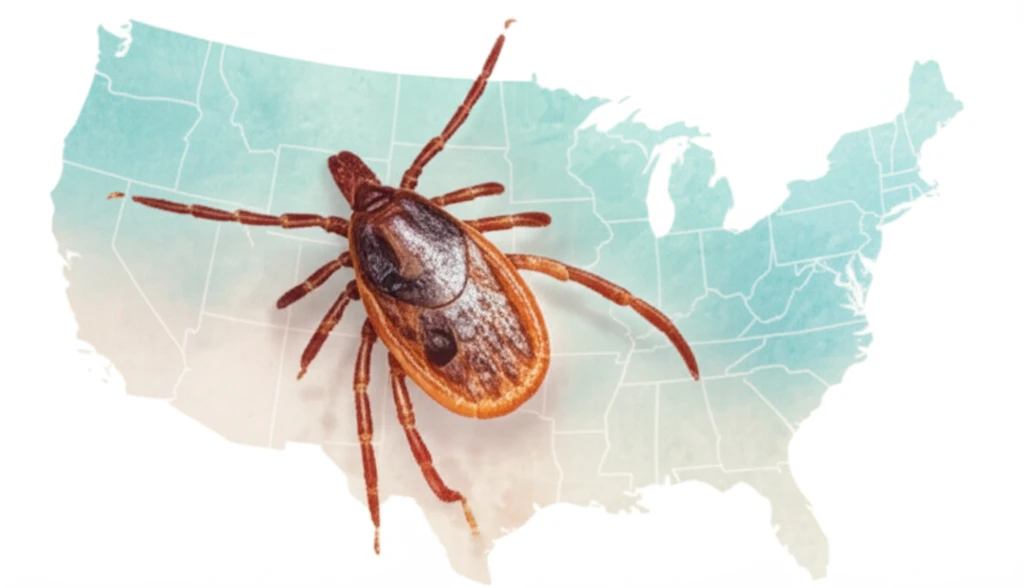
Tick-Borne Diseases: Are You at Risk? Understanding Ehrlichia ewingii and Its Expanding Reach

"New research reveals a higher prevalence of Ehrlichia ewingii infections, challenging previous assumptions about its geographic distribution and potential dangers."
Ehrlichiosis, a bacterial infection transmitted through tick bites, is a growing concern in the United States. While Ehrlichia chaffeensis has been recognized as the primary culprit, recent studies highlight the increasing presence and wider distribution of another species: Ehrlichia ewingii. This lesser-known bacterium is now appearing in regions where it was previously considered rare, prompting a reassessment of its potential impact on public health.
A recent study published in Emerging Infectious Diseases sheds light on this evolving situation. Researchers retrospectively analyzed data from an 18-month study of ehrlichiosis cases across the country. Their findings revealed that Ehrlichia ewingii was present in a significant percentage of cases, surpassing previous estimates. Even more surprising, the infection was identified in patients from New Jersey and Indiana, states not traditionally associated with this particular disease.
This discovery raises important questions about the true prevalence of Ehrlichia ewingii infections in the U.S. and underscores the need for greater awareness among healthcare providers and the public. Understanding the symptoms, risk factors, and diagnostic challenges associated with this emerging threat is crucial for timely diagnosis and effective treatment.
Current Impact
Ehrlichia ewingii is part of a group of tick-borne bacteria that can affect people and animals. The available material does not establish a current case count or measured trend for its spread. Risk and impact may vary by location, tick exposure, and individual health factors.
Ehrlichiosis Basics
The CDC describes ehrlichiosis as diseases caused in the United States by Ehrlichia chaffeensis, E. ewingii, or E. muris eauclairensis. These bacteria are spread primarily through infected ticks, including the lone star tick (Amblyomma americanum) and the blacklegged tick (Ixodes scapularis). Ehrlichia bacteria are tick-transmitted organisms associated with zoonotic disease, with animals serving as important reservoirs. In hosts, they infect white blood cells, but the supplied sources do not describe the limitations of specific diagnostic or treatment methods.
Foundational Understanding
Ehrlichiosis is understood as an illness acquired from a tick bite. Cleveland Clinic identifies fever, muscle aches, and headache among its symptoms. It also reports that the illness can cause serious complications when it is not treated quickly, underscoring the importance of timely medical attention.
What is Ehrlichia ewingii and Why Should You Care?
Ehrlichia ewingii is a type of bacteria that lives inside the cells of its host. It's primarily spread through the bite of the lone star tick (Amblyomma americanum), a common species found throughout the eastern and southeastern United States. The bacteria infect white blood cells, leading to a range of symptoms that can often be mistaken for other illnesses.
- Fever: Often the first and most common symptom.
- Headache: Can range from mild to severe.
- Muscle Aches (Myalgia): Pain and stiffness in muscles.
- Malaise: A general feeling of discomfort, illness, or lack of well-being.
- Thrombocytopenia: A decrease in platelets, which are essential for blood clotting. This can lead to easy bruising or bleeding.
- Leukopenia: A decrease in white blood cells, which are crucial for fighting infection.
Research Landscape
Current research on Ehrlichia ewingii continues to develop as scientists and clinicians refine understanding of tick-borne infection. Available evidence should be interpreted carefully because findings may differ by population, geography, and study design. Readers should rely on updated public-health and clinical guidance when evaluating new claims.
Limits and Uncertainty
A major challenge in discussing Ehrlichia ewingii is that incomplete evidence can make its prevalence and broader impact difficult to characterize. Symptoms may overlap with other illnesses, which can complicate recognition in real-world settings. These uncertainties do not eliminate risk, but they support cautious interpretation and professional medical evaluation.
Comparing Risks
Ehrlichia ewingii belongs to a broader group of Ehrlichia bacteria associated with tick-borne disease. Its risks should therefore be considered alongside other causes of ehrlichiosis rather than in isolation. Meaningful comparisons require consistent information about symptoms, exposure, location, testing, and outcomes.
Staying Safe: Prevention and Actionable Steps
The increasing prevalence and expanding geographic range of Ehrlichia ewingii highlight the importance of taking preventive measures to avoid tick bites. When spending time outdoors, especially in wooded or grassy areas, remember to wear long sleeves and pants, use insect repellent containing DEET, and perform thorough tick checks on yourself, your children, and your pets. If you develop symptoms of ehrlichiosis after a tick bite, seek medical attention promptly. Early diagnosis and treatment with antibiotics are crucial for a full recovery.
Putting the Evidence Together
Taken together, the available information presents Ehrlichia ewingii as one cause of a zoonotic, tick-borne illness. The evidence supports attention to tick exposure and possible symptoms while leaving some questions about current reach and measured impact unresolved. Medical advice is especially important when illness follows a possible tick bite.
What Comes Next
Future work will likely focus on clarifying where Ehrlichia ewingii occurs, how often it causes human illness, and how best to recognize it. Better surveillance and continued research could reduce uncertainty about its expanding reach. Until then, prevention and prompt clinical assessment remain practical priorities.
Public-Health Context
Tick-borne disease risk is shaped by interactions among people, animals, ticks, and local environments. Public-health systems must account for these connected factors when monitoring possible infections. Differences in awareness, access to care, and reporting can also affect how clearly the overall burden is understood.
Living With the Risk
For individuals, a possible tick-borne infection can create uncertainty when early symptoms resemble other common illnesses. Fever, muscle aches, and headache can be significant, and untreated ehrlichiosis may become serious. Awareness of tick exposure and timely discussion with a healthcare professional can help people respond appropriately.