
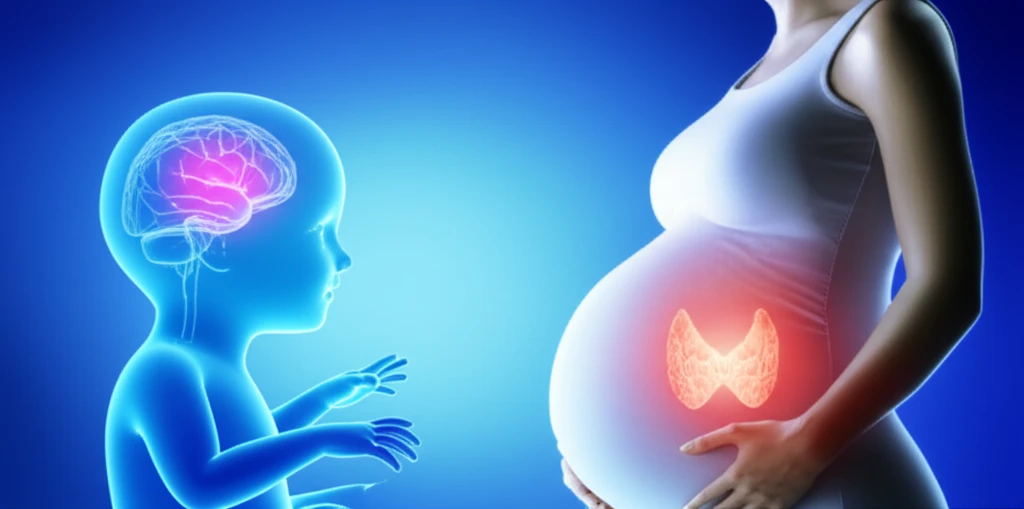
Illustration of a pregnant woman, thyroid and baby's brain to visualize the relation between maternal thyroid health and the baby's brain.

Thyroid Troubles in Pregnancy: Protecting Your Baby from Cerebral Palsy Risks

"New research highlights the link between maternal thyroid disorders and the risk of cerebral palsy in children, offering insights and hope for expectant mothers."


Pregnancy is a time of profound transformation, not only for the mother but also for the developing baby. While the focus often centers on nutrition and lifestyle choices, the intricate role of maternal health, particularly thyroid function, is increasingly coming to light. Recent research has uncovered a concerning link between thyroid disorders during pregnancy and an elevated risk of cerebral palsy in children, underscoring the critical need for awareness and proactive healthcare.

Cerebral palsy (CP) is a condition that affects a child's movement, coordination, and posture, impacting their physical development. While the causes are complex and multifaceted, with many factors playing a role, new studies are shedding light on previously overlooked risk factors, most notably maternal thyroid health. This article delves into the recent research findings, providing a comprehensive overview of the study's implications and offering guidance for expectant mothers.

Understanding the connection between maternal thyroid disorders and cerebral palsy is essential for empowering women to take proactive steps towards a healthy pregnancy and the well-being of their child. This article delves into the intricacies of thyroid function, cerebral palsy, and the emerging research that bridges these two critical areas, providing an actionable guide for expectant mothers.

Decoding the Link: Maternal Thyroid Disorders and Cerebral Palsy

Illustration of a pregnant woman, thyroid and baby's brain to visualize the relation between maternal thyroid health and the baby's brain.

The thyroid gland, a butterfly-shaped organ in the neck, plays a vital role in regulating metabolism and producing essential hormones. During pregnancy, the thyroid's influence expands to support both the mother's health and the developing fetus. Thyroid hormones are crucial for fetal brain development, and any disruption in these hormones can have significant consequences. Research has long suggested that hormonal imbalances during pregnancy may affect neurodevelopment. The new study explored how issues with the thyroid affected the risk of cerebral palsy.

The study focused on two primary areas: hypothyroidism (underactive thyroid) and hyperthyroidism (overactive thyroid). Researchers found that maternal thyroid disorders, particularly those identified during pregnancy, were associated with an increased risk of cerebral palsy. Specifically, there was a notable link between thyroid disorders identified in pregnancy and an increased risk of unilateral spastic cerebral palsy, which affects one side of the body. While the exact mechanisms are still being investigated, the findings highlight the importance of monitoring thyroid health during pregnancy.

  • Unilateral Spastic Cerebral Palsy: Affects one side of the body, impacting motor skills and coordination.
  • Bilateral Spastic Cerebral Palsy: Impacts both sides of the body, often affecting movement and muscle control.
  • Hypothyroidism: An underactive thyroid gland, which can lead to fatigue, weight gain, and cognitive difficulties.
  • Hyperthyroidism: An overactive thyroid gland, causing symptoms such as rapid heartbeat, anxiety, and weight loss.
While the study revealed a correlation, it’s essential to note that it does not establish a direct cause-and-effect relationship. Other factors also play a role in the development of cerebral palsy. However, the findings underscore the importance of monitoring and managing thyroid health throughout pregnancy. This study helps inform expectant mothers, equipping them with actionable insights to safeguard the well-being of both themselves and their developing child.

Empowering Mothers, Protecting Futures

The findings underscore the importance of proactive thyroid health management during pregnancy. By working closely with healthcare providers to monitor thyroid function and address any imbalances promptly, expectant mothers can take an active role in safeguarding their baby's health. This research is a crucial step forward, adding to the understanding of the complexities of cerebral palsy and paving the way for healthier pregnancies and brighter futures for all.

About this Article -

This article was crafted using a human-AI hybrid and collaborative approach. AI assisted our team with initial drafting, research insights, identifying key questions, and image generation. Our human editors guided topic selection, defined the angle, structured the content, ensured factual accuracy and relevance, refined the tone, and conducted thorough editing to deliver helpful, high-quality information.See our About page for more information.

This article is based on research published under:

DOI-LINK: 10.1186/s12887-018-1152-5, Alternate LINK

Title: Maternal Thyroid Disorder In Pregnancy And Risk Of Cerebral Palsy In The Child: A Population-Based Cohort Study

Subject: Pediatrics, Perinatology and Child Health

Journal: BMC Pediatrics

Publisher: Springer Science and Business Media LLC

Authors: Tanja Gram Petersen, Anne-Marie Nybo Andersen, Peter Uldall, Nigel Paneth, Ulla Feldt-Rasmussen, Mette Christophersen Tollånes, Katrine Strandberg-Larsen

Published: 2018-05-31

Everything You Need To Know

1

What is the connection between thyroid disorders during pregnancy and cerebral palsy?

Research indicates a notable correlation between maternal thyroid disorders, specifically hypothyroidism (underactive thyroid) and hyperthyroidism (overactive thyroid), during pregnancy and an increased risk of cerebral palsy in children. While it does not establish a direct cause-and-effect relationship, the study found a particular link between thyroid issues identified during pregnancy and unilateral spastic cerebral palsy, which affects one side of the body. This highlights the importance of monitoring thyroid health during pregnancy for fetal brain development.

2

What are the primary types of maternal thyroid disorders that have been linked to an increased risk of cerebral palsy?

The key thyroid disorders identified are hypothyroidism and hyperthyroidism. Hypothyroidism is an underactive thyroid, which can cause symptoms such as fatigue and weight gain. Hyperthyroidism is an overactive thyroid and can lead to symptoms like anxiety and rapid heartbeat. Both of these conditions can disrupt the balance of thyroid hormones crucial for fetal brain development, potentially increasing the risk of cerebral palsy.

3

What is unilateral spastic cerebral palsy, and how is it related to maternal thyroid disorders?

Unilateral spastic cerebral palsy is a specific type of cerebral palsy that primarily affects one side of the body, impacting motor skills and coordination. Research suggests a notable link between maternal thyroid disorders identified during pregnancy and an increased risk of this condition. This suggests that hormonal imbalances caused by thyroid issues may disproportionately affect brain development on one side, leading to unilateral spastic cerebral palsy.

4

Why is it important for pregnant women to monitor their thyroid health?

Thyroid hormones are vital for fetal brain development. Disruptions caused by conditions like hypothyroidism or hyperthyroidism can have significant consequences on the developing fetus, potentially increasing the risk of cerebral palsy. Proactive monitoring and management of thyroid function during pregnancy, in close collaboration with healthcare providers, helps ensure a stable hormonal environment conducive to healthy fetal development, reducing potential risks.

5

Beyond thyroid health, what other factors should expectant mothers be aware of to minimize the risk of cerebral palsy?

While maternal thyroid health is crucial, cerebral palsy is a multifaceted condition with various contributing factors. Expectant mothers should focus on overall health including nutrition, lifestyle choices, and prenatal care, while working closely with healthcare providers to monitor and manage any potential health issues. While the study highlights the importance of thyroid health, it is important to understand that there are other factors that play a role in the development of cerebral palsy. Addressing these will help to lower risks and promote a healthy pregnancy and fetal development.

Newsletter Subscribe

Subscribe to get the latest articles and insights directly in your inbox.