
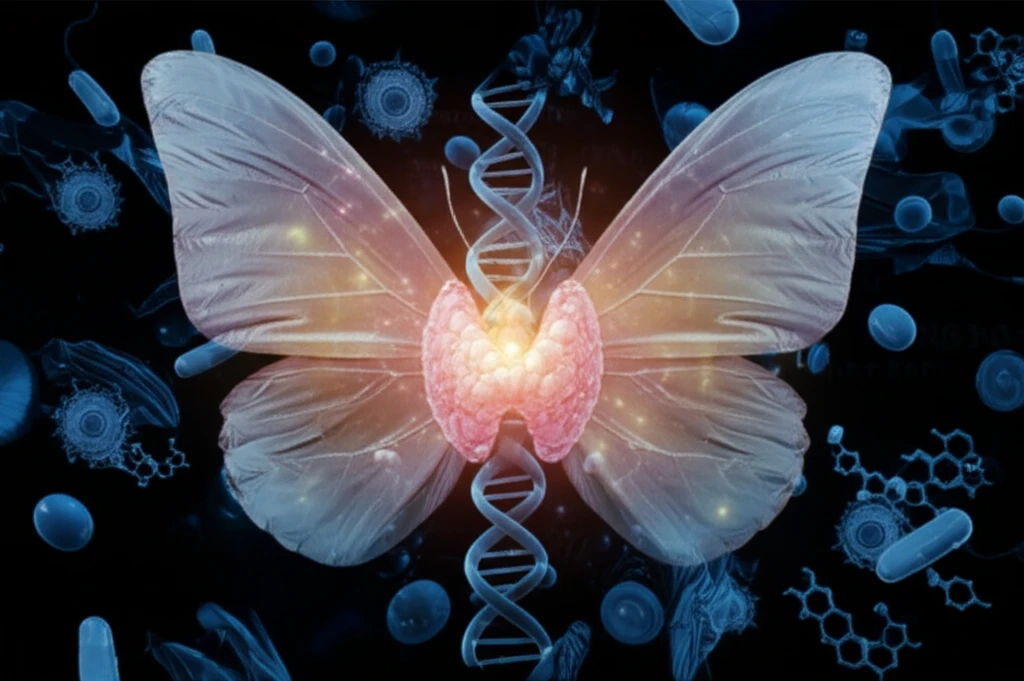
A butterfly representing the thyroid gland emerges from medical symbols, symbolizing resilience after cancer treatment.

Thyroid Troubles After Cancer: What Survivors Need to Know

"A guide to understanding and managing thyroid issues that can arise years after pediatric cancer treatment."


The journey of a childhood cancer survivor doesn't end with remission. While overcoming cancer is a monumental achievement, the treatments themselves can sometimes leave lasting effects. One area that requires careful, long-term monitoring is the health of the thyroid gland.

The thyroid, a small butterfly-shaped gland in the neck, plays a vital role in regulating metabolism, growth, and development. Unfortunately, it's also particularly vulnerable to damage from radiation therapy, certain medications, and even some of the newer, targeted cancer treatments. This means that thyroid problems can emerge during or even years after cancer treatment has ended.

This article breaks down what childhood cancer survivors and their families need to know about the potential for thyroid issues, including the risks, how to monitor for problems, and what treatment options are available. Understanding these risks is key to ensuring lifelong health and well-being.

Why is the Thyroid at Risk After Cancer Treatment?

A butterfly representing the thyroid gland emerges from medical symbols, symbolizing resilience after cancer treatment.

Several factors contribute to the increased risk of thyroid problems in childhood cancer survivors:

External radiation therapy, used to target cancerous cells, can unintentionally damage the thyroid gland. The risk increases with higher radiation doses and when the thyroid is directly in the path of radiation. However, even "scattered" radiation can pose a risk.

  • Radiation Exposure: External beam radiation to the neck area can directly damage the thyroid.
  • Chemotherapy: Certain chemotherapy drugs can also impact thyroid function.
  • Radiopharmaceuticals: Treatments like 131I-MIBG, used for neuroblastoma, deliver radiation internally, affecting the thyroid.
  • Tyrosine Kinase Inhibitors (TKIs): These targeted therapies can disrupt thyroid hormone production.
  • Immunotherapy: Immune checkpoint inhibitors can sometimes trigger thyroiditis (inflammation of the thyroid).
It's important to note that the effects of these treatments can be delayed, with thyroid problems sometimes appearing years or even decades after cancer therapy. This is why lifelong monitoring is so crucial.

Taking Control of Your Thyroid Health: What to Do Now

If you are a childhood cancer survivor, proactive monitoring is the best way to safeguard your thyroid health. Here's what you should discuss with your doctor:

<b>Regular Screening:</b> Annual thyroid exams, including blood tests to check TSH and free T4 levels, are essential. More frequent monitoring may be necessary if you are undergoing immunotherapy or TKI therapy. <b>Know the Symptoms:</b> Be aware of the signs of both hypothyroidism (underactive thyroid) and hyperthyroidism (overactive thyroid). These can include fatigue, weight changes, mood swings, and changes in heart rate. <b>Advocate for Yourself:</b> Make sure your healthcare providers are aware of your cancer history and the potential for late effects. Don't hesitate to ask questions and seek clarification.

Thyroid problems after childhood cancer are a real concern, but with awareness and proper monitoring, they can be effectively managed. By staying informed and working closely with your healthcare team, you can take control of your thyroid health and live a long and healthy life.

About this Article -

This article was crafted using a human-AI hybrid and collaborative approach. AI assisted our team with initial drafting, research insights, identifying key questions, and image generation. Our human editors guided topic selection, defined the angle, structured the content, ensured factual accuracy and relevance, refined the tone, and conducted thorough editing to deliver helpful, high-quality information.See our About page for more information.

This article is based on research published under:

DOI-LINK: 10.1159/000495040, Alternate LINK

Title: Thyroid Sequelae Of Pediatric Cancer Therapy

Subject: Endocrinology

Journal: Hormone Research in Paediatrics

Publisher: S. Karger AG

Authors: Steven G. Waguespack

Published: 2018-12-12

Everything You Need To Know

1

What is the thyroid, and what does it do?

The thyroid is a small, butterfly-shaped gland located in the neck. Its primary function is to regulate metabolism, growth, and development by producing essential hormones. When the thyroid is damaged, its ability to produce and release these hormones can be compromised, leading to various health problems. Understanding the role of the thyroid is vital for childhood cancer survivors, as damage to the gland can have long-term implications for their overall health and well-being.

2

What cancer treatments are most likely to cause thyroid problems?

Several cancer treatments can increase the risk of thyroid problems. External radiation therapy, particularly when directed at the neck, can directly damage the thyroid gland. Certain chemotherapy drugs, radiopharmaceuticals like 131I-MIBG, tyrosine kinase inhibitors (TKIs), and even immunotherapy drugs, such as immune checkpoint inhibitors, can also disrupt thyroid function. These treatments can lead to issues like hypothyroidism (underactive thyroid) or hyperthyroidism (overactive thyroid), sometimes appearing years or even decades after the initial cancer treatment.

3

Why is ongoing monitoring of the thyroid important for childhood cancer survivors?

Lifelong monitoring is essential for childhood cancer survivors because thyroid problems can emerge long after treatment has ended. The effects of cancer treatments on the thyroid can be delayed, making it crucial to regularly check thyroid function. This allows for early detection and management of any issues. Regular monitoring can help prevent the long-term complications associated with untreated thyroid disorders, such as fatigue, weight changes, and developmental problems.

4

What does proactive monitoring of thyroid health involve?

Proactive monitoring involves regular discussions with your doctor and specific tests to assess your thyroid health. This includes blood tests to measure thyroid hormone levels, such as thyroid-stimulating hormone (TSH), and potentially other hormones like T4 and T3. Depending on the results, further tests or treatments may be necessary. Following your doctor's recommendations and staying informed about your thyroid health are critical steps to ensure long-term well-being.

5

What are the common treatment options for thyroid problems?

If thyroid problems are detected, treatment options depend on the specific condition. Hypothyroidism is often treated with synthetic thyroid hormone replacement. Hyperthyroidism may require medications to slow hormone production, radioactive iodine therapy, or, in some cases, surgery. The goal of treatment is to restore normal thyroid hormone levels and alleviate symptoms. Regular follow-up with an endocrinologist (a doctor specializing in hormonal disorders) is typically needed to manage these conditions effectively.

Newsletter Subscribe

Subscribe to get the latest articles and insights directly in your inbox.