
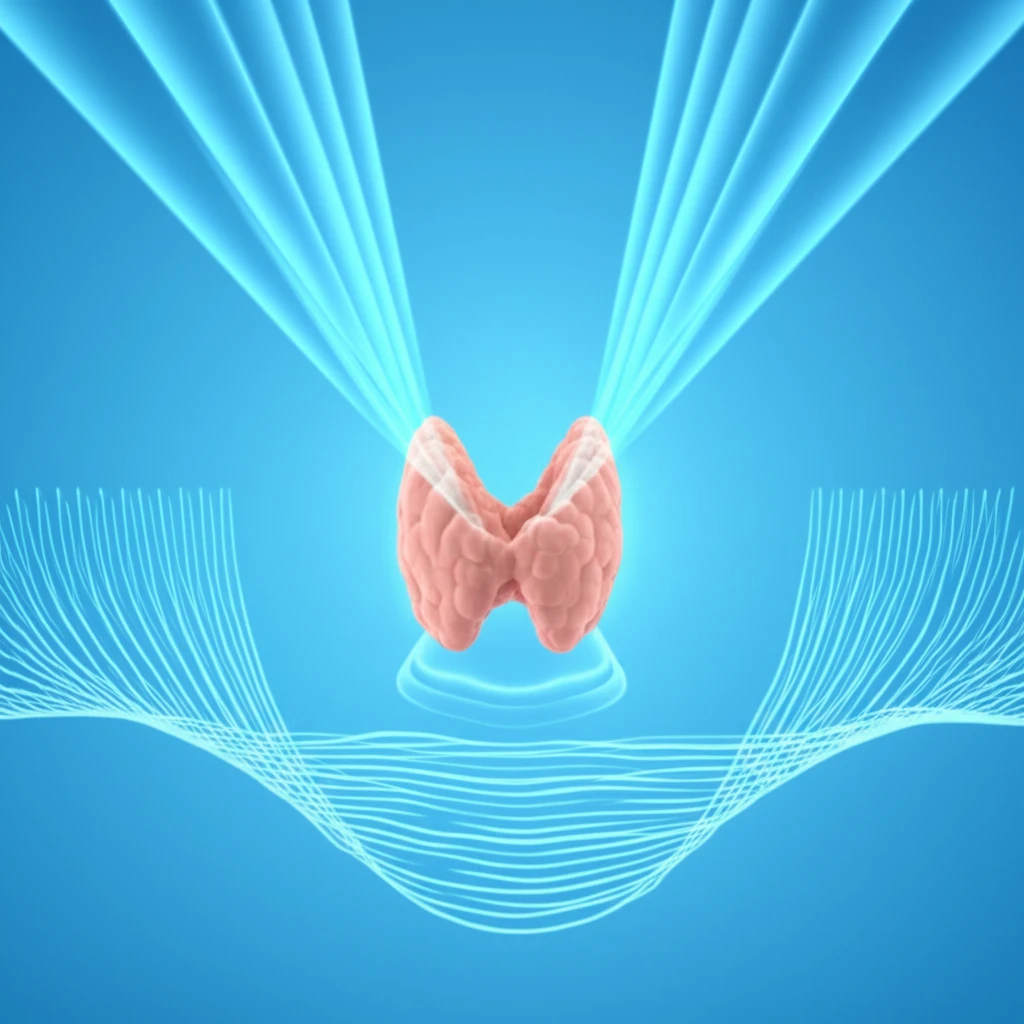
Illustration of HIFU ablation shrinking a thyroid nodule.

Thyroid Nodules: Is HIFU Ablation the Future of Treatment?

"A new study explores whether High-Intensity Focused Ultrasound (HIFU) can rival traditional surgery for benign thyroid nodules, offering potentially scar-free, quicker recovery."


Thyroid nodules are a common occurrence, and while most are harmless, some can grow large enough to cause discomfort or even difficulty swallowing. When this happens, doctors often recommend surgical removal. However, surgery isn't without its drawbacks: it can lead to complications, requires general anesthesia, and leaves a scar.

Enter High-Intensity Focused Ultrasound (HIFU) ablation, a non-invasive technique that's gaining traction as a potential alternative. HIFU uses focused sound waves to heat and destroy the nodule, all without making a single incision. But how does it stack up against traditional surgery?

A recent study published in the journal Surgery sought to answer this question by comparing the outcomes of HIFU ablation and open lobectomy (surgical removal of the thyroid lobe) in patients with benign thyroid nodules. By using a method called propensity score matching, the researchers were able to create two groups of patients that were similar in terms of age, sex, and other important factors, allowing for a more accurate comparison of the two treatments.

HIFU vs. Surgery: Key Findings at a Glance

Illustration of HIFU ablation shrinking a thyroid nodule.

The study compared the clinical outcomes of patients who underwent high-intensity focused ultrasound (HIFU) ablation with those who had open lobectomy. Here's a breakdown of what they discovered:

Comparable Morbidity: The rate of treatment-related complications was similar between the two groups. Both HIFU and surgery had low rates of complications, suggesting that HIFU is a safe alternative.

  • Shorter Treatment & Hospital Stay: HIFU ablation took less time to perform than surgery.
  • Reduced Costs: The medical costs associated with HIFU ablation were significantly lower than those for surgery.
  • Effective Nodule Shrinkage: HIFU ablation resulted in a significant reduction in nodule size, with an average shrinkage of 64% after six months.
  • Similar Symptom Improvement: Patients in both groups reported comparable improvements in their symptoms after treatment.
  • Voice Quality Maintained: Acoustic parameters of voice were unchanged after both procedures.
These findings suggest that HIFU ablation may offer several advantages over traditional surgery for benign thyroid nodules, including a shorter treatment time, reduced costs, and comparable effectiveness in symptom relief.

The Future of Thyroid Nodule Treatment?

While this study offers promising insights into the potential of HIFU ablation, it's important to remember that it's not a one-size-fits-all solution. The decision of whether to undergo HIFU ablation or surgery should be made in consultation with a doctor, taking into account individual factors such as nodule size, location, and patient preferences. However, as technology advances and more research becomes available, HIFU ablation may become an increasingly attractive option for those seeking a less invasive approach to thyroid nodule treatment.

About this Article -

This article was crafted using a human-AI hybrid and collaborative approach. AI assisted our team with initial drafting, research insights, identifying key questions, and image generation. Our human editors guided topic selection, defined the angle, structured the content, ensured factual accuracy and relevance, refined the tone, and conducted thorough editing to deliver helpful, high-quality information.See our About page for more information.

Everything You Need To Know

1

What exactly is High-Intensity Focused Ultrasound (HIFU) ablation?

High-Intensity Focused Ultrasound (HIFU) ablation is a non-invasive technique used to treat benign thyroid nodules. It works by using focused sound waves to heat and destroy the nodule without requiring any incisions. This distinguishes it from traditional surgery, which involves cutting into the body to remove the nodule.

2

Why is High-Intensity Focused Ultrasound (HIFU) ablation being considered as a potential alternative to surgery for thyroid nodules?

HIFU ablation is important because it offers a potentially less invasive alternative to traditional surgery for treating benign thyroid nodules. The recent study showed comparable morbidity, shorter treatment and hospital stay, reduced costs, effective nodule shrinkage and similar symptom improvement. This means patients may experience quicker recovery times, reduced scarring, and lower medical costs, while still achieving similar outcomes in terms of symptom relief and nodule size reduction.

3

How does the safety profile of High-Intensity Focused Ultrasound (HIFU) ablation compare to traditional surgery for thyroid nodules?

The study showed that the rate of treatment-related complications was similar between High-Intensity Focused Ultrasound (HIFU) ablation and open lobectomy. Both HIFU and surgery had low rates of complications, suggesting that HIFU is a safe alternative. Additionally, the acoustic parameters of voice were unchanged after both procedures

4

What is an open lobectomy, and how does it relate to the treatment of thyroid nodules?

Open lobectomy refers to the surgical removal of the thyroid lobe. Open lobectomy is more invasive, requiring general anesthesia and resulting in a scar. By using a method called propensity score matching, researchers could create two groups of patients that were similar in terms of age, sex, and other important factors, allowing for a more accurate comparison of the two treatments.

5

How effective is High-Intensity Focused Ultrasound (HIFU) ablation in reducing the size of thyroid nodules and improving patient symptoms?

According to the study, High-Intensity Focused Ultrasound (HIFU) ablation resulted in a significant reduction in nodule size, with an average shrinkage of 64% after six months. Also, patients in both groups reported comparable improvements in their symptoms after treatment. This is significant because it demonstrates that HIFU can effectively reduce nodule size and alleviate symptoms without the need for invasive surgery.

Newsletter Subscribe

Subscribe to get the latest articles and insights directly in your inbox.