
Thyroid Cancer and Hormones: Unlocking the Estrogen Connection

"Discover how estrogen and progesterone receptors influence papillary thyroid carcinoma, impacting treatment and prognosis."
Thyroid cancer, the most common malignancy of the endocrine system, includes several types, with papillary thyroid carcinoma (PTC) being the most prevalent, accounting for approximately 80% of cases. While risk factors such as ionizing radiation exposure are known, the striking female predominance in thyroid cancer incidence suggests hormonal influences might play a crucial role.
Estrogens, key hormones in female physiology, are increasingly recognized for their potential involvement in thyroid cancer development. These hormones can promote the proliferation and invasion of mutated epithelial follicular cells, contributing to the progression of papillary carcinoma. Understanding how estrogen and its receptors behave in thyroid cancer cells is crucial for improving treatment approaches.
This article delves into the role of estrogen and progesterone receptors (ER and PR) in papillary thyroid carcinoma (PTC). By examining the expression of these receptors and correlating them with clinical and pathological characteristics, we aim to provide insights into the hormonal dynamics of thyroid cancer and explore potential therapeutic implications.
A Complex Hormonal Condition
Thyroid cancer and hormone-related conditions can affect how the body functions, but their impact varies considerably among individuals. The estrogen connection remains an area requiring careful interpretation rather than broad conclusions. Current discussions should distinguish established thyroid biology from emerging questions about sex hormones.
Established Care and Open Questions
Standard thyroid care generally relies on clinical evaluation, testing, and treatment tailored to the underlying condition. These approaches can address abnormal thyroid function or cancer-related concerns, but they may not fully explain how estrogen-related factors interact with thyroid disease. Evidence limitations mean that hormone connections should be evaluated cautiously.
From Anatomy to Endocrinology
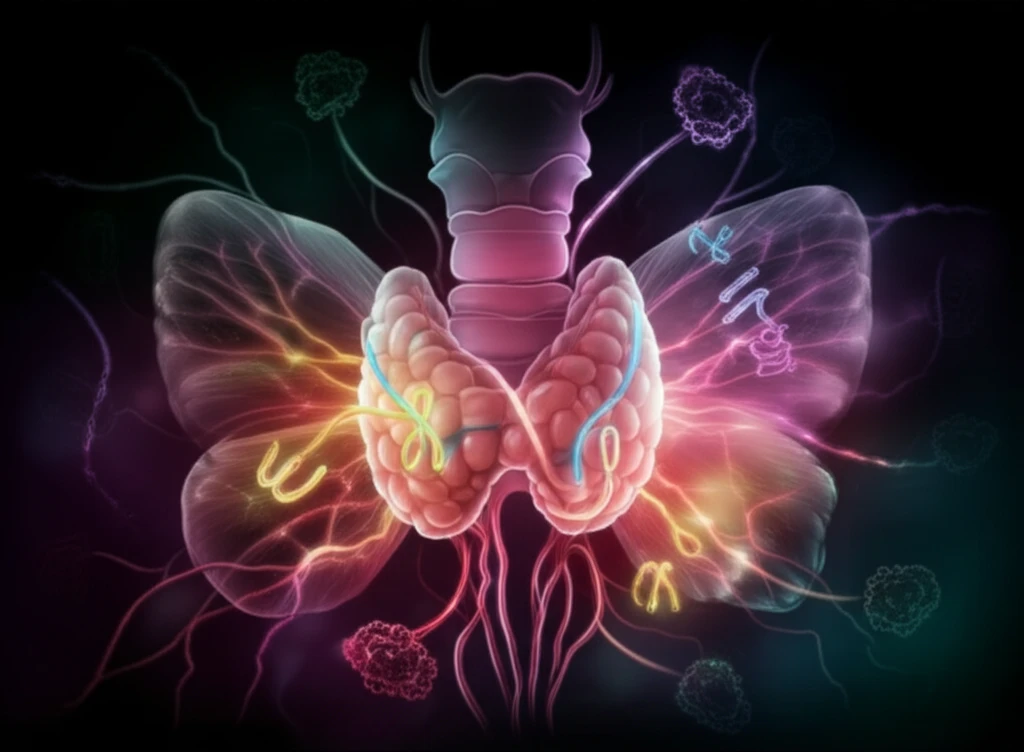
The thyroid is a butterfly-shaped endocrine gland with two lobes connected by a narrow band called the isthmus. Wikipedia reports that the adult thyroid weighs about 25 grams and surrounds the cricoid and tracheal cartilages. Cleveland Clinic describes the thyroid as an endocrine gland whose main job is controlling metabolism through hormone production and release. Thyroid disease is broadly defined as a condition in which the gland does not make the right amount of hormones, with hypothyroidism identified as the most common form in Cleveland Clinic's overview.
How Do Estrogen and Progesterone Receptors Impact Thyroid Cancer?
A recent study analyzed 62 primary and six metastatic papillary thyroid carcinoma cases to assess the expression of ER-a and PR. The findings revealed that 19% of primary PTC cases showed positive nuclear expression for ER, while 38.7% were positive for PR. Interestingly, metastatic cases displayed a higher ER positivity rate (66.7%), but all were negative for PR.
- ER Expression in Metastatic Cases: The significantly higher ER positivity in metastatic cases compared to primary PTC (p = 0.02) suggests that estrogen receptor expression may play a role in the metastatic process.
- Association with Thyroiditis: ER expression was significantly associated with primary PTC cases that also presented with thyroiditis (p = 0.002), indicating a potential link between inflammation and estrogen signaling in thyroid cancer.
- PR Expression and Age: Progesterone receptor expression was significantly associated with older age in primary PTC patients (p = 0.003), implying that PR activity may be influenced by age-related factors.
- Co-expression of ER and PR: The study found a significant co-parallel expression of ER and PR (p = 0.000), suggesting that these receptors may work together in thyroid cancer cells.
An Evolving Evidence Base
Research on thyroid cancer and estrogen is still developing. Available evidence may help clarify biological relationships, but it does not automatically establish that estrogen causes thyroid cancer or determines outcomes. Reviews and future studies will need to distinguish association from causation and account for differences among patients.
Avoiding Overstatement
A major limitation in interpreting the estrogen connection is that biological plausibility does not by itself prove clinical significance. Findings may be difficult to generalize across thyroid cancer types, hormone exposures, and patient populations. Claims should therefore be presented with appropriate uncertainty until stronger evidence is available.
Symptoms Across Thyroid Conditions
Symptoms of thyroid conditions can include brain fog, weight changes, and heat sensitivity. Health reports that identifying these symptoms may support earlier diagnosis and management. These symptoms are not, by themselves, evidence of a specific relationship between estrogen and thyroid cancer.
What's Next? Future Directions for Research and Treatment
The discovery that estrogen and progesterone receptors are expressed in papillary thyroid carcinoma opens new avenues for research and potential therapeutic interventions. Further studies are warranted to investigate whether patients with ER-positive or PR-positive tumors might benefit from hormonal therapies. Additionally, understanding the relationship between estrogen receptor expression and metastasis could lead to more targeted treatment strategies for advanced thyroid cancer. Specifically, exploring the role of lymphocytes in the stroma and their potential promotion of ER expression in adjacent PTC warrants further investigation, particularly in cases associated with Hashimoto's thyroiditis.
A Careful Interpretation
The estrogen connection is best understood as a developing research question rather than a settled explanation for thyroid cancer. A balanced interpretation should place hormonal findings alongside established clinical assessment and individual patient factors. Readers should avoid treating preliminary associations as personal medical conclusions.
Where Research May Lead
Future research may clarify whether estrogen-related mechanisms have meaningful implications for thyroid cancer risk, biology, or treatment. Progress will depend on consistent study methods and careful comparison of patient groups. Until then, the field should treat new findings as informative but not definitive.
Context Matters
Understanding thyroid cancer requires attention to both endocrine biology and the broader circumstances in which patients receive care. Hormonal questions can be complicated by differences in medical history, treatment, and access to evaluation. These challenges make cautious communication and individualized assessment especially important.
Individual Experience
People may experience thyroid-related symptoms differently, and symptoms such as weight changes or brain fog can have more than one possible explanation. Questions about estrogen can add uncertainty for patients seeking clear answers. Real-world decisions should therefore be based on a person's clinical evaluation rather than on a single hormone-related claim.