
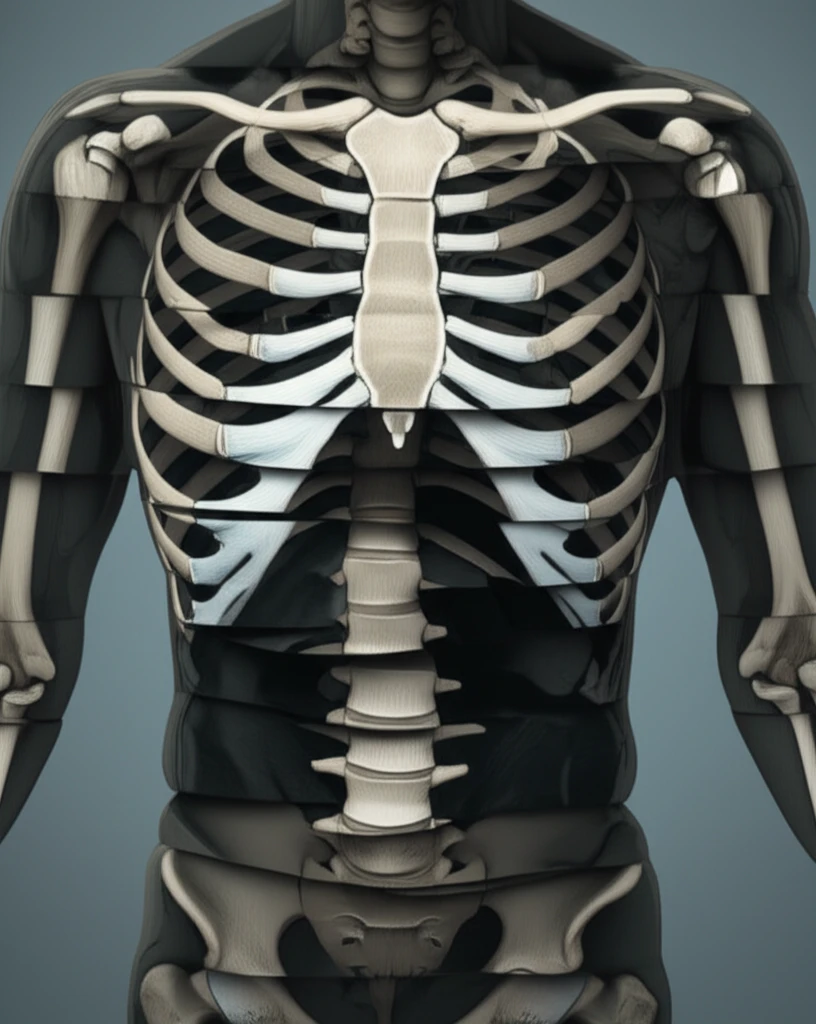
CT Scan Slice Comparison: Thick vs. Thin

Thick vs. Thin: Which CT Scan Slice is Best for Trauma?

"A new study investigates whether thinner CT scan slices offer a diagnostic advantage in thoracoabdominal trauma, finding surprising results for bone fractures and incidental findings."


In emergency rooms, quick and accurate diagnoses are critical, especially when dealing with trauma. Accident-related injuries are a leading cause of death for young adults, making fast and detailed diagnostic measures crucial. Whole-body computed tomography (WBCT) has become a standard procedure for evaluating internal injuries in such cases, allowing for a comprehensive assessment of potentially life-threatening conditions.

When performing CT scans, radiologists can choose different slice thicknesses, which affects the level of detail in the images. Thin slices are often used for detailed exploration of small cysts, tumor classification, and detecting metastases, while thick slices are typically used for swift detection of trauma and other significant pathologies. But does the slice thickness really impact the accuracy of diagnosis in emergency situations?

A recent study published in the European Journal of Trauma and Emergency Surgery aimed to answer this question by comparing thick (5mm) and thin (1.5mm) slice images in thoracoabdominal trauma CT scans. This retrospective analysis sought to determine if thinner slices provide a diagnostic advantage, particularly in detecting injuries to the lung, soft tissue, and bone.

The Slice Thickness Showdown: Does Thinner Always Mean Better?

CT Scan Slice Comparison: Thick vs. Thin

The study, conducted between November 2014 and December 2015, involved 167 patients who underwent thoracoabdominal trauma CT. The CT data was reconstructed in a transverse direction using both 5mm and 1.5mm slice images, which were then evaluated by two blinded radiologists. These radiologists looked for predefined injuries in different organ areas, noting the reconstruction and evaluation times, as well as the injuries detected.

The results revealed that reconstruction and evaluation times were significantly longer for the 1.5mm thin-slice images. According to Rosenthal, the effect strength was a strong 0.61. In bone windows, for instance, the average evaluation time differences between 1.5mm and 3mm slices were 62.7 seconds for rater 1 and 71.4 seconds for rater 2 (p<0.001). Similarly, in lung windows, the average time differences between 1.5mm and 5mm slices were 68.7 seconds for rater 1 and 75.3 seconds for rater 2 (p<0.001).

  • Reconstruction and Evaluation Times: Significantly higher with 1.5mm thin-slice images.
  • Evaluation Time Differences: 62.7s (rater 1) and 71.4s (rater 2) longer for bone window (1.5mm vs. 3mm).
  • Lung Window: 68.7s (rater 1) and 75.3s (rater 2) longer for lung window (1.5mm vs. 5mm).
  • Soft-Tissue Window: 66.6s (rater 1) and 114s (rater 2) longer for soft-tissue window.
Despite the increased time, there was no significant difference in detecting soft-tissue and lung injuries between the thick and thin slices. However, the study did find a non-significant improvement in the detection of bone fractures with the thinner slices. This suggests that while thin-slice images don't necessarily improve the detection of soft-tissue and lung injuries, they may be helpful in diagnosing bone fractures and incidental findings.

The Verdict: Thin Slices for Bones, But Not Much Else

The study concludes that thin-slice images don't offer a significant advantage in thoracoabdominal trauma CT for soft-tissue and lung injuries. However, they can be beneficial for diagnosing bone fractures and incidental findings. This information can help radiologists make informed decisions about when to use thin-slice imaging, balancing the need for detailed information with the constraints of time in emergency situations.

About this Article -

This article was crafted using a human-AI hybrid and collaborative approach. AI assisted our team with initial drafting, research insights, identifying key questions, and image generation. Our human editors guided topic selection, defined the angle, structured the content, ensured factual accuracy and relevance, refined the tone, and conducted thorough editing to deliver helpful, high-quality information.See our About page for more information.

Everything You Need To Know

1

In trauma cases, why is whole-body computed tomography (WBCT) considered a standard procedure?

Whole-body computed tomography (WBCT) has become a standard procedure in trauma cases because it allows for a comprehensive assessment of potentially life-threatening conditions. Accident-related injuries are a leading cause of death, especially for young adults, making quick and detailed diagnostic measures crucial. WBCT aids in the swift detection of internal injuries, ensuring a more thorough evaluation than traditional methods might provide. However, the choice of slice thickness impacts the speed and accuracy of diagnoses, thus requiring careful consideration. While WBCT is valuable, relying solely on it without considering factors like slice thickness might lead to overlooking subtle but significant injuries.

2

How does the slice thickness of a CT scan affect the detection of different types of injuries in thoracoabdominal trauma?

The slice thickness in computed tomography (CT) scans impacts the level of detail in the images, which subsequently affects the detection of different injuries. Thin slices, such as 1.5mm, are often used for detailed exploration of small cysts, tumor classification, and detecting metastases. Thick slices, like 5mm, are typically used for swift detection of trauma and other significant pathologies. A study showed that while thin slices did not significantly improve the detection of soft-tissue and lung injuries, they were beneficial for diagnosing bone fractures and incidental findings. Radiologists must balance the need for detailed information with time constraints in emergency situations, impacting decisions on which slice thickness to use.

3

What were the main findings regarding reconstruction and evaluation times when comparing thick (5mm) and thin (1.5mm) slice images in thoracoabdominal trauma CT scans?

The study comparing thick (5mm) and thin (1.5mm) slice images in thoracoabdominal trauma computed tomography (CT) scans revealed that reconstruction and evaluation times were significantly longer for the 1.5mm thin-slice images. For bone windows, the evaluation time differences between 1.5mm and 3mm slices were approximately 62.7 seconds (rater 1) and 71.4 seconds (rater 2). Similarly, in lung windows, the time differences between 1.5mm and 5mm slices were about 68.7 seconds (rater 1) and 75.3 seconds (rater 2). Soft-tissue window evaluations also took longer, with differences of 66.6 seconds (rater 1) and 114 seconds (rater 2). These results indicate that while thin slices may offer more detail, they come at the cost of increased time for both reconstruction and evaluation, which is a critical consideration in emergency settings.

4

Did the study demonstrate a significant advantage of using thin-slice images for detecting soft-tissue and lung injuries in thoracoabdominal trauma CT?

No, the study did not demonstrate a significant advantage in using thin-slice images for detecting soft-tissue and lung injuries in thoracoabdominal trauma computed tomography (CT). While thin slices increased the reconstruction and evaluation times, there was no significant difference in the detection of soft-tissue and lung injuries compared to thick slices. The study found a non-significant improvement in the detection of bone fractures with the thinner slices, suggesting that thin-slice images are more helpful in diagnosing bone-related issues and incidental findings rather than soft-tissue and lung injuries. This implies that in cases where the primary concern is soft-tissue or lung damage, using thick slices might be more efficient without sacrificing diagnostic accuracy.

5

What implications do the findings on CT scan slice thickness have for radiologists in emergency situations involving thoracoabdominal trauma?

The findings regarding computed tomography (CT) scan slice thickness have several implications for radiologists in emergency situations involving thoracoabdominal trauma. While thin-slice images (1.5mm) may be beneficial for diagnosing bone fractures and incidental findings, they do not offer a significant advantage in detecting soft-tissue and lung injuries and increase reconstruction and evaluation times. Radiologists must weigh the need for detailed information against the time constraints in emergency settings. In situations where bone fractures are suspected, using thin slices might be justified, but when the focus is on soft-tissue or lung injuries, thick slices (5mm) may be more efficient without compromising diagnostic accuracy. This informs a tailored approach to imaging protocols, balancing the comprehensive nature of whole-body CT with the practical need for speed and efficiency in trauma diagnosis.

Newsletter Subscribe

Subscribe to get the latest articles and insights directly in your inbox.