
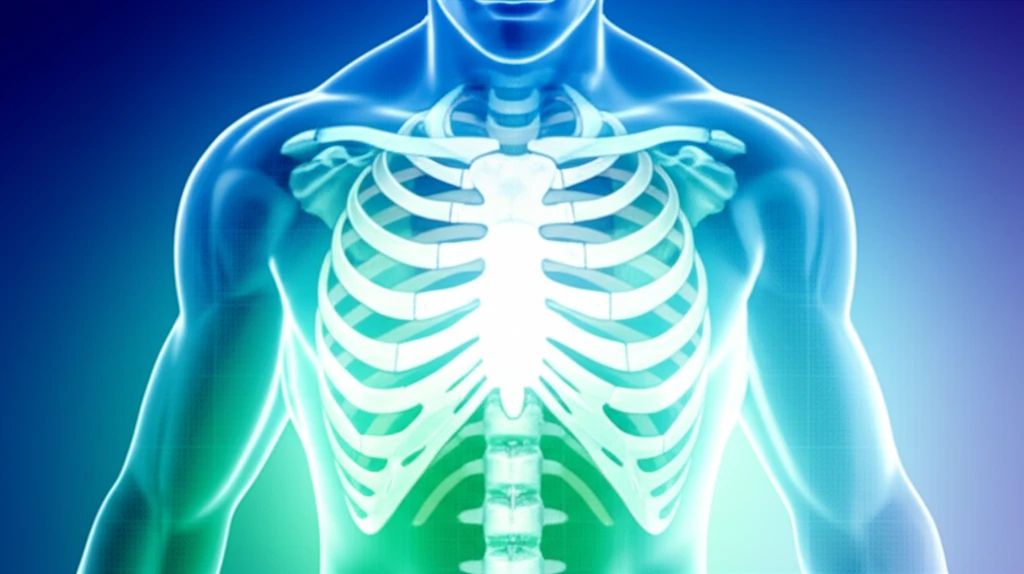
Digital illustration of a human torso with CT scan lines.

Thick vs. Thin: Which CT Scan Slice is Best for Trauma?

"A new study analyzes whether thinner CT scan slices improve diagnostic accuracy in thoracoabdominal trauma cases."


Accidents are a leading cause of death for young adults, highlighting the need for quick and accurate diagnostic tools. In the emergency room,Computed Tomography (CT) scans play a vital role in identifying internal injuries, guiding treatment decisions.

For years, doctors have debated the ideal thickness of CT scan slices. Thin slices offer the potential for greater detail, but come at the cost of longer scan times and increased image data. The question remains: Do these thinner slices actually improve diagnostic accuracy in critical situations?

A recent study published in the European Journal of Trauma and Emergency Surgery has shed new light on this debate. Researchers compared the use of thick (5mm) and thin (1.5mm) slice images in thoracoabdominal trauma CT scans to determine if the extra detail provided by thinner slices leads to better outcomes.

The Thick and Thin of It: Understanding CT Scan Slice Thickness

Digital illustration of a human torso with CT scan lines.

CT scans create images of the body by taking cross-sectional X-ray 'slices.' The thickness of these slices can affect the level of detail and the amount of data produced. Thin-slice CT scans (around 1.5mm) create more detailed images, potentially making it easier to spot subtle injuries. However, they also generate a much larger amount of data, which can increase reconstruction and evaluation times.

Thick-slice CT scans (around 5mm) produce less data, allowing for faster reconstruction and evaluation. While they may not show as much detail as thin slices, they are often sufficient for identifying major injuries. The key is finding the right balance between detail and efficiency, especially in emergency situations where time is critical.

Here’s a quick breakdown of the pros and cons:
  • Thin-Slice CT Scans (1.5mm):
    • Pros: Higher detail, potentially better for detecting subtle fractures and small abnormalities.
    • Cons: Longer scan times, more data to process, increased radiation exposure.
  • Thick-Slice CT Scans (5mm):
    • Pros: Faster scan times, less data, lower radiation exposure.
    • Cons: Lower detail, may miss subtle injuries.
The study published in the European Journal of Trauma and Emergency Surgery aimed to determine if thin-slice CT scans offer a significant advantage over thick-slice scans in diagnosing thoracoabdominal injuries.

The Verdict: Balancing Speed and Accuracy

The research suggests that while thin-slice CT scans can be helpful for diagnosing bone fractures and incidental findings, they don't offer a significant advantage for detecting soft-tissue and lung injuries. In emergency situations, where time is of the essence, thick-slice CT scans may be the more efficient and equally effective option. As technology advances, the gap in image quality may narrow. However, now the focus should be on efficiency and limiting unneeded radiation.

About this Article -

This article was crafted using a human-AI hybrid and collaborative approach. AI assisted our team with initial drafting, research insights, identifying key questions, and image generation. Our human editors guided topic selection, defined the angle, structured the content, ensured factual accuracy and relevance, refined the tone, and conducted thorough editing to deliver helpful, high-quality information.See our About page for more information.

Everything You Need To Know

1

What are the key differences between Thick-Slice and Thin-Slice CT Scans?

The primary difference lies in the slice thickness, measured in millimeters (mm). Thick-slice CT scans, typically around 5mm, use thicker slices, resulting in faster scan times, less data to process, and lower radiation exposure. However, they may miss subtle injuries due to lower detail. Conversely, Thin-slice CT scans, around 1.5mm, create more detailed images, which can be advantageous for spotting subtle fractures and small abnormalities, but they come with longer scan times, more data, and increased radiation exposure. The choice between the two depends on the clinical situation, balancing the need for detail with the urgency of the diagnosis.

2

In the context of thoracoabdominal trauma, what did the study in the European Journal of Trauma and Emergency Surgery find regarding the use of Thick-Slice versus Thin-Slice CT scans?

The study investigated the effectiveness of Thick-Slice (5mm) and Thin-Slice (1.5mm) CT scans in diagnosing injuries in thoracoabdominal trauma cases. The research indicated that while Thin-Slice CT scans could be beneficial for identifying bone fractures and incidental findings, they didn't provide a significant advantage over Thick-Slice scans in detecting soft-tissue and lung injuries. The study suggested that in emergency situations, Thick-Slice CT scans might be a more efficient option without compromising diagnostic accuracy.

3

What are the potential implications of using Thin-Slice CT scans, and when might they be preferred over Thick-Slice scans?

Thin-Slice CT scans, due to their higher detail, are particularly useful for identifying subtle injuries like small fractures or other minor abnormalities. However, the increased scan time and larger data volume can be a drawback, especially in emergency situations where time is critical. The increased radiation exposure is another concern. Thin-Slice CT scans might be preferred when detailed imaging is crucial, the patient's condition allows for longer scan times, and the benefits of detecting subtle injuries outweigh the risks and inefficiencies. For instance, when evaluating a patient with suspected subtle fractures.

4

Why is the balance between diagnostic speed and accuracy so crucial when using CT scans for trauma cases?

In trauma cases, every second counts. Accidents are a leading cause of death for young adults, underscoring the need for rapid and accurate diagnostic tools. CT scans are vital in emergency rooms to identify internal injuries, guiding treatment decisions. If a CT scan is too slow, it can delay critical interventions, potentially worsening the patient's condition. Conversely, if the scan is too fast but misses important injuries, it can lead to inadequate treatment. The goal is to use the most efficient method (like a Thick-Slice CT scan) that still provides sufficient detail to make accurate diagnoses.

5

How does the amount of data generated differ between Thick-Slice and Thin-Slice CT scans, and what impact does this have on the diagnostic process?

Thick-Slice CT scans (5mm) produce less data compared to Thin-Slice CT scans (1.5mm). This difference in data volume directly affects the reconstruction and evaluation times. The processing of Thin-Slice scans requires significantly more time due to the larger dataset, which can slow down the diagnostic process. Conversely, Thick-Slice scans, with their smaller data volume, allow for faster processing and evaluation, which is a crucial advantage in emergency situations where speed is paramount. This difference highlights the trade-off between detail and efficiency in medical imaging.

Newsletter Subscribe

Subscribe to get the latest articles and insights directly in your inbox.