
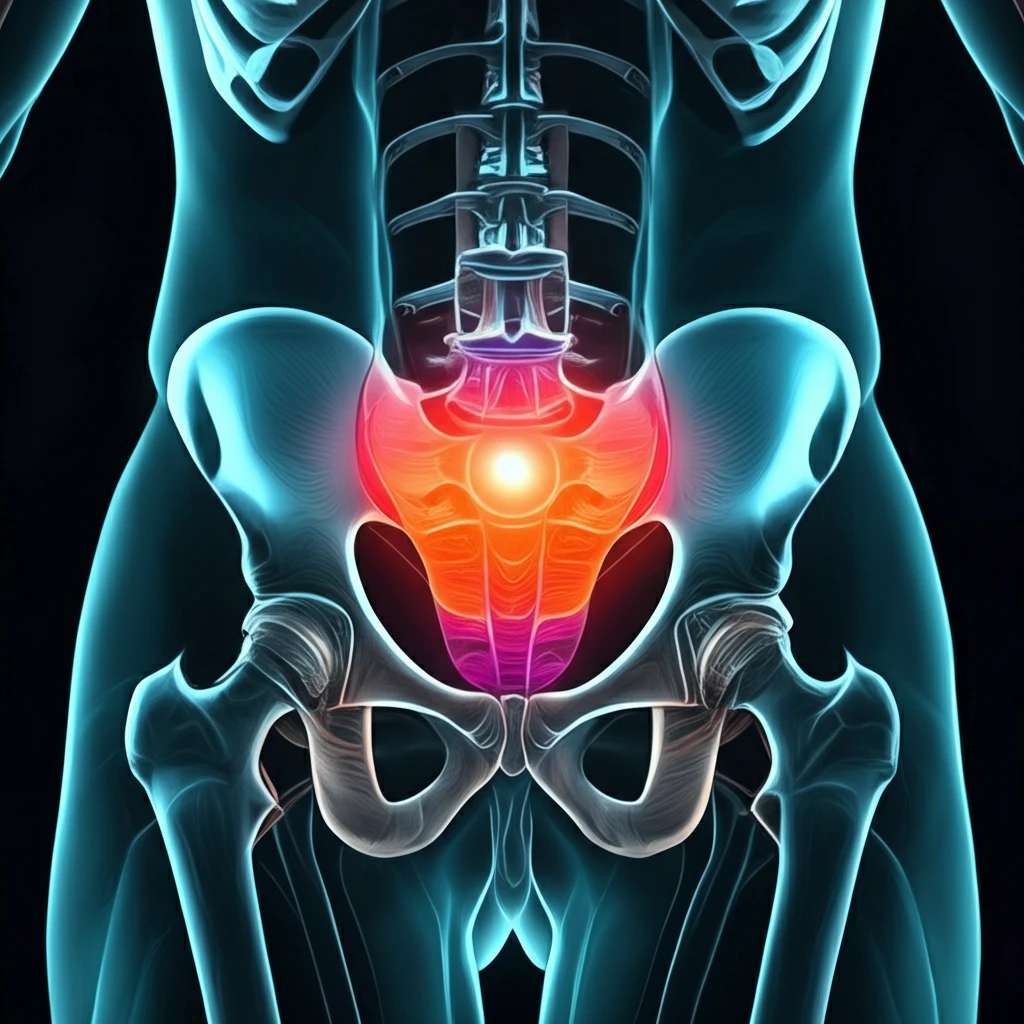
Abstract illustration of pelvic floor muscles with light waves representing vibratory stimulation.

The V-Spot Solution: Can Vibratory Perineal Stimulation Stop Stress Incontinence?

"A deep dive into a novel approach to female stress urinary incontinence treatment. Is it the future of pelvic floor therapy?"


Stress urinary incontinence (SUI), the involuntary leakage of urine during activities like coughing, sneezing, or exercise, affects millions of women worldwide. The pelvic floor muscles (PFM) play a crucial role in maintaining continence, and when these muscles weaken or become dysfunctional, SUI can develop. Traditional treatments often involve pelvic floor exercises, lifestyle modifications, and, in some cases, surgery.

Now, a new approach is gaining attention: vibratory perineal stimulation (PVS). This non-invasive technique involves applying vibration to the perineal area, aiming to stimulate the pelvic floor muscles and improve their function. But how effective is it, and what does the research say?

This article delves into the science behind PVS, exploring its potential benefits, limitations, and how it compares to other treatment options. Whether you're a woman seeking relief from SUI, a healthcare professional interested in innovative therapies, or simply curious about the latest advancements in pelvic floor health, this is your guide to understanding PVS.

Vibratory Perineal Stimulation (PVS): How Does It Work?

Abstract illustration of pelvic floor muscles with light waves representing vibratory stimulation.

The pelvic floor muscles (PFM) are a group of muscles that support the bladder, uterus, and rectum. They play a vital role in urinary continence by contracting to prevent urine leakage. When these muscles are weak or damaged, they may not be able to provide adequate support, leading to SUI.

Vibratory perineal stimulation (PVS) aims to address this problem by stimulating the PFM and improving their strength and function. Here's how it's believed to work:

  • Nerve Stimulation: PVS delivers vibrations to the perineal area, which stimulates the pudendal nerve. This nerve plays a key role in controlling the PFM.
  • Muscle Contraction: The nerve stimulation triggers a reflex contraction of the PFM, helping to strengthen them over time.
  • Increased Awareness: PVS may also increase a woman's awareness of her PFM, making it easier to consciously contract them during activities that trigger leakage.
  • Improved Blood Flow: The vibrations may improve blood flow to the pelvic floor, promoting muscle health and healing.
PVS can be administered in different ways, including transcutaneously (through the skin) or intravaginally. The intensity and frequency of the vibrations can also be adjusted to suit individual needs.

The Future of PVS: What's Next?

Vibratory perineal stimulation holds promise as a potential treatment for female SUI. While the existing research shows some encouraging results, further studies are needed to confirm its effectiveness and optimize treatment protocols. As research continues, PVS may become an increasingly valuable tool for women seeking a non-invasive and convenient way to manage SUI and improve their quality of life. Talk to your doctor or a qualified pelvic floor therapist to see if PVS is right for you.

About this Article -

This article was crafted using a human-AI hybrid and collaborative approach. AI assisted our team with initial drafting, research insights, identifying key questions, and image generation. Our human editors guided topic selection, defined the angle, structured the content, ensured factual accuracy and relevance, refined the tone, and conducted thorough editing to deliver helpful, high-quality information.See our About page for more information.

This article is based on research published under:

DOI-LINK: 10.1007/s00192-017-3444-y, Alternate LINK

Title: Vibratory Perineal Stimulation For The Treatment Of Female Stress Urinary Incontinence: A Systematic Review

Subject: Urology

Journal: International Urogynecology Journal

Publisher: Springer Science and Business Media LLC

Authors: Marina Petter Rodrigues, Luciana Laureano Paiva, José Geraldo Lopes Ramos, Lia Ferla

Published: 2017-08-15

Everything You Need To Know

1

What is Vibratory Perineal Stimulation (PVS) and how does it work for Stress Urinary Incontinence (SUI)?

Vibratory Perineal Stimulation (PVS) is a non-invasive technique that uses vibrations applied to the perineal area to treat Stress Urinary Incontinence (SUI). It works by stimulating the Pelvic Floor Muscles (PFM), which are crucial for maintaining continence. The process involves nerve stimulation of the pudendal nerve, which controls the PFM. This stimulation triggers reflex contractions of the PFM, strengthening them over time. It may also increase a woman's awareness of her PFM, making it easier to consciously contract them. Additionally, the vibrations can improve blood flow to the pelvic floor, promoting muscle health.

2

How does Vibratory Perineal Stimulation (PVS) compare to traditional treatments for Stress Urinary Incontinence (SUI)?

Traditional treatments for Stress Urinary Incontinence (SUI) often include pelvic floor exercises, lifestyle modifications, and in some cases, surgery. Unlike these, Vibratory Perineal Stimulation (PVS) offers a non-invasive approach. While pelvic floor exercises require conscious effort and consistent practice to strengthen the Pelvic Floor Muscles (PFM), PVS uses external vibrations to stimulate the PFM, potentially leading to muscle strengthening and improved continence. Surgery, the most invasive, is reserved for severe cases and carries the risks associated with any surgical procedure. PVS, by contrast, may offer a less invasive option, avoiding these risks and potentially improving a woman's quality of life.

3

What are the potential benefits of using Vibratory Perineal Stimulation (PVS) for Stress Urinary Incontinence (SUI)?

The potential benefits of using Vibratory Perineal Stimulation (PVS) for Stress Urinary Incontinence (SUI) include strengthening the Pelvic Floor Muscles (PFM), improving urinary continence, and increasing awareness of the PFM. By stimulating the pudendal nerve, PVS can trigger reflex contractions of the PFM, making them stronger over time. This can help the PFM provide better support to the bladder, reducing or eliminating urine leakage. Furthermore, by increasing a woman's awareness of her PFM, PVS may enable her to consciously contract these muscles during activities that trigger leakage. Finally, the improved blood flow to the pelvic floor caused by the vibrations can also promote muscle health and healing, contributing to an overall improvement in the condition.

4

How is Vibratory Perineal Stimulation (PVS) administered, and are there different methods?

Vibratory Perineal Stimulation (PVS) can be administered in several ways. The most common is transcutaneously, meaning through the skin, where a device is placed on the perineal area to deliver the vibrations. Another method involves intravaginal application, which uses a device inserted into the vagina. The intensity and frequency of the vibrations can be adjusted during both methods to suit individual needs and comfort levels. The choice of method and the specific parameters of the stimulation protocol depend on the individual's condition and the healthcare professional's recommendations.

5

What does the future hold for Vibratory Perineal Stimulation (PVS) as a treatment for Stress Urinary Incontinence (SUI)?

The future of Vibratory Perineal Stimulation (PVS) as a treatment for female Stress Urinary Incontinence (SUI) looks promising. While current research shows encouraging results, further studies are necessary to confirm its effectiveness and to refine treatment protocols. As research continues, PVS may become an increasingly valuable, non-invasive, and convenient tool for women seeking to manage SUI and enhance their quality of life. The ongoing investigations will help to optimize the use of PVS, providing more effective and personalized treatment plans. It is recommended that anyone considering PVS should consult their doctor or a qualified pelvic floor therapist to determine if this treatment is right for them.

Newsletter Subscribe

Subscribe to get the latest articles and insights directly in your inbox.