
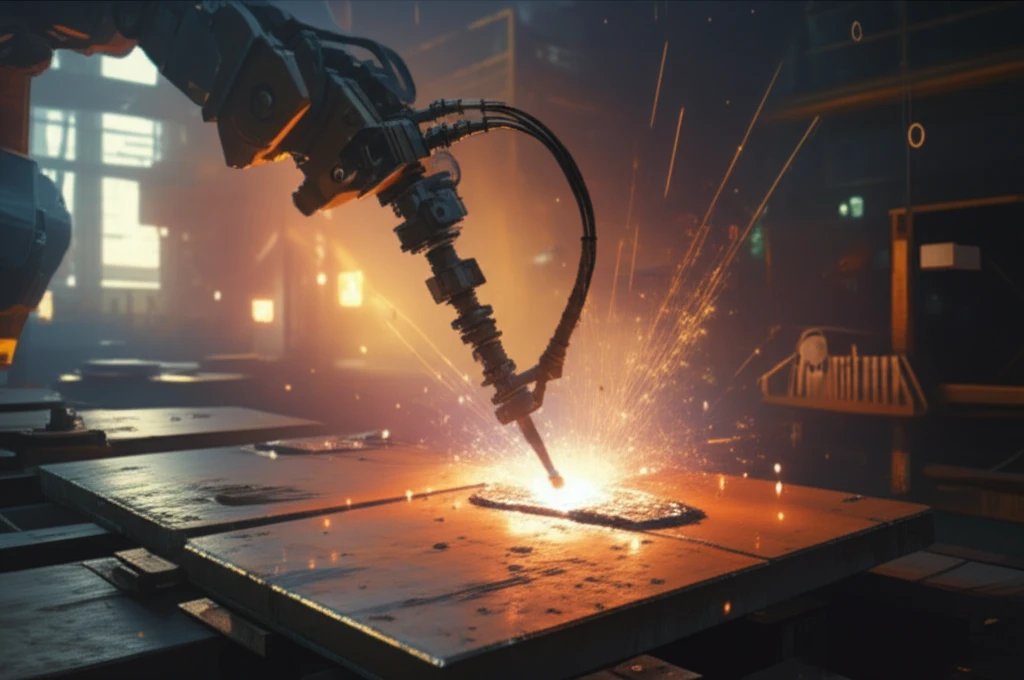
The Ultimate Guide to Welding High-Strength Steel: Mastering the WELDOX 960 Process

"Unlock the secrets to optimizing your welding process for WELDOX 960 high-strength steel and achieve flawless, robust welds every time."
In industries that depend on heavy lifting and robust construction, the use of high-strength steel is paramount. As crane designs evolve and demand greater load capacities, the integrity of the steel components becomes critical. Welding, the primary method for fabricating these metal structures, directly influences the overall quality and safety of the machinery.
Among the various high-strength steels available, WELDOX 960 stands out for its exceptional properties. Predominantly used in the manufacturing of heavy equipment booms, this steel, often sourced from Sweden, requires a specialized welding approach to maintain its inherent strength and prevent potential defects.
While established welding techniques exist, adapting these methods to different environments and skilled welders poses a unique challenge. This guide delves into the optimization of the welding process for WELDOX 960, exploring essential parameters and strategies to ensure superior weld quality and structural integrity.
Decoding WELDOX 960: Understanding High-Strength Steel Weldability
Compared to conventional alloy structural steels, WELDOX 960 boasts a significantly higher yield strength (over 960MPa), offering enhanced strength, excellent plasticity, and superior welding and mechanical properties. However, this impressive strength comes with a caveat. Increasing the alloying elements to achieve high strength in low-alloyed steels also elevates the carbon content, potentially increasing the risk of brittleness in welded joints.
- Crack Sensitivity: Higher carbon content increases the risk of cracking.
- Alloying Elements: While enhancing strength, these can impact weld properties.
- Heat Affected Zone (HAZ): Maintaining strength and toughness in this area is key.
Mastering the Process: Optimizing Welding for Superior Results
Achieving optimal welding results with WELDOX 960 requires careful consideration of process parameters. The welding current, voltage, and speed all play critical roles in determining the penetration depth and weld width. By carefully adjusting these factors, you can ensure the creation of high-quality welds that meet the specific requirements of your project.
Remember, multi-layer and multi-pass welding techniques are often the key to achieving superior welds with WELDOX 960. By implementing these methods and diligently monitoring the welding process, you can effectively minimize residual stress and deformation, leading to stronger, more reliable welds.
Ultimately, mastering the welding process for WELDOX 960 high-strength steel is essential for industries demanding robust and reliable construction. By understanding the material properties, optimizing process parameters, and implementing best-practice techniques, you can consistently achieve welds that meet the highest standards of quality and performance.