
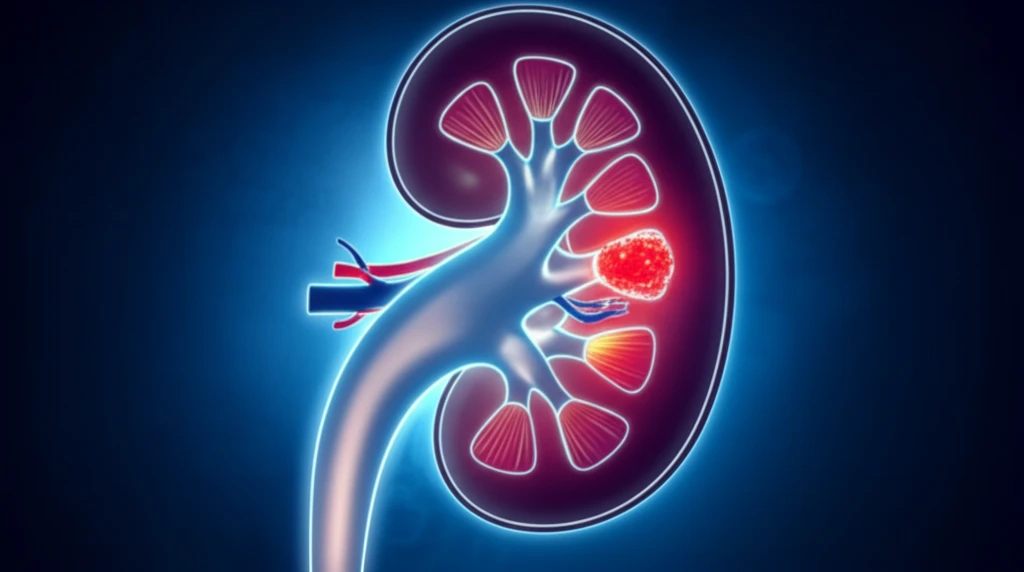
Illustration of a kidney with a blood clot being treated with AngioJet, symbolizing the study's findings on AKI risk.

The Silent Threat: How a Common Procedure Could Be Putting Your Kidneys at Risk

"New research reveals that a routine treatment for blood clots might be unexpectedly linked to a higher risk of kidney problems."


Imagine facing a sudden health crisis: a dangerous blood clot threatening your well-being. Doctors have a few ways to treat this, one being a procedure that quickly removes the clot. But what if the treatment itself carried an unexpected risk? A new study has revealed a surprising connection between a common procedure and a potential threat to kidney health.

This is the reality uncovered by recent research. The study, published in the Journal of Vascular Surgery: Venous and Lymphatic Disorders, focuses on a procedure called percutaneous mechanical thrombectomy (PMT) using AngioJet. The findings suggest that this method, while effective at removing clots, might increase the risk of acute kidney injury (AKI) compared to another common treatment called catheter-directed thrombolysis (CDT).

This revelation isn't just about medical jargon; it's about understanding potential risks and empowering patients to have informed conversations with their doctors. Let's explore what the research says, what it means for you, and how healthcare professionals are working to keep patients safe.

Unpacking the Study: Key Findings and What They Mean

Illustration of a kidney with a blood clot being treated with AngioJet, symbolizing the study's findings on AKI risk.

The study looked at a group of patients with acute iliofemoral deep vein thrombosis (IFDVT), a condition where blood clots form in the major veins of the legs and pelvis. The researchers compared two groups of patients: those who underwent PMT using AngioJet and those treated with CDT. The main goal was to see if there was a difference in the rate of AKI after the procedures.

The results were striking. The study found that patients who underwent the AngioJet procedure had a higher risk of developing AKI compared to those who received CDT. Specifically, the study showed:

  • Increased Risk: Patients in the AngioJet group were significantly more likely to experience AKI.
  • Hemolysis: The AngioJet procedure was associated with a higher incidence of hemolysis (the breakdown of red blood cells), which is a potential trigger for kidney problems.
  • Risk Factors: The study identified that a history of major surgery within three months of the procedure and a significant drop in hematocrit (HCT, a measure of red blood cells) were linked to a higher risk of AKI.
These findings are important because they highlight a potential complication that both patients and healthcare providers need to be aware of. While the AngioJet procedure can be effective, this research suggests that it might pose a greater risk to kidney health than CDT, especially in certain patients.

Moving Forward: Protecting Kidney Health

This study serves as a critical reminder of the importance of ongoing research and vigilance in healthcare. For patients, it underscores the importance of open communication with doctors about potential risks and benefits of any medical procedure. Healthcare providers can use these findings to refine their approach, considering the potential impact on kidney health when choosing the best treatment for their patients. More research is needed, but this study provides a valuable step towards ensuring safer and more effective care.

About this Article -

This article was crafted using a human-AI hybrid and collaborative approach. AI assisted our team with initial drafting, research insights, identifying key questions, and image generation. Our human editors guided topic selection, defined the angle, structured the content, ensured factual accuracy and relevance, refined the tone, and conducted thorough editing to deliver helpful, high-quality information.See our About page for more information.

This article is based on research published under:

DOI-LINK: 10.1016/j.jvsv.2018.06.016, Alternate LINK

Title: Increased Risk Of Acute Kidney Injury With Percutaneous Mechanical Thrombectomy Using Angiojet Compared With Catheter-Directed Thrombolysis

Subject: Cardiology and Cardiovascular Medicine

Journal: Journal of Vascular Surgery: Venous and Lymphatic Disorders

Publisher: Elsevier BV

Authors: Yang Shen, Xiang Wang, Sha-Sha Jin, Rui-Li Zhang, Wen-Jun Zhao, Guang Chen

Published: 2019-01-01

Everything You Need To Know

1

What is percutaneous mechanical thrombectomy (PMT) using AngioJet, and why is it used?

Percutaneous mechanical thrombectomy (PMT) using AngioJet is a medical procedure designed to rapidly remove blood clots. It's particularly used in cases of acute iliofemoral deep vein thrombosis (IFDVT), where clots form in the major veins of the legs and pelvis, threatening well-being. While effective in clot removal, recent research suggests it may carry a higher risk of acute kidney injury (AKI) compared to catheter-directed thrombolysis (CDT). The AngioJet procedure works by using a mechanical device to break up and remove the clot, but this process can sometimes lead to hemolysis, potentially causing kidney problems. It's crucial for patients to discuss the risks and benefits of PMT using AngioJet with their doctors, especially if they have pre-existing kidney conditions or other risk factors like recent major surgery.

2

How does catheter-directed thrombolysis (CDT) compare to percutaneous mechanical thrombectomy (PMT) using AngioJet in treating blood clots?

Catheter-directed thrombolysis (CDT) is another method for treating blood clots, particularly acute iliofemoral deep vein thrombosis (IFDVT). Unlike percutaneous mechanical thrombectomy (PMT) using AngioJet, CDT involves delivering thrombolytic drugs directly to the clot through a catheter to dissolve it over time. Recent research indicates that CDT might pose a lower risk of acute kidney injury (AKI) compared to the AngioJet procedure. The AngioJet procedure was associated with a higher incidence of hemolysis, which is a potential trigger for kidney problems. CDT, while potentially safer for the kidneys, may require a longer treatment duration and may not be suitable for all patients. The choice between CDT and PMT using AngioJet depends on individual patient factors and the specific characteristics of the blood clot.

3

What is acute kidney injury (AKI), and how is it linked to the AngioJet procedure?

Acute kidney injury (AKI) is a sudden decline in kidney function. The kidneys are unable to filter waste and excess fluids from the blood, leading to a buildup of toxins in the body. Recent research has found a potential link between the AngioJet procedure, used in percutaneous mechanical thrombectomy (PMT), and an increased risk of AKI. The study indicated that patients undergoing the AngioJet procedure had a higher likelihood of developing AKI compared to those treated with catheter-directed thrombolysis (CDT). The mechanism behind this increased risk is believed to be related to hemolysis, which the AngioJet procedure may induce, leading to kidney damage. Recognizing the risk factors, such as a history of recent major surgery or a significant drop in hematocrit, is crucial for mitigating potential kidney complications.

4

What should patients discuss with their doctors before undergoing a procedure for blood clot removal, considering the risk of acute kidney injury (AKI)?

Patients should have an open and comprehensive discussion with their doctors about the potential risks and benefits of each treatment option, including percutaneous mechanical thrombectomy (PMT) using AngioJet and catheter-directed thrombolysis (CDT). Specifically, patients should inquire about the risk of acute kidney injury (AKI) associated with each procedure, as recent research indicates a higher risk with the AngioJet procedure. It's also important to discuss any pre-existing kidney conditions, history of major surgery, and other relevant risk factors. Understanding the potential for hemolysis with the AngioJet procedure and its possible impact on kidney health is crucial. Patients should feel empowered to ask questions and seek clarification to make an informed decision about their treatment plan.

5

What role does hemolysis play in the increased risk of acute kidney injury (AKI) associated with the AngioJet procedure?

Hemolysis, the breakdown of red blood cells, plays a significant role in the increased risk of acute kidney injury (AKI) associated with the AngioJet procedure. When red blood cells break down, they release hemoglobin into the bloodstream. High levels of free hemoglobin can overwhelm the kidneys, leading to damage and potentially causing AKI. The AngioJet procedure, used in percutaneous mechanical thrombectomy (PMT), has been associated with a higher incidence of hemolysis compared to catheter-directed thrombolysis (CDT). The mechanical action of the AngioJet device can cause red blood cells to rupture, releasing hemoglobin and increasing the risk of kidney injury. Monitoring for signs of hemolysis, such as a drop in hematocrit, is crucial in patients undergoing the AngioJet procedure to mitigate potential kidney complications.

Newsletter Subscribe

Subscribe to get the latest articles and insights directly in your inbox.