
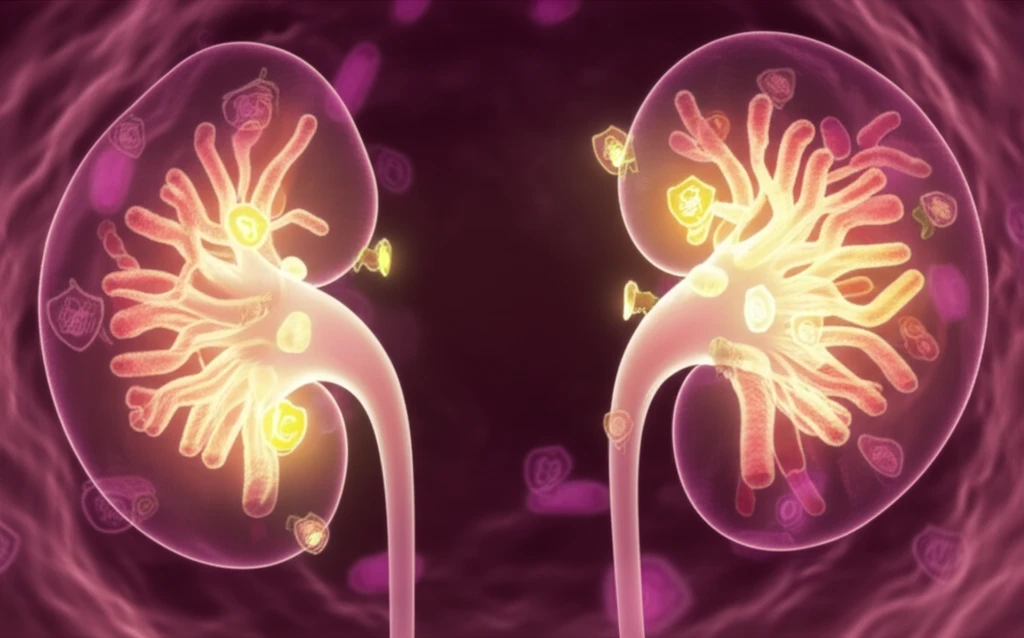
Bacteria with shields spreading in a urinary tract, symbolizing antibiotic resistance.

The Silent Spread: Understanding Antibiotic Resistance in UTIs

"New research unveils how seemingly harmless bacteria in urine can carry hidden resistance, threatening treatment effectiveness."


Urinary tract infections (UTIs) are among the most common infections, affecting millions worldwide, particularly women. While often easily treated with antibiotics, a growing concern is the rise of antibiotic resistance, making these infections harder to combat. This article explores recent research that sheds light on how antibiotic resistance spreads, even when bacteria don't appear to be causing immediate harm.

The core of the issue lies in what's known as plasmid-mediated quinolone resistance (PMQR). Quinolones are a class of antibiotics frequently used to treat UTIs. PMQR occurs when bacteria acquire genes on plasmids (small DNA molecules) that make them resistant to these drugs. What's particularly concerning is that some bacteria carrying these resistance genes might still appear susceptible to antibiotics in standard tests, acting as 'silent reservoirs' of resistance.

This article breaks down a study investigating the prevalence of PMQR genes in Enterobacteriaceae, a common family of bacteria responsible for many UTIs. By understanding how these resistance genes spread, we can better address the challenges of antibiotic resistance and protect the effectiveness of UTI treatments.

Decoding the Threat: How Resistance Spreads Undetected

Bacteria with shields spreading in a urinary tract, symbolizing antibiotic resistance.

Researchers in Hungary investigated over 200 Enterobacteriaceae strains from urine samples to understand the prevalence of PMQR genes. They looked for specific genes known to confer resistance to quinolone antibiotics, including qnrA, qnrB, qnrS, and others. They also tested the susceptibility of these bacteria to common antibiotics used to treat UTIs, such as ciprofloxacin.

The study revealed that a significant percentage of the bacteria carried PMQR genes. Alarmingly, many of these bacteria still appeared susceptible or only showed low-level resistance to ciprofloxacin in standard laboratory tests. This means that routine testing might not always detect the presence of these resistance genes, potentially leading to ineffective treatment and further spread of resistance.

  • 17.7% of the tested Enterobacteriaceae carried PMQR genes.
  • Many PMQR-positive strains showed susceptibility or low-level resistance to ciprofloxacin (MIC between 0.06 and 1 mg/L), suggesting that standard tests may underestimate the prevalence of resistance.
  • The study reported the first detection of the qnrD resistance determinant in Hungary.
The implications of these findings are significant. The study highlights that bacteria carrying PMQR genes can exist in the urinary tract without causing obvious resistance in standard tests. These bacteria can then spread these resistance genes to other bacteria, potentially contributing to the overall increase in antibiotic resistance. The researchers emphasize the need for more thorough screening methods to detect these 'silent' carriers of resistance.

Protecting Our Future: What You Need to Know About Antibiotic Resistance

The rise of antibiotic resistance is a serious threat to public health. As bacteria become resistant to antibiotics, common infections become harder and more expensive to treat, and can even become life-threatening. Understanding how resistance spreads is crucial to tackling this challenge.

This research underscores the importance of responsible antibiotic use. Overuse and misuse of antibiotics contribute to the development of resistance. Always follow your doctor's instructions when taking antibiotics, and never use them for viral infections like colds or flu.

While researchers work on new ways to combat antibiotic resistance, including developing new drugs and alternative therapies, you can play your part by practicing good hygiene, preventing infections where possible, and using antibiotics wisely.

About this Article -

This article was crafted using a human-AI hybrid and collaborative approach. AI assisted our team with initial drafting, research insights, identifying key questions, and image generation. Our human editors guided topic selection, defined the angle, structured the content, ensured factual accuracy and relevance, refined the tone, and conducted thorough editing to deliver helpful, high-quality information.See our About page for more information.

This article is based on research published under:

DOI-LINK: 10.1556/030.65.2018.012, Alternate LINK

Title: Plasmid-Mediated Quinolone Resistance Determinants In Enterobacteriaceae From Urine Clinical Samples

Subject: General Immunology and Microbiology

Journal: Acta Microbiologica et Immunologica Hungarica

Publisher: Akademiai Kiado Zrt.

Authors: Orsolya Szabó, Dániel Gulyás, Nikolett Szabó, Katalin Kristóf, Béla Kocsis, Dóra Szabó

Published: 2018-02-23

Everything You Need To Know

1

What is PMQR, and why is it a concern in treating urinary tract infections?

PMQR, or Plasmid-Mediated Quinolone Resistance, occurs when bacteria acquire genes on plasmids, small DNA molecules, that make them resistant to quinolones, a class of antibiotics often used to treat UTIs. The concern is that some bacteria carrying these resistance genes might still appear susceptible to antibiotics in standard tests, acting as 'silent reservoirs' of resistance. This can lead to treatment failures and further spread of resistance, as the bacteria can still transmit the resistance genes to other bacteria even if they themselves don't show high levels of resistance.

2

What did the recent research in Hungary reveal about antibiotic resistance in Enterobacteriaceae strains?

The recent research focused on Enterobacteriaceae strains from urine samples. Researchers investigated the prevalence of PMQR genes such as qnrA, qnrB, qnrS and the recently discovered qnrD resistance determinant. These bacteria were tested for susceptibility to antibiotics like ciprofloxacin. The study also reported that many bacteria carrying PMQR genes still appeared susceptible to Ciprofloxacin in standard tests. This suggests routine testing may underestimate the presence of antibiotic resistance.

3

What is the significance of detecting bacteria with PMQR genes that still appear susceptible to antibiotics?

A key finding of the Hungarian study is the detection of bacteria with PMQR genes that appear susceptible or show low-level resistance to antibiotics like ciprofloxacin in standard laboratory tests. This means that standard tests may not always detect these 'silent' carriers of resistance. The finding suggests the need for more thorough screening methods to detect these silent carriers of resistance. This has significant implications for treatment strategies, as infections caused by these bacteria might not respond to standard antibiotic treatments, potentially leading to prolonged infections and increased healthcare costs.

4

What are the broader implications of antibiotic resistance in UTIs for public health?

Antibiotic resistance in UTIs makes these common infections harder and more expensive to treat. Resistance leads to prolonged illness, increased healthcare costs, and potentially more severe outcomes, including kidney damage or sepsis. The spread of resistance genes, like those involved in PMQR, can compromise the effectiveness of antibiotics used to treat other infections as well, not just UTIs. This highlights the importance of responsible antibiotic use and the development of new strategies to combat resistance.

5

What role do plasmids play in the spread of antibiotic resistance, particularly in urinary tract infections?

Plasmids are small DNA molecules within bacterial cells that are physically separated from chromosomal DNA and can replicate independently. In the context of antibiotic resistance, plasmids often carry genes that confer resistance to specific antibiotics. The concerning part is that bacteria can transfer these plasmids to other bacteria, even those of different species. This horizontal gene transfer is a major mechanism by which antibiotic resistance spreads rapidly. In UTIs, plasmids carrying PMQR genes can enable bacteria to resist quinolone antibiotics, undermining treatment effectiveness.

Newsletter Subscribe

Subscribe to get the latest articles and insights directly in your inbox.