
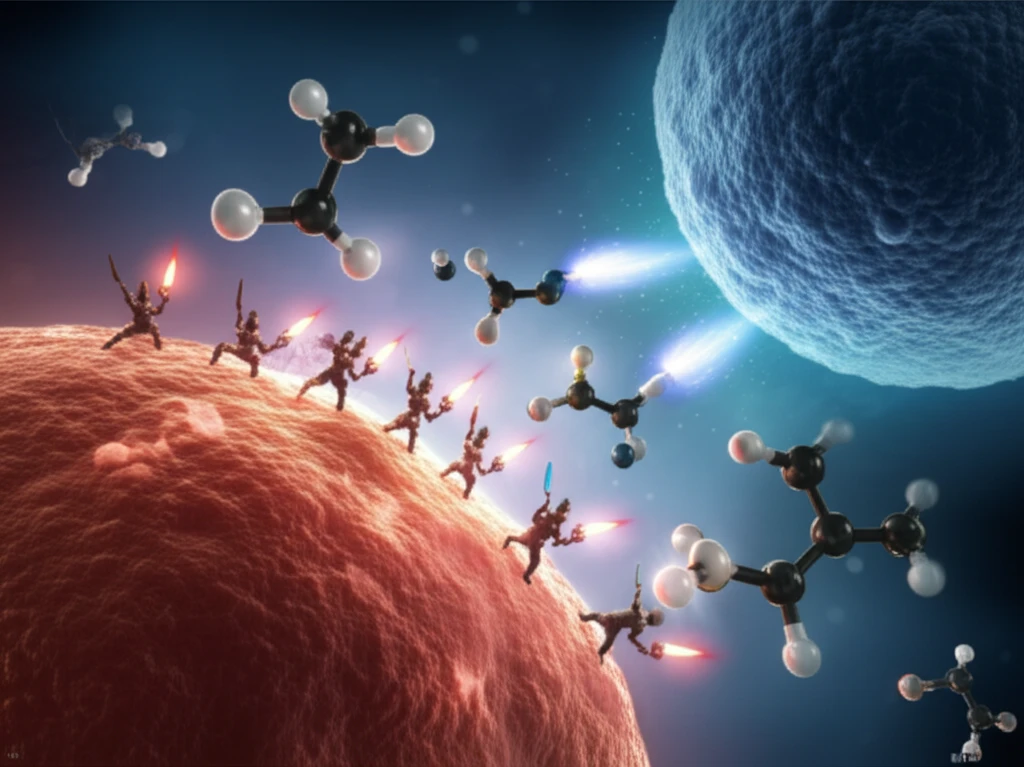
The Power of Ferulic Acid: Boosting Antibiotic Effectiveness Against Superbugs

"Discover how ferulic acid, a natural compound, can enhance the power of antibiotics in the fight against resistant bacteria like Acinetobacter baumannii."
The rise of antibiotic-resistant bacteria poses a significant threat to global health. Superbugs like Acinetobacter baumannii are becoming increasingly difficult to treat, leading to prolonged hospital stays, increased healthcare costs, and higher mortality rates. The urgent need for new strategies to combat these resistant organisms has spurred researchers to investigate novel approaches, including the use of natural compounds to enhance the activity of existing antibiotics.
Ferulic acid, a ubiquitous plant-derived phenolic compound, has garnered attention for its potential to potentiate the effects of quinolone-based antibiotics against Acinetobacter baumannii. Found in various fruits, vegetables, and grains, ferulic acid is known for its antioxidant, anti-inflammatory, and antimicrobial properties. Recent studies suggest that ferulic acid can disrupt bacterial defense mechanisms, making Acinetobacter baumannii more susceptible to antibiotics.
This article delves into the groundbreaking research exploring the synergistic effects of ferulic acid and quinolone antibiotics in combating Acinetobacter baumannii infections. We will examine the mechanisms by which ferulic acid enhances antibiotic activity, the implications of these findings for treating resistant infections, and the potential for ferulic acid to serve as a valuable tool in the ongoing fight against antibiotic resistance.
How Does Ferulic Acid Supercharge Antibiotics Against Superbugs?
The study by Ibitoye and Ajiboye (2018) investigates how ferulic acid can restore the effectiveness of quinolone antibiotics against Acinetobacter baumannii. Quinolones, a class of broad-spectrum antibiotics, are commonly used to treat various bacterial infections. However, the emergence of quinolone-resistant Acinetobacter baumannii strains has limited their clinical utility. The research highlights that ferulic acid can disrupt bacterial defense mechanisms, making the bacteria more vulnerable to antibiotics.
- Reduced Antibiotic Resistance: Ferulic acid significantly lowers the minimum inhibitory concentration (MIC) of quinolone antibiotics needed to combat Acinetobacter baumannii. This is especially pronounced in resistant strains.
- Synergistic Action: Checkerboard assays confirm that ferulic acid and quinolones interact synergistically. This means their combined effect is greater than the sum of their individual effects.
- Enhanced Antibacterial Activity: In murine sepsis models, ferulic acid enhances the antibacterial activities of quinolones, improving treatment outcomes.
- Redox Imbalance: Ferulic acid amplifies quinolone-induced redox imbalance in bacteria by increasing superoxide ion generation and disrupting NAD+/NADH and ADP/ATP ratios.
- Glutathione Reduction: Ferulic acid significantly lowers the levels of reduced glutathione, an important antioxidant in bacteria, further weakening their defenses.
A New Weapon in the Fight Against Superbugs?
The research on ferulic acid offers a promising avenue for combating antibiotic resistance. By enhancing the effectiveness of existing antibiotics, ferulic acid could help reduce the reliance on newer, more expensive drugs and slow the spread of resistance. This approach holds particular significance for treating infections caused by Acinetobacter baumannii, a notorious superbug that poses a serious threat to public health. While further research is needed to fully understand the clinical potential of ferulic acid, these findings suggest that this natural compound could play a crucial role in the future of antimicrobial therapy. By exploring innovative strategies like ferulic acid supplementation, we can strive to stay ahead in the battle against antibiotic resistance and protect public health.