
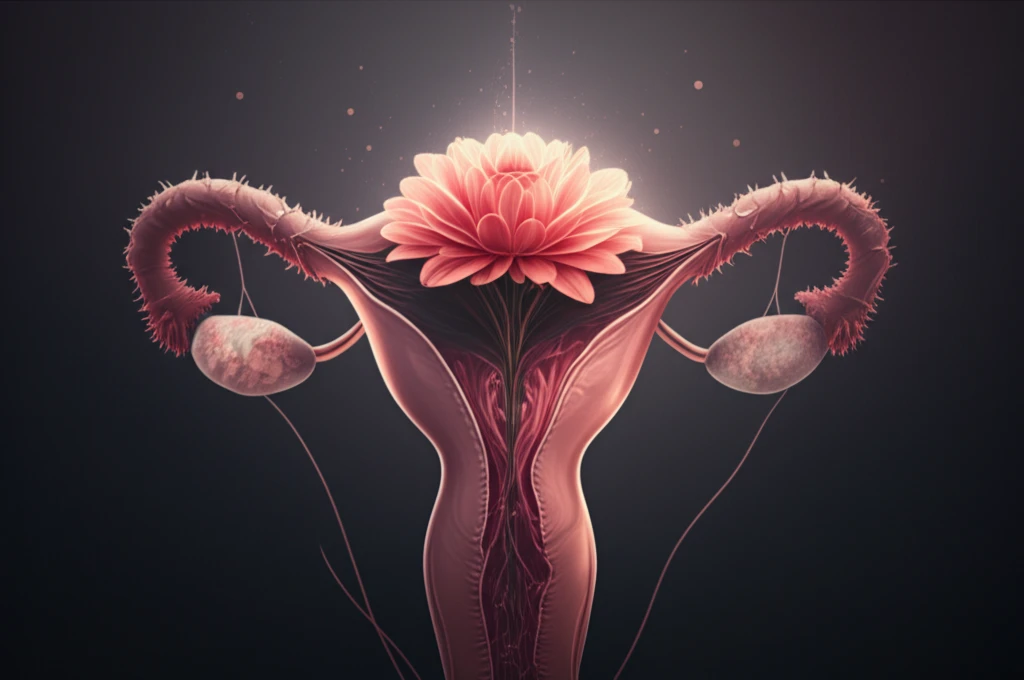
Uterus with Blooming Flower

The 'Nausicaa' Suture: A Revolutionary Technique to Prevent Hysterectomy After Childbirth

"Discover how the 'Nausicaa' compression suture offers a simple, effective alternative to hysterectomy in severe postpartum hemorrhage cases."


Postpartum hemorrhage (PPH), particularly when caused by placenta accreta spectrum (PAS), has become a significant global concern in maternal healthcare. This condition, where the placenta abnormally attaches to the uterine wall, can lead to severe bleeding and life-threatening complications during and after childbirth.

Traditionally, hysterectomy—the surgical removal of the uterus—has been a common intervention in such cases to control the bleeding and save the mother's life. However, this procedure eliminates the possibility of future pregnancies and can have long-term physical and emotional effects on women.

Now, a groundbreaking technique offers a beacon of hope. The ‘Nausicaa’ compression suture, a novel method of uterine compression, provides a simple yet effective alternative to hysterectomy for women experiencing major PPH, especially those with PAS. This innovative approach aims to preserve the uterus while effectively managing severe bleeding, offering a chance for future pregnancies and improved quality of life.

What is the 'Nausicaa' Compression Suture?

Uterus with Blooming Flower

The ‘Nausicaa’ compression suture is a surgical technique developed as an alternative to hysterectomy in cases of severe postpartum hemorrhage (PPH), particularly those resulting from placenta accreta spectrum (PAS). This method involves a specific pattern of sutures designed to compress the uterus and control bleeding without the need for removing the organ.

The technique was applied to a study of 68 patients experiencing major PPH during cesarean sections. These included 43 patients with PAS, 20 with placenta previa totalis, and 5 with uterine atony. The results were remarkable: none of these patients required a hysterectomy after the ‘Nausicaa’ suture was applied.

Here’s a breakdown of the key elements:
  • Preservation of the Uterus: The primary goal is to avoid hysterectomy, preserving the woman's fertility and overall well-being.
  • Effective Hemostasis: The suture technique is designed to stop bleeding quickly and effectively, preventing further complications.
  • Relatively Simple Procedure: Compared to a hysterectomy, the ‘Nausicaa’ suture is a less invasive and complex procedure.
This suggests that the ‘Nausicaa’ suture is a feasible option for women who wish to preserve their fertility and avoid the long-term consequences of hysterectomy. The procedure's effectiveness hinges on the precise placement and tension of the sutures, which compress the uterine tissue and reduce blood flow to the affected area.

The Future of Childbirth is Here

The ‘Nausicaa’ compression suture represents a significant advancement in obstetric care, offering a simple, effective alternative to hysterectomy for women experiencing severe postpartum hemorrhage. This innovative technique has the potential to improve outcomes, preserve fertility, and enhance the quality of life for countless women worldwide.

About this Article -

This article was crafted using a human-AI hybrid and collaborative approach. AI assisted our team with initial drafting, research insights, identifying key questions, and image generation. Our human editors guided topic selection, defined the angle, structured the content, ensured factual accuracy and relevance, refined the tone, and conducted thorough editing to deliver helpful, high-quality information.See our About page for more information.

Everything You Need To Know

1

What exactly is the 'Nausicaa' compression suture?

The 'Nausicaa' compression suture is a surgical technique used as an alternative to hysterectomy in cases of severe postpartum hemorrhage, especially those related to placenta accreta spectrum. It involves a specific suture pattern to compress the uterus, controlling bleeding without removing the organ. This technique aims to preserve the uterus, maintain fertility, and avoid the physical and emotional impacts of a hysterectomy.

2

Why is postpartum hemorrhage such a big deal, and how does the 'Nausicaa' compression suture help?

Postpartum hemorrhage (PPH) is a significant concern because it can lead to life-threatening complications during and after childbirth. The 'Nausicaa' compression suture is significant because it offers a way to control severe bleeding without resorting to a hysterectomy, thus preserving the woman's uterus and fertility. This is particularly important for women with placenta accreta spectrum, where the risk of severe bleeding is higher.

3

What is placenta accreta spectrum, and why is the 'Nausicaa' compression suture so important for women who have it?

Placenta accreta spectrum (PAS) is a condition where the placenta abnormally attaches to the uterine wall. This can cause severe bleeding during and after childbirth, making it difficult to control. The 'Nausicaa' compression suture is crucial in these cases because it provides a method to manage the bleeding while preserving the uterus, which is especially important for women who desire future pregnancies. Traditionally, a hysterectomy was often the primary solution in such cases.

4

What is a hysterectomy and why would someone want to avoid it?

A hysterectomy is the surgical removal of the uterus. Traditionally, it has been a common intervention in cases of severe postpartum hemorrhage, especially when caused by conditions like placenta accreta spectrum, to control bleeding and save the mother's life. However, a hysterectomy eliminates the possibility of future pregnancies and can have long-term physical and emotional effects. The 'Nausicaa' compression suture offers an alternative to avoid these consequences.

5

How is the 'Nausicaa' compression suture actually performed?

The 'Nausicaa' compression suture is performed by applying a specific pattern of sutures to compress the uterus and reduce blood flow to the affected area. The precise placement and tension of these sutures are critical to the procedure's effectiveness. The procedure is considered relatively simple compared to a hysterectomy, making it a feasible option for women who wish to preserve their fertility and avoid the long-term consequences of uterine removal. Its simplicity makes it an easier option for doctors to perform.

Newsletter Subscribe

Subscribe to get the latest articles and insights directly in your inbox.