
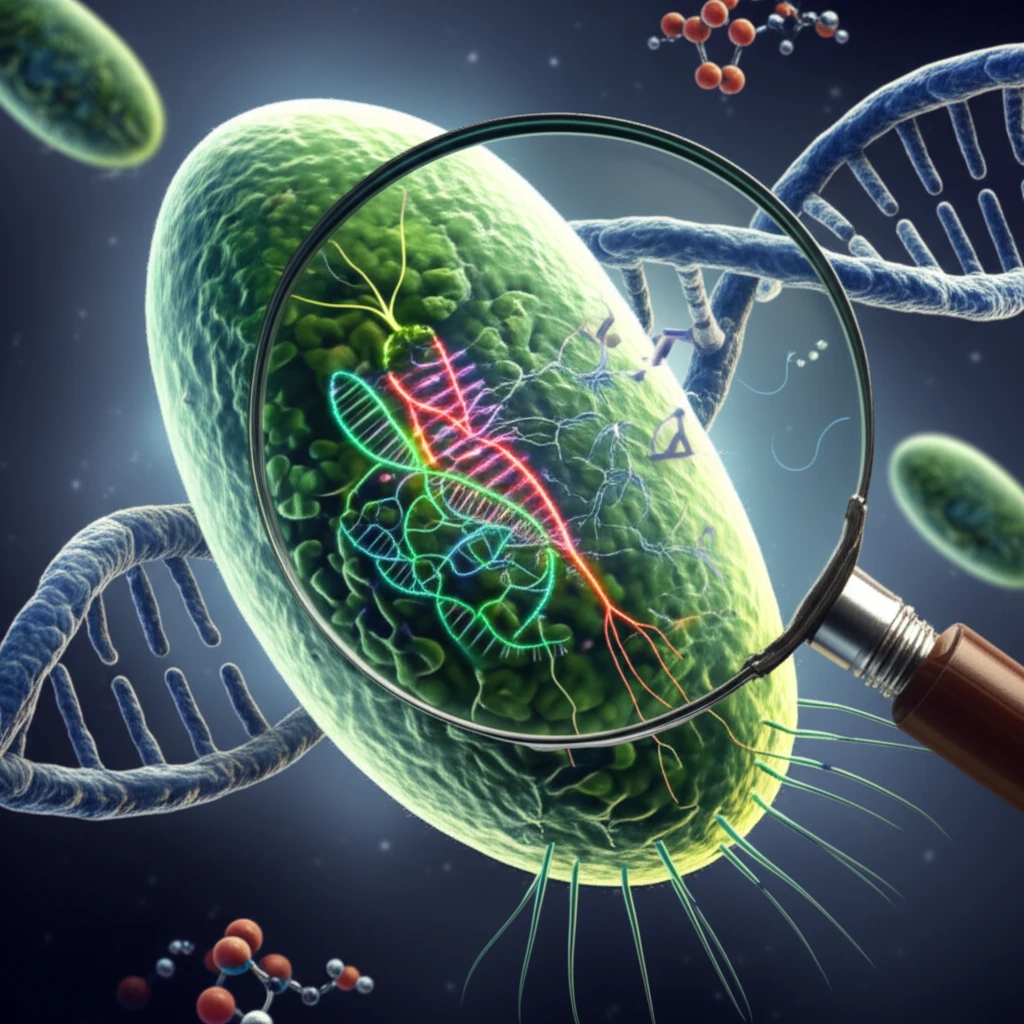
Surreal illustration of a Paramecium cell highlighting RNA-mediated genome regulation.

The Methylation Mystery: Why This Single-Celled Organism Doesn't Play by the Rules

"Unraveling the absence of 5-methylcytosine in Paramecium tetraurelia and what it means for epigenetic research."


In the realm of biology, DNA methylation, specifically the addition of a methyl group to the fifth carbon of cytosine (creating 5-methylcytosine or 5mC), is a well-established process for regulating gene expression and guiding developmental programs in a wide array of organisms. Think of it as a molecular switch that can turn genes on or off, influencing everything from cell differentiation to responses to environmental cues.

However, the story takes a fascinating twist when we consider ciliates. These complex, single-celled eukaryotes have a unique nuclear arrangement: a germline micronucleus and a somatic macronucleus, dividing labor with one genome focused on heredity and the other on day-to-day operations. Despite their complexity, the role of DNA methylation in ciliates remains largely unknown. While the usual cytosine methyltransferases (the enzymes that install those methyl groups) appear to be missing in many ciliate genomes, some recent studies hint at de novo (new) cytosine methylation in at least one species: the stichotrichous ciliate Oxytricha trifallax.

This study investigates the presence of DNA methylation in Paramecium tetraurelia, another ciliate. Using sophisticated techniques like bisulfite genome sequencing, DNA mass spectrometry, and antibody-based detection, researchers aimed to determine whether 5mC is present and, if so, what role it might play. The findings challenge initial assumptions and reveal a surprising twist: despite some suggestive evidence from antibody-based methods, the other techniques show that 5mC levels are below the limits of detection. This suggests that Paramecium may not rely on 5-methylcytosine DNA methylation as an integral part of its epigenetic toolkit.

Why Paramecium's Lack of Methylation Matters

Surreal illustration of a Paramecium cell highlighting RNA-mediated genome regulation.

If DNA methylation is so important, why does Paramecium appear to do without it? The answer likely lies in the organism's unique biology and the alternative strategies it employs for genome regulation. Paramecium undergoes a dramatic genome reorganization during sexual reproduction (autogamy). The old somatic macronucleus is destroyed, and a new one is built from the germline micronucleus. This process involves eliminating specific DNA sequences called Internal Eliminated Sequences (IESs) and stitching the remaining segments together. How does Paramecium know which IESs to cut out?

Researchers initially hypothesized that, like in other systems, DNA methylation might be involved in marking IESs for removal. This study, however, suggests otherwise, leading to other possibilities for how Paramecium pulls off this feat of genomic engineering. The current thinking points to a class of small RNAs (scnRNAs) guiding the process, potentially through histone modifications or direct targeting of IESs. The absence of DNA methylation forces scientists to look deeper into the fascinating world of RNA-mediated control.

  • The study challenges the universality of DNA methylation as a core epigenetic mechanism.
  • It highlights the diversity of strategies organisms use to regulate their genomes.
  • It focuses future research on RNA-based mechanisms in Paramecium and other ciliates.
Furthermore, these results emphasize the need for caution when relying solely on antibody-based methods for detecting DNA methylation, especially when levels are expected to be low. These methods can sometimes produce false positives, highlighting the importance of using multiple complementary techniques to confirm findings.

What's Next? The Ongoing Quest to Understand Genome Regulation

This research underscores that our understanding of epigenetic mechanisms is far from complete, and model organism like Paramecium continue to surprise us. Just as the absence of evidence isn't evidence of absence, it inspires new hypotheses, improved methodologies, and exciting discoveries.

Future studies will likely focus on characterizing the precise role of scnRNAs in IES removal, identifying any novel DNA modifications that might be present (even at very low levels), and exploring the interplay between different epigenetic marks in Paramecium. This research offers a great reminder of the diversity of life and the many clever solutions organisms have evolved to manage their genetic information.

The study serves as a call for cautious interpretation of antibody-based assays and the importance of complementary methodologies. This will enable the scientific community to reach a more accurate and nuanced understanding of cytosine methylation.

About this Article -

This article was crafted using a human-AI hybrid and collaborative approach. AI assisted our team with initial drafting, research insights, identifying key questions, and image generation. Our human editors guided topic selection, defined the angle, structured the content, ensured factual accuracy and relevance, refined the tone, and conducted thorough editing to deliver helpful, high-quality information.See our About page for more information.

This article is based on research published under:

DOI-LINK: 10.1371/journal.pone.0206667, Alternate LINK

Title: Determination Of The Presence Of 5-Methylcytosine In Paramecium Tetraurelia

Subject: Multidisciplinary

Journal: PLOS ONE

Publisher: Public Library of Science (PLoS)

Authors: Aditi Singh, Adrienne Vancura, Rafal K. Woycicki, Daniel J. Hogan, Alan G. Hendrick, Mariusz Nowacki

Published: 2018-10-31

Everything You Need To Know

1

What role does 5-methylcytosine typically play in organisms, and how does Paramecium tetraurelia differ?

In many organisms, DNA methylation, which involves adding a methyl group to cytosine to create 5-methylcytosine (5mC), acts as a crucial epigenetic mechanism. It regulates gene expression, influencing processes from cell differentiation to environmental responses. However, Paramecium tetraurelia doesn't seem to use 5-methylcytosine in the same way, challenging the idea that it's a universal epigenetic tool.

2

How does Paramecium tetraurelia manage to eliminate Internal Eliminated Sequences (IESs) during autogamy without relying on DNA methylation?

Paramecium tetraurelia reorganizes its genome during sexual reproduction (autogamy). The old macronucleus is destroyed, and a new one is constructed from the micronucleus. This involves eliminating Internal Eliminated Sequences (IESs) and stitching the remaining segments. Researchers thought DNA methylation might mark IESs for removal, but this study points to small RNAs (scnRNAs) guiding the process, potentially through histone modifications or direct targeting of IESs.

3

What methods were used to investigate DNA methylation in Paramecium tetraurelia, and what do the results indicate about relying on antibody-based detection?

The study used techniques like bisulfite genome sequencing and DNA mass spectrometry to investigate the presence of 5-methylcytosine (5mC) in Paramecium tetraurelia. While antibody-based methods suggested its presence, the other techniques showed levels below detection limits. This discrepancy highlights the importance of using multiple methods to confirm findings, especially when dealing with low levels of DNA methylation.

4

What are the implications of Paramecium tetraurelia lacking 5-methylcytosine for our understanding of epigenetics and genome regulation?

The absence of 5-methylcytosine in Paramecium tetraurelia suggests that alternative epigenetic mechanisms, like small RNAs (scnRNAs), play a more significant role in genome regulation. It also highlights the diversity of epigenetic strategies across different organisms. The study refocused the research community to consider other mechanisms such as histone modification.

5

Now that 5-methylcytosine has been shown to be absent, what are the next steps in understanding genome regulation in Paramecium tetraurelia?

This discovery underscores that our understanding of epigenetics is incomplete and inspires new research avenues. This includes improving methodologies for detecting epigenetic modifications and exploring RNA-based mechanisms in Paramecium and other ciliates. Future research will likely focus on how small RNAs (scnRNAs) guide genome reorganization and gene expression in the absence of traditional DNA methylation.

Newsletter Subscribe

Subscribe to get the latest articles and insights directly in your inbox.