
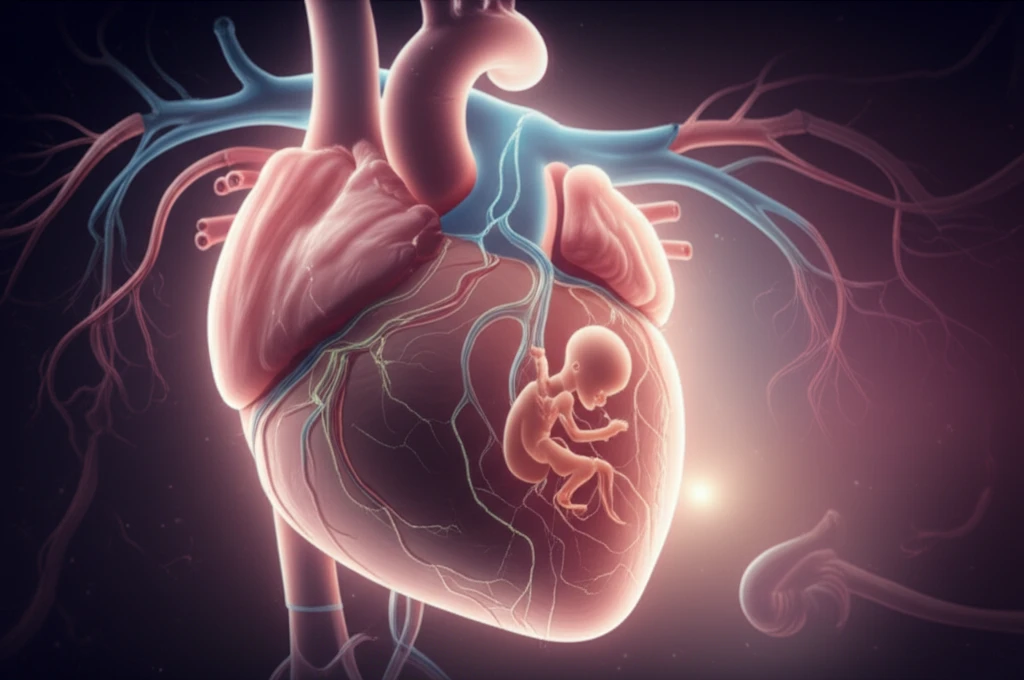
Interconnected hearts symbolizing maternal-fetal health

The Maternal-Fetal Connection: How Obesity Impacts Baby's Heart Health

"Groundbreaking research reveals the unexpected ways a mother's metabolic health during pregnancy can shape her child's cardiac future."


For decades, scientists have understood the heart's reliance on metabolism, both as an energy provider and a crucial source of cellular building blocks. However, with the growing focus on cardiac regeneration, the complexities of intracellular metabolism are coming into sharper focus. It's no longer sufficient to examine cardiac metabolism in isolation; a more holistic approach is needed.

A recent study in iJACC, led by Guzzardi et al. (2018), sheds new light on this crucial area. The researchers investigated the impact of maternal overweight on the cardiac development of infants, utilizing minipigs – a standard large-animal model in cardiovascular research – to gain deeper insights.

Their findings revealed a concerning link: neonatal changes in heart structure correlated with the mother's third-trimester body mass index. This suggests that the fetal heart's overexposure to glucose in utero can have lasting consequences. Furthermore, long-term effects in minipigs included hyperdynamic left ventricular systolic function, myocardial insulin resistance, and altered enzyme activities.

Unpacking the Implications: Why This Research Matters

Interconnected hearts symbolizing maternal-fetal health

This research carries significant weight due to several key factors. First, cardiovascular disease is a growing global concern. In Western societies, there's a noticeable shift from traditional atherothrombotic causes to those triggered by metabolic stress. This underscores the interconnectedness of systemic metabolic dysregulation and its impact on both the structure and function of the heart.

Second, the high prevalence of gestational obesity is alarming. Maternal overweight is a known risk factor for insulin resistance, high birth weight, and a specific type of metabolic cardiomyopathy in offspring. While the underlying causes of this cardiomyopathy are intricate, they highlight new roles for cardiac metabolism beyond simple energy provision.

  • Energy for Contraction: Conventionally, cardiac metabolism is understood to provide the energy needed for the heart to contract efficiently.
  • Substrate Assessment: The metabolism of key energy substrates like fatty acids, glucose, and amino acids can be assessed non-invasively using advanced imaging techniques like positron emission tomography (PET).
  • Crosstalk: The study provides compelling evidence of crosstalk between metabolic dysregulation in the mother and structural/functional abnormalities in the offspring's heart. This suggests a direct link between maternal and fetal metabolic health.
The maternal-fetal interaction can be viewed as a form of 'parabiosis' – where two organisms are joined and share a single physiological entity. This study underscores the concept of long-term gene expression regulation within this maternal-fetal parabiosis model. The offspring's heart appears to retain a 'metabolic memory,' reflecting structural, metabolic, and functional rewiring that occurred in the fetal heart due to the mother's metabolic state.

Looking Ahead: New Avenues for Research and Prevention

Ultimately, the work by Guzzardi et al. (2018) underscores the power of contemporary cardiac imaging and molecular techniques in uncovering previously unknown mechanisms of cardiac growth and metabolism. It highlights that maternal metabolic stress, in combination with maternal-fetal parabiosis, leads to structural and functional remodeling of the fetal heart. This remodeling persists even after birth. These discoveries open doors to exciting new hypotheses and potential preventative strategies, ultimately improving the long-term cardiac health of future generations.

About this Article -

This article was crafted using a human-AI hybrid and collaborative approach. AI assisted our team with initial drafting, research insights, identifying key questions, and image generation. Our human editors guided topic selection, defined the angle, structured the content, ensured factual accuracy and relevance, refined the tone, and conducted thorough editing to deliver helpful, high-quality information.See our About page for more information.

This article is based on research published under:

DOI-LINK: 10.1016/j.jcmg.2017.11.002, Alternate LINK

Title: Maternal-Fetal Parabiosis In Obesity Exposes Unexpected Roles For Cardiac Metabolism

Subject: Cardiology and Cardiovascular Medicine

Journal: JACC: Cardiovascular Imaging

Publisher: Elsevier BV

Authors: Heinrich Taegtmeyer

Published: 2018-12-01

Everything You Need To Know

1

How does a mother's weight during pregnancy affect her baby's heart?

The research indicates that maternal obesity can significantly impact a baby's heart health. Specifically, the study by Guzzardi et al. (2018) found a correlation between a mother's body mass index during the third trimester and changes in the infant's heart structure. This means that the fetal heart's overexposure to glucose in utero can lead to lasting consequences such as hyperdynamic left ventricular systolic function, myocardial insulin resistance, and altered enzyme activities in the offspring.

2

What is meant by 'maternal-fetal parabiosis,' and why is it important?

The concept of 'maternal-fetal parabiosis' is crucial because it explains how metabolic information is shared between the mother and the developing fetus. This interaction leads to the offspring's heart retaining a 'metabolic memory,' reflecting structural, metabolic, and functional rewiring that occurred in the fetal heart due to the mother's metabolic state. The study underscores the concept of long-term gene expression regulation within this maternal-fetal parabiosis model. Understanding this connection is vital for developing preventative strategies aimed at improving the long-term cardiac health of future generations.

3

What is cardiac metabolism, and why is it significant in heart health?

Cardiac metabolism is traditionally understood to provide the energy necessary for the heart to contract efficiently. However, it goes beyond just energy provision. The metabolism of key energy substrates like fatty acids, glucose, and amino acids plays a significant role in cardiac health. Advanced imaging techniques, such as positron emission tomography (PET), can non-invasively assess the metabolism of these substrates, offering valuable insights into heart function and potential issues like myocardial insulin resistance. This is particularly important because metabolic stress can trigger cardiovascular issues.

4

Why is gestational obesity such a big concern for a baby's heart health?

Gestational obesity is a significant concern because it is a known risk factor for several adverse health outcomes in offspring, including insulin resistance, high birth weight, and metabolic cardiomyopathy. The prevalence of maternal overweight contributes to the shift from traditional atherothrombotic causes of cardiovascular disease to those triggered by metabolic stress. Addressing gestational obesity is crucial for preventing long-term cardiac issues in future generations.

5

Why is this research so important?

This study matters because it highlights the connection between maternal metabolic health and the fetal heart. It also emphasized the importance of a more holistic approach to understanding cardiac metabolism, considering the impact of systemic metabolic dysregulation on heart structure and function. The research underscores the need for preventative strategies to combat maternal metabolic stress and improve the long-term cardiac health of offspring. Furthermore, it showcases the potential of cardiac imaging and molecular techniques in uncovering mechanisms of cardiac growth and metabolism.

Newsletter Subscribe

Subscribe to get the latest articles and insights directly in your inbox.