
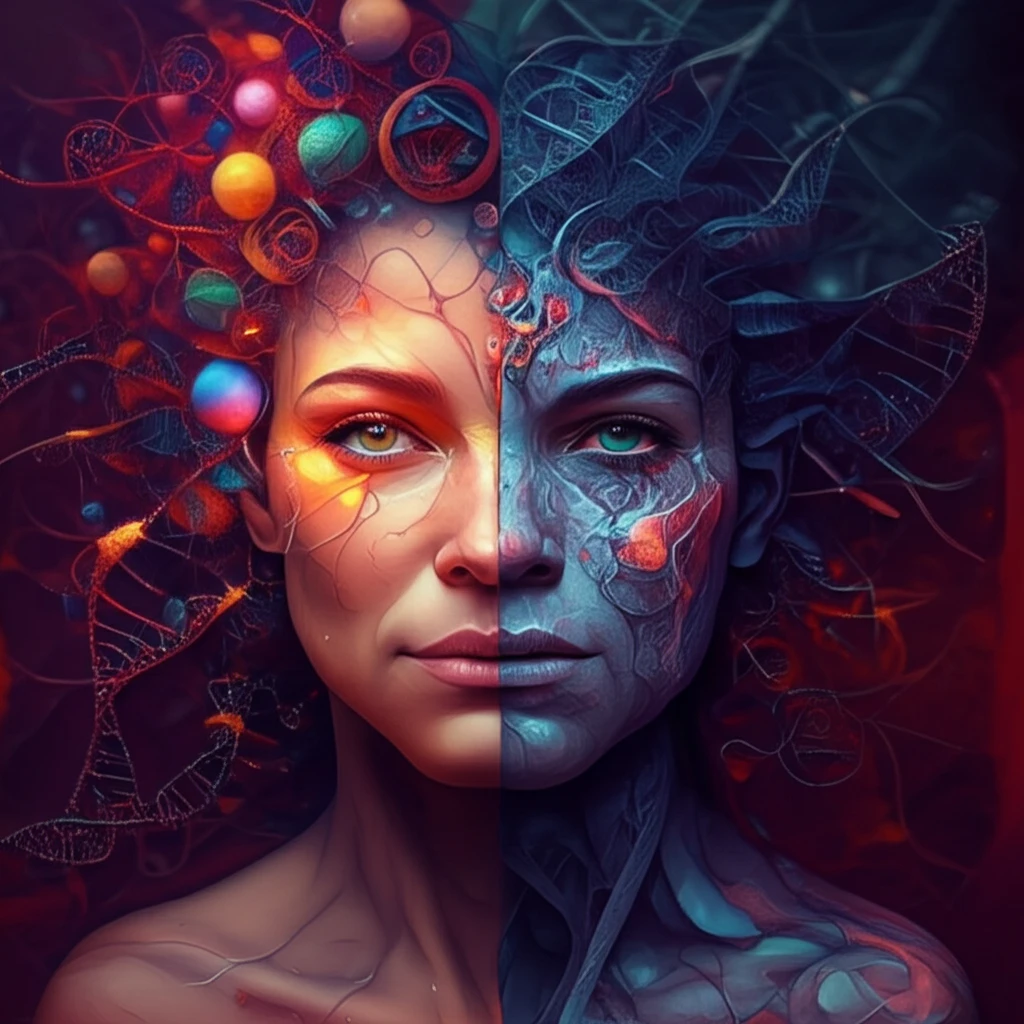
The duality of happiness, a blend of joy and stress reflected in our genes

The Jekyll and Hyde of Happiness: Decoding the Science of Well-Being

"Is there a dark side to seeking pleasure? A new study explores how different types of happiness impact our genes and overall health."


We all instinctively understand that negative emotions like sadness, depression, and stress can harm our health. But what about the other side of the coin? Can joy, contentment, and a sense of purpose actually boost our well-being? Many would agree that happiness is more than just a fleeting emotion—it can be a powerful force for good.

Those who have experienced the all-consuming euphoria of love can attest to its almost medicinal effect. When we're happy, we feel stronger, more resilient, and less susceptible to illness. It seems intuitive that a positive outlook translates to better health. But can this idea be scientifically proven?

Researchers at universities in California and North Carolina are delving deeper into this question. They're investigating whether a positive state of mind can favorably influence the expression of key genes involved in immunity. Their findings, published in the Proceedings of the National Academy of Sciences, have sparked considerable discussion, prompting us to examine the science behind happiness and its impact on our genes.

Unlocking the Transcriptomic Signature of Happiness

The duality of happiness, a blend of joy and stress reflected in our genes

The overarching goal of Barbara Fredrickson and her team is to unravel the intricate connections between our experiences and the activity of our genome. By understanding these links, they hope to identify new avenues for improving human health. This research is rooted in the concept of "social signal transduction," as termed by Steven Cole, a co-author of the study. This field posits that our social and environmental factors can directly influence gene expression.

We know that social isolation and chronic stress can increase the risk of various health problems. Over the past few years, research has focused on identifying the biological pathways that connect perceived socio-environmental stress with the development of conditions like cardiovascular disease, rheumatoid arthritis, neurodegenerative disorders, and certain cancers—all of which often involve inflammation. Cole's team previously discovered that the expression of several gene categories is altered in the immune cells of individuals experiencing chronic stress.

  • This altered gene expression, termed CTRA (conserved transcriptional response to adversity), is characterized by:
  • Increased expression of genes involved in inflammation.
  • Reduced transcription of genes related to antiviral immunity and antibody production.
Having identified a potential "negative marker" of health, the researchers naturally wondered about its status in happy, well-adjusted individuals. But how do you define happiness? Is there only one type? Fredrickson's study stands out because it distinguishes between hedonic and eudaimonic well-being, a distinction first made by ancient philosophers.

A Word of Caution

While this type of research is valuable, it’s also important to approach it with a critical eye. It can lead to the development of genetic tests that claim to measure an individual’s level of happiness. There is also the risk of promoting one way of life over another. The definition of a "good life" varies from person to person, culture to culture. It is essential to recognize that forcing morality into a scientific study can be highly problematic.

About this Article -

This article was crafted using a human-AI hybrid and collaborative approach. AI assisted our team with initial drafting, research insights, identifying key questions, and image generation. Our human editors guided topic selection, defined the angle, structured the content, ensured factual accuracy and relevance, refined the tone, and conducted thorough editing to deliver helpful, high-quality information.See our About page for more information.

This article is based on research published under:

DOI-LINK: 10.1051/medsci/20143005002, Alternate LINK

Title: Bonheur Jekyll Et Bonheur Hyde Ou L’Étrange Cas De La Génomique Psycho-Sociale

Subject: General Biochemistry, Genetics and Molecular Biology

Journal: médecine/sciences

Publisher: EDP Sciences

Authors: Abdel Aouacheria

Published: 2014-05-01

Everything You Need To Know

1

What are the two types of well-being discussed, and how do they differ?

The study distinguishes between two primary types of well-being: hedonic and eudaimonic well-being. Hedonic well-being is often associated with pleasure and enjoyment, focusing on immediate gratification and positive emotions. Eudaimonic well-being, on the other hand, emphasizes a sense of purpose, meaning, and fulfillment, often involving activities that contribute to personal growth and the greater good. Ancient philosophers initially made this distinction. The article focuses on how each affects our genes and health.

2

What is CTRA, and why is it relevant to the study of happiness?

CTRA (conserved transcriptional response to adversity) is a gene expression pattern identified by researchers, characterized by increased inflammation and reduced antiviral immunity and antibody production. This pattern is associated with chronic stress and social isolation, leading to various health problems. The study used CTRA as a 'negative marker' to investigate the effects of different types of well-being. The researchers wanted to know if hedonic or eudaimonic well-being would have the opposite effect, potentially improving immune function and overall health.

3

How does 'social signal transduction' relate to the impact of happiness on our genes?

Social signal transduction, as defined by Steven Cole, proposes that our social and environmental factors directly influence gene expression. This concept forms the foundation of the study, implying that experiences, including those related to happiness, can alter the activity of our genome. The research investigates whether positive states of mind, like those associated with hedonic or eudaimonic well-being, can favorably influence the expression of key genes involved in immunity, thus demonstrating how our social and emotional environments can impact our physical health at a molecular level.

4

What are the potential risks of research into the science of happiness, and how should we approach it?

One of the primary risks of this type of research is the potential development of genetic tests claiming to measure an individual's level of happiness, which can oversimplify a complex concept. There's also the risk of promoting one way of life over another, as the definition of a 'good life' varies greatly from person to person and culture to culture. A critical and nuanced approach is essential, recognizing that forcing morality into a scientific study can be problematic. The researchers caution against these potential pitfalls.

5

Can happiness truly change our genes, and if so, how does this happen at a molecular level?

The research suggests that happiness, specifically hedonic and eudaimonic well-being, can influence gene expression. Although the exact mechanisms are still being investigated, the study points to social signal transduction as a key factor. Positive states of mind may favorably influence the expression of key genes involved in immunity. The study suggests that well-being can potentially alter the CTRA pattern (reduced inflammation, improved antiviral immunity and antibody production) associated with adverse health outcomes caused by stress and social isolation, providing a molecular basis for the idea that happiness can indeed affect our genes and overall health.

Newsletter Subscribe

Subscribe to get the latest articles and insights directly in your inbox.