
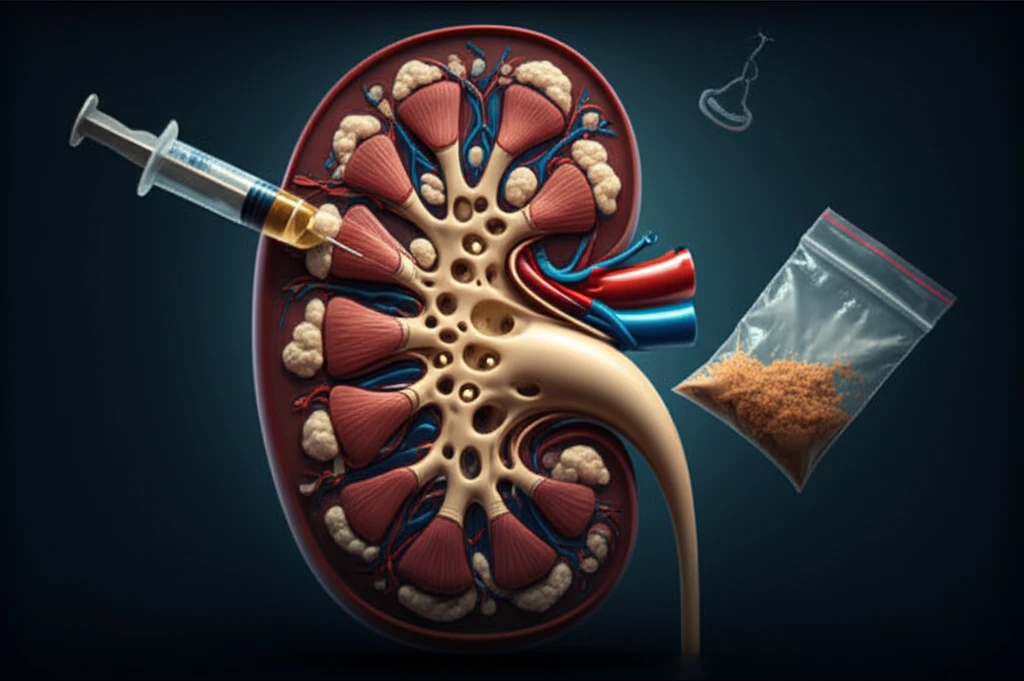
Illustration depicting a kidney with amyloid deposits, a syringe, and a heroin bag, symbolizing the link between drug use and kidney disease.

The Hidden Threat: How Heroin Use Fuels a Rare Kidney Disease

"Unveiling the Connection Between Opioid Addiction and Secondary Amyloidosis"


In the shadow of the opioid crisis, a lesser-known health threat looms: secondary amyloidosis, a rare but serious kidney disease, increasingly linked to heroin use and recurrent infections. This article delves into the connection, shedding light on the disease's causes, symptoms, and the urgent need for awareness and action.

Secondary amyloidosis is characterized by the buildup of abnormal protein deposits in the body's organs, primarily the kidneys. These deposits, known as amyloid fibrils, disrupt normal organ function, leading to a range of health complications. While the disease has various causes, emerging evidence points to a significant association with chronic inflammation, a common consequence of illicit drug use, particularly heroin.

This article aims to provide a comprehensive understanding of secondary amyloidosis in the context of the opioid crisis. We will explore the mechanisms by which heroin use contributes to the disease, examine the symptoms and diagnosis, and discuss the importance of early detection and treatment. This information is essential for both individuals at risk and healthcare professionals seeking to combat the disease's impact.

Understanding Secondary Amyloidosis and Its Link to Heroin Use

Illustration depicting a kidney with amyloid deposits, a syringe, and a heroin bag, symbolizing the link between drug use and kidney disease.

Secondary amyloidosis, or AA amyloidosis, is a condition where abnormal proteins, specifically serum amyloid A protein (SAA), accumulate in various organs. This protein is produced in response to inflammation, and chronic inflammation triggers its overproduction and deposition in tissues. In the case of heroin users, recurrent infections, often stemming from injection drug use, create a continuous inflammatory state, fueling the development of AA amyloidosis.

The connection between heroin use and secondary amyloidosis is multifaceted. Several factors contribute to this increased risk:

  • Recurrent Infections: Heroin users frequently experience skin infections (abscesses, cellulitis), bone infections (osteomyelitis), and bloodstream infections (bacteremia). These infections trigger the inflammatory response, leading to SAA production.
  • Injection Practices: Unsterile injection practices can introduce bacteria into the bloodstream, causing infections and inflammation. The use of non-sterile needles and syringes, along with the injection of substances containing impurities, further elevates the risk.
  • Impaired Immune Function: Heroin use can weaken the immune system, making users more susceptible to infections. This compromised immunity exacerbates the inflammatory response and accelerates amyloid formation.
  • Chronic Inflammation: Heroin use is often associated with chronic inflammation, even in the absence of active infections. This sustained inflammatory state is a primary driver of SAA production and amyloid deposition.
The kidneys are the most commonly affected organs in secondary amyloidosis. The buildup of amyloid fibrils in the kidneys impairs their function, leading to proteinuria (protein in the urine), nephrotic syndrome (a condition characterized by protein loss, swelling, and other complications), and eventually, kidney failure. Other organs, such as the liver, spleen, and heart, can also be affected, leading to a range of systemic complications.

Conclusion: A Call to Action

The rising prevalence of secondary amyloidosis among heroin users underscores the devastating consequences of the opioid crisis and the importance of proactive intervention. Raising awareness, promoting early detection, and expanding access to addiction treatment and harm reduction services are critical steps in addressing this emerging health threat. By understanding the link between heroin use, chronic infections, and secondary amyloidosis, we can work towards protecting individuals and communities from the insidious effects of this rare but serious disease.

About this Article -

This article was crafted using a human-AI hybrid and collaborative approach. AI assisted our team with initial drafting, research insights, identifying key questions, and image generation. Our human editors guided topic selection, defined the angle, structured the content, ensured factual accuracy and relevance, refined the tone, and conducted thorough editing to deliver helpful, high-quality information.See our About page for more information.

This article is based on research published under:

DOI-LINK: 10.1016/j.amsu.2018.11.013, Alternate LINK

Title: Secondary Amyloidosis Associated With Heroin Use And Recurrent Infections – A Case Report

Subject: General Medicine

Journal: Annals of Medicine and Surgery

Publisher: Elsevier BV

Authors: Deepthi Mani

Published: 2019-01-01

Everything You Need To Know

1

What exactly is secondary amyloidosis, and how is it related to kidney function?

Secondary amyloidosis, also known as AA amyloidosis, involves the accumulation of abnormal proteins, specifically serum amyloid A protein (SAA), in various organs. This buildup of amyloid fibrils particularly affects the kidneys, impairing their function and potentially leading to proteinuria, nephrotic syndrome, and ultimately, kidney failure. The accumulation disrupts the normal filtration processes performed by the kidneys, causing protein to leak into the urine and leading to further complications. While the kidneys are commonly affected, other organs such as the liver, spleen, and heart can also be impacted by these amyloid deposits, leading to systemic complications.

2

How does heroin use contribute to the development of secondary amyloidosis?

Heroin use contributes to secondary amyloidosis through several interconnected factors. Recurrent infections, stemming from unsterile injection practices, trigger chronic inflammation and subsequently increase the production of serum amyloid A protein (SAA). Injection practices that introduce bacteria into the bloodstream exacerbate this inflammatory response. Furthermore, heroin use can impair immune function, making individuals more susceptible to infections and sustaining the inflammatory state necessary for the development and progression of AA amyloidosis. Even in the absence of active infections, heroin use is often associated with chronic inflammation, which drives SAA production and amyloid deposition.

3

What are the primary risk factors associated with heroin use that increase the likelihood of developing secondary amyloidosis?

The primary risk factors include recurrent infections such as skin infections (abscesses, cellulitis), bone infections (osteomyelitis), and bloodstream infections (bacteremia), all of which trigger the inflammatory response leading to serum amyloid A protein (SAA) production. Unsterile injection practices, which introduce bacteria and impurities into the bloodstream, are another significant risk factor. Impaired immune function, a consequence of heroin use, makes individuals more susceptible to these infections. Chronic inflammation, even without active infections, further elevates the risk of SAA production and the development of AA amyloidosis. These factors, combined with the direct effects of heroin on the body, create an environment conducive to the formation of amyloid deposits.

4

Besides kidney failure, what other health complications can arise from secondary amyloidosis?

While kidney failure is a major concern, secondary amyloidosis can also affect other organs, leading to a range of systemic complications. The liver and spleen can be affected, causing impaired function. The heart can also be impacted, potentially leading to cardiac dysfunction. These complications arise from the buildup of serum amyloid A protein (SAA) in these organs, disrupting their normal function. The specific manifestations and severity of these complications depend on the extent and location of the amyloid deposits.

5

What steps can be taken to address the rising prevalence of secondary amyloidosis among heroin users, and why is early intervention so critical?

Addressing the rising prevalence of secondary amyloidosis requires a multifaceted approach. Raising awareness about the link between heroin use and AA amyloidosis is crucial for early detection and intervention. Promoting addiction treatment and harm reduction services can help reduce heroin use and the associated risk of recurrent infections and chronic inflammation. Early intervention is critical because it can slow or halt the progression of amyloid deposition, preserving organ function and improving outcomes. Without early detection and treatment, the damage caused by serum amyloid A protein (SAA) accumulation can become irreversible, leading to severe health complications and reduced quality of life.

Newsletter Subscribe

Subscribe to get the latest articles and insights directly in your inbox.